
Chen Qingzhou, the founder of Hytera, talks about the impact of the U.S. purchase ban on the company
2021-11-13

source:pttcn.net
The Trump administration in the United States provoked trade frictions with China in 2018, and in 2019 it extended its tentacles to Chinese technology companies to suppress China's technological development. Chen Qingzhou, Chairman of Hytera, told the reporter of "Global People" that the U.S. purchase ban on Hytera has little impact on the company. They are not afraid of external pressure, but rely on excellent technology and products to achieve it in the first half of 2020. A 12.60% year-on-year revenue growth rate.
"The biggest victims of market shifts are American companies"
Established in 1993, Hytera is the world's leading provider of intelligent private network communication equipment and solutions. It is known as the "Private Network Little Huawei". It accounts for more than half of its overseas revenue, and its share in the global walkie-talkie terminal market is second only to Motorola.
In August 2019, the U.S. government issued temporary regulations that banned the federal government from purchasing products from five Chinese companies, including Hytera, for safety reasons. Regarding the U.S. stick, Chen Qingzhou told reporters: "In the past, you could open the European and American markets when you were poor and white, and you can survive all the hardship. Now that there are such good products and technologies, it is not a big deal to suffer a loss, and there is nothing terrible. It should be. Dare to dance with wolves, hone yourself, and make progress.” During the COVID-19 pandemic this year, many countries in Europe, America, and Southeast Asia used Hytera’s private network communication equipment to assist in emergency rescue. Its high quality and cost-effective Recognition in developed markets. For example, Chen Qingzhou said that a digital trunked walkie-talkie produced by an American company is priced at the equivalent of three Apple mobile phones, while a Chinese company produces the same product and the price is only 1/2 of an Apple mobile phone. The market will naturally do so. Out of choice. But Hytera's US business is relatively small, accounting for less than 2% of the company's total turnover. This is due to the US government's protection of the domestic walkie-talkie market. "Government procurement uses taxpayer money. Such procurement increases the cost of procurement and is also a waste of taxpayer money. More importantly, closed markets will only make companies lazy and lead to lack of innovation. I believe in the United States. The purchase ban is short-term, and they will not do it for a long time."
In Chen Qingzhou's view, the protection of chip technology in the United States is also short-sighted. Due to US sanctions, Huawei's Kirin high-end chips cannot be manufactured after September 15 this year. Chen Qingzhou told reporters: "U.S. trade protection measures will only lead to the transfer of the chip market, that is, Chinese companies switch to chips from other countries. In fact, 95% of chip technologies and products can be independently developed and produced by Chinese companies. "A new type of walkie-talkie recently launched by Hytera uses domestic chips. It is compatible with 4G and 5G communication technologies. It can not only be self-organized, but also can be used in conjunction with traditional cellular wireless networks and wired networks. Hybrid networking solves the communication problem of underground shielded space. It can realize first-line fire video during fire rescue. Real-time reporting of backhaul, vital signs, and gas detection data, can withstand the impact of a 1.5-meter drop, and can work stably in harsh and harsh environments... It brings together a variety of black technologies and has a positive market response. The American abacus is clinking, but it is wrong.
"For the United States, the chip industry is a highly profitable industry. The biggest victims of market shifts will be American companies, and American companies themselves will lose their competitiveness. I believe the U.S. government and business community will definitely see these problems. The markets and technology of both countries The complementary nature of the two countries is very strong. I have a more positive and optimistic attitude towards cooperation between the two countries, because this is a long-term trend." Chen Qingzhou said.
In the first half of this year, Hytera's overseas turnover rose against the trend, accounting for 65.85%. Chen Qingzhou said: "China should have more professional fields that are very strong, product technology and quality are well done, and have international brands and management capabilities. Innovative capabilities are relatively weak, and more companies should be encouraged to enter the international market and improve themselves with international standards. If the leading companies in each sub-industry are Chinese, they are not afraid of getting stuck."
Introductory knowledge of amateur radio UV section
Global research finds that the pandemic has accelerated the demand for and adoption of public safety technologies
Related Article

A practical guide to testing two-way radio coverage in the environment where people will actually depend on it.
Why a Radio Coverage Test Can Pass— and the System Still Fails in Real Operation

Most radio operators never take grounding seriously—until their gear is fried. This piece exposes three fatal grounding traps, from shallow rods to mixed signal-and-power grounds, then hands you a six-step, code-compliant checklist drawn from NEC Article 810 and IEEE Std 142. Copy this homework instead.
A grounding error can instantly fry your radio—Installation guide for radio system lightning protection

Professional walkie talkie earpiece guide covering how to put on, wear, and use earpieces correctly. Features brand-specific tips for Motorola, Hytera, Baofeng, and more with structural comparisons for optimal comfort and performance.
How to use walkie talkie earpiece?- The Complete Guide to Walkie Talkie Earpiece Setup
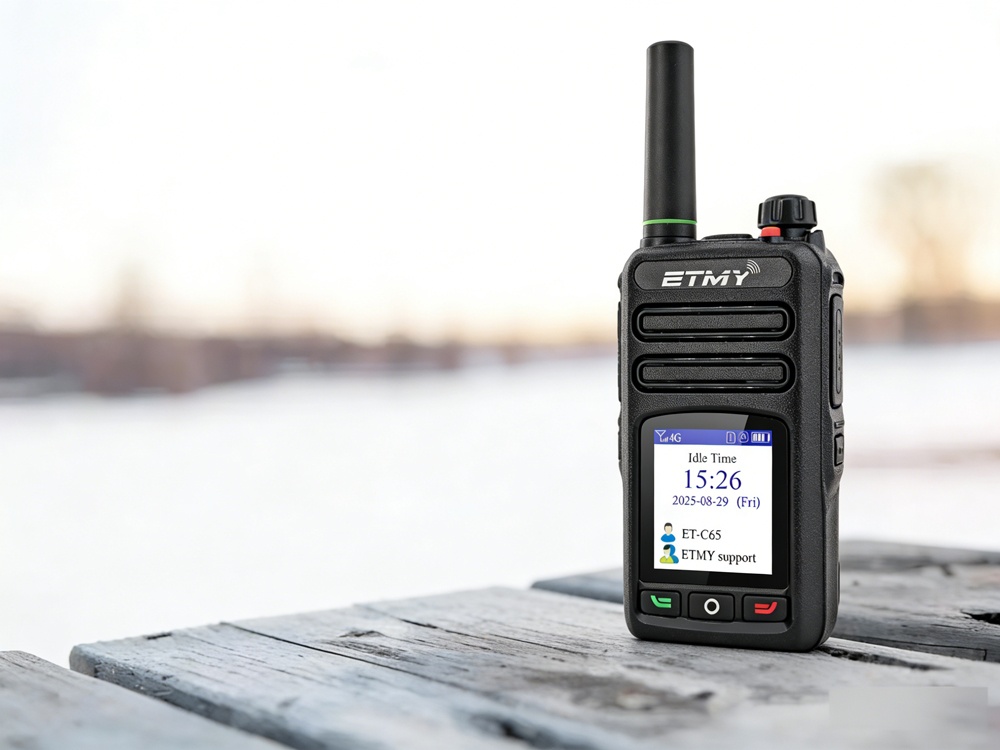
A recent industry report highlights PoC radio adoption for faster, long-distance team communication. Designed for cellular network connectivity, these radios improve coordination in public safety, logistics, and field operations, while offering beginner-friendly setup guidance to ensure reliable activation and compliance.
How exactly do you use a newly acquired PoC radio?