Why a Radio Coverage Test Can Pass— and the System Still Fails in Real Operation

The Most Expensive Sentence in a Radio Project
“We tested it. It worked.”
That sentence sounds reassuring. In professional radio projects, it can also be the start of an expensive problem.
A portable radio may make a clear call near the entrance, beside a repeater, or during a quiet demonstration. Two weeks later, the same system produces missed calls in a stairwell, broken audio behind machinery, or unreliable communication on a loading route. The equipment did not necessarily change. The test conditions did.
For distributors, system integrators and project contractors, coverage testing is not a box to tick. It is the point where a design assumption meets the customer’s real operation. A useful test must reflect where people walk, how they carry the radio, what the building contains, and when the site is busiest.
1. A Demonstration Call Is Not a Coverage Test
A quick radio check answers one narrow question: can these two units communicate from these two positions at this moment? An operational test asks a much harder question: can the intended users communicate reliably across all critical routes and zones, under normal working conditions?
|
Test factor |
Quick demonstration |
Operational coverage test |
|
Location |
One or two convenient points |
All critical zones and travel routes |
|
Timing |
Quiet or low-activity period |
Normal and peak operating periods |
|
Radio position |
Held upright in the open |
Belt, pocket, vehicle or control desk |
|
Accessory |
Often none |
Production earpiece, speaker mic or headset |
|
Movement |
Users stand still |
Users walk, turn, enter vehicles and open doors |
|
Traffic |
One test call |
Repeated calls with realistic channel activity |
|
Result |
Pass or fail |
Audio quality, repeatability and risk by zone |
|
Evidence |
Memory or informal comment |
Logged route, conditions and corrective action |
This distinction matters commercially. A successful demonstration may help a customer feel confident for a few minutes. A documented operational test protects that confidence after installation.
2. The Environment Changes Radio Performance
Radio coverage is shaped by more than transmitter power. Reinforced concrete, underground rooms, metal shelving, tanks, elevators, vehicles and moving equipment can absorb, reflect or block RF energy. The result may be a small dead zone, fluctuating audio or a one-way path where one user hears the call but cannot reply.
The same radio can therefore behave very differently in a hotel, warehouse, mine, factory or airport. Even within one site, the environment changes during the day: loading-bay doors close, stock levels rise, machinery starts, and users move from open areas into enclosed spaces.
3. Test the Radio as People Will Use It
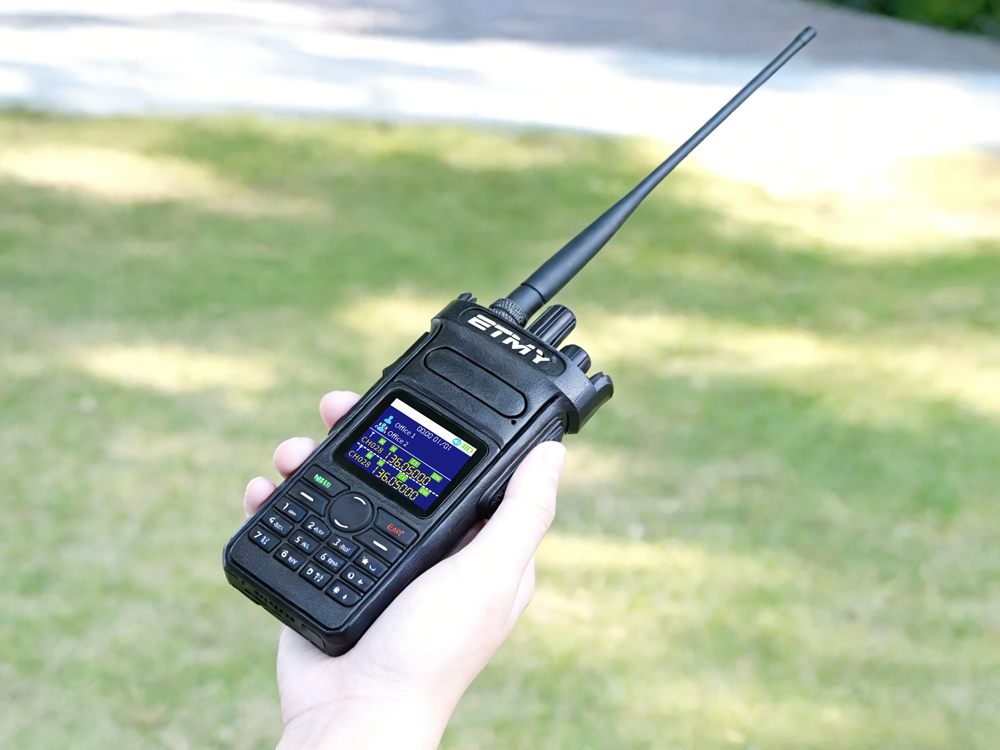
Human factors are easy to overlook. A radio held at shoulder height with the antenna vertical may perform better than the same unit worn on a belt, covered by a jacket or connected to an unsuitable accessory. That difference is not a laboratory detail; it is the difference between the test setup and the working setup.
Figure 2. Test the radio in its normal carrying position with the intended audio accessory.
Before the test begins, confirm the actual configuration: radio model, frequency band, antenna, power setting, programmed channel, battery condition, audio accessory and carrying method. If the customer will use a speaker microphone, test with that exact accessory. If guards work inside vehicles, test from the driver’s normal position with the doors closed.
4. Follow the Real Working Route
A floor plan is useful, but a floor plan is not the job. The test route should follow the way information moves through the operation—from the security gate to the warehouse, from the production line to maintenance, or from an airport stand to the control room.
|
Priority area |
Typical risk |
Why it matters |
Suggested condition |
|
Stairwells |
Concrete enclosure |
Emergency movement and evacuation |
Test on every landing with doors closed |
|
Basements |
Below-grade attenuation |
Utilities, parking and plant rooms |
Test at the deepest occupied point |
|
Elevators |
Metal enclosure |
Security and maintenance response |
Test inside and at each lobby |
|
Loading bays |
Moving doors and vehicles |
Logistics coordination |
Test during an active loading cycle |
|
Warehouses |
Dense or changing inventory |
Coverage changes with stock levels |
Test aisles at representative stock density |
|
Plant rooms |
Motors and metal equipment |
High-noise maintenance work |
Test with machinery operating |
|
Vehicle cabins |
Body shielding and antenna position |
Drivers depend on hands-free audio |
Test seated with doors and windows closed |
Mark marginal areas, not only complete failures. A location where audio is acceptable in one body position but fails after the user turns around deserves attention. Marginal coverage tends to become a complaint when the environment changes.
5. Measure More Than Signal Bars
Signal indicators can support a survey, but they do not replace an intelligibility check. For the end user, the practical question is simple: was the message understood correctly, on the first attempt, in both directions?
Record at least the following for every critical point:
• Location and route: the exact zone, direction of travel and whether the user was stationary or moving.
• Test conditions: doors, machinery, vehicles, stock level, background noise and time of day.
• Radio configuration: model, antenna, power, channel, accessory and carrying position.
• Communication result: outbound and inbound audio, repeated-call consistency and any delay or drop-out.
• Decision: accepted, conditionally accepted, retest required or corrective action required.
A simple audio scale can keep different testers consistent: 5 = clear, 4 = usable with minor noise, 3 = understandable but marginal, 2 = frequent repetition required, 1 = mostly unusable, and 0 = no communication. This is a practical project scale, not a universal industry standard; define the customer’s pass threshold before testing.
6. Repeat the Test During Normal Operations
Coverage can look better when a site is empty. A warehouse before opening does not represent a warehouse during vehicle movement. A hotel corridor during installation does not represent an event changeover. A factory during shutdown does not represent a running production line.
Where communication is operationally important, repeat the route during representative activity. Pay special attention to areas that scored only one level above the acceptance threshold. The aim is not to make the survey unnecessarily complicated; it is to expose conditions that a convenient test would miss.
7. Turn Observations into Usable Data
The test record does not need to be complex. It needs to be specific enough that another person can understand what happened and reproduce the test.
|
Zone and condition |
Out / In audio |
Consistency |
Decision |
|
Main entrance; normal traffic |
5 / 5 |
5 of 5 calls |
Accept |
|
Warehouse aisle 8; high stock |
4 / 4 |
5 of 5 calls |
Accept |
|
Stairwell B, level 2; door closed |
3 / 2 |
3 of 5 calls |
Corrective action |
|
Basement plant room; pumps running |
2 / 2 |
2 of 5 calls |
Corrective action |
|
Loading bay; truck at dock |
4 / 3 |
4 of 5 calls |
Retest after adjustment |
|
Security vehicle; doors closed |
4 / 4 |
5 of 5 calls |
Accept |
Figure 3. Documented results help customers and integrators agree on corrective actions.
8. Define Acceptance Criteria Before Installation
Many disagreements start because “good coverage” was never defined. One party assumes that every room is included; another assumes that only operational areas matter. One party accepts understandable audio; another expects perfectly clean audio everywhere.
Agree on the acceptance method before equipment is installed:
• Scope: identify mandatory zones, normal routes, optional areas and known exclusions.
• Configuration: freeze the radio, antenna, power, programming and accessory used for acceptance.
• Threshold: define the minimum audio score, required successful-call ratio and whether both directions must pass.
• Conditions: state the operating period, door positions, machinery state and representative user position.
• Corrective process: agree who reviews failures, how changes are approved and when retesting occurs.
9. A Coverage Problem Does Not Always Need a Higher-Power Radio
When a dead zone appears, increasing portable-radio power is often the first suggestion. It is not always the right one. The limitation may be repeater location, antenna feedline loss, poor antenna selection, building structure, incorrect programming, accessory performance, interference or an unrealistic coverage expectation.
A useful troubleshooting sequence is to verify configuration first, reproduce the issue, compare radio and accessory combinations, inspect the infrastructure path, and then consider design changes such as antenna relocation, an additional site, a repeater, distributed coverage or a hybrid LTE/PoC approach. The corrective action should match the cause—not merely the symptom.
10. Document the Result—and Protect the Project
A short, signed test record is valuable to every party. The customer sees what was checked. The integrator has evidence of the agreed method. The distributor can separate equipment issues from design or environmental issues. Future maintenance teams can compare new complaints with the original baseline.
Useful records include the marked route, date and time, tester names, equipment serial or asset numbers, software configuration, photos of critical positions, results by zone, corrective actions and retest status. Documentation turns “it worked when we tested it” into a statement that can actually be examined.
Final Thought
A radio system should not be judged by its best call. It should be judged by the calls users cannot afford to miss.
Before accepting a project, ask: Was the radio tested where people really work? Was it worn and used in the normal way? Were difficult routes included? Were results repeated and recorded? And did everyone agree in advance on what “pass” means?
Those questions take longer than a demonstration call. They also cost far less than a failed project.
A grounding error can instantly fry your radio—Installation guide for radio system lightning protection
Related Article