
From cognitive radio to artificial intelligence, explain the development process of dynamic spectrum management technology in detail
2021-12-02

source:pttcn.net
With the rapid development of radio technology, limited frequency resources can no longer meet the ever-increasing demand for frequency use. In order to improve the utilization efficiency of frequency resources, comprehensive management of frequency resources has received extensive attention. In the process of developing from traditional static management to dynamic management, new technologies such as cognitive radio and TDOA positioning have developed rapidly. However, the most cutting-edge artificial intelligence technology will complete the conversion from data to decision more efficiently and complete comprehensive tasks more intelligently.
Cognitive Radio
Solve the problem of spectrum utilization
Dynamic spectrum sharing is an important subject in the research of cognitive wireless networks, which aims to improve the utilization of wireless spectrum.
At present, wireless networks generally use fixed spectrum allocation methods, and almost all wireless terminals work under the spectrum allocated by some spectrum management organizations (such as the International Telecommunication Union and the spectrum management organizations of various countries). Studies have shown that in this way, most of the allocated spectrum is often not fully used in many areas, and its utilization rate ranges from 15% to 85%. Dynamic spectrum sharing is an important subject in the research of cognitive wireless networks, which aims to improve the utilization efficiency of wireless spectrum resources. Driven by opportunity, cognitive radio allows wireless terminals to automatically perceive, identify and utilize any free spectrum resources. Once an authorized user on the used spectrum segment appears, the wireless terminal will actively give up the corresponding spectrum and switch to another available spectrum.
In order to solve the problem of spectrum dynamic utilization, cognitive radio technology has developed rapidly in recent years. The research of cognitive radio mainly includes: the next generation wireless communication (xG) project funded by the US Defense Advanced Research Projects Agency (DARPA), and a National Natural Science Foundation project of the winlab laboratory of Rutgers University in the United States on cognitive wireless technology. Research on adaptive radio frequency technology in the UK’s mobile telecom technology virtual center, DRIVE, OverDRiVE and TRUST funded by the European Communications Association, cooperation and cross-layer design technology in the cognitive radio system of the national "863" plan, spatial signal detection and analysis, and QoS Guarantee mechanism, etc.
Cognitive radio is a radio technology that can change the parameters of the transmitter according to changes in the environment. It can use this frequency band when there is no user to use the authorized frequency band, which greatly improves the spectrum utilization rate and makes up for the shortcomings of fixed spectrum allocation. It is a key technology of the next generation network. From a technical point of view, cognitive radio can change the transmitter parameters according to environmental changes. It is used for adaptive spectrum management and the development of subsystems-smart antennas, sensors and receivers, adaptive modulation and waveform technology, etc. It is the key to the dynamic use of spectrum in next-generation networks. Cognitive radio can use this frequency band when there is no user using the authorized frequency band, which greatly improves the spectrum utilization rate and makes up for the shortcomings of fixed spectrum allocation.
Cognitive radio has two main capabilities. One is cognitive ability. Cognitive ability is the ability to obtain perceptual information from the environment. Use complex techniques to obtain the instantaneous spatial variables of the environment and avoid interference to other users. The other is the ability to reset. Cognitive ability perceives the spectrum, and reset ability allows the radio to dynamically configure hardware parameters so that it can transmit and receive on different frequencies, and can also use different transmission access supported by hardware devices. Therefore, cognitive radio can achieve multiple functions in dynamic spectrum management. The first is spectrum sensing, which determines which spectrum is available, and detects whether there are authorized users when the user is working on an authorized frequency band. The second is spectrum management, which selects the best available channel to use. The third is spectrum sharing, which adjusts channel access with other users and provides users with appropriate spectrum arrangements. Finally, there is spectrum movement. After the authorized user's spatio-temporal channel is detected, it will migrate to other frequency bands.
The disadvantage of cognitive radio technology is that it greatly increases the complexity of the system, and the communication quality cannot be fully guaranteed. Therefore, a new system is proposed internationally, namely the dynamic authorization management system. In other words, companies such as radio and television are allowed to lease free spectrum to users in hotspots. The main representatives of the international research frontiers are LSA of the European Union and SuperWiFi of the United States. Although cognitive radio partially solves the problem of dynamic spectrum management of a certain frequency band from the perspective of radio users, there is still a lack of effective solutions for the dynamic management of the entire spectrum by radio regulatory agencies. In the process of technical analysis of radio spectrum management, it is often necessary to identify key signals and abnormal signals. In the case of multiple signal types and multiple transmitting stations in the frequency band, multiple signals will overlap in the same frequency band, which brings huge challenges to spectrum management. Spectrum sensing in cognitive radio technology can quickly identify free spectrum and establish a free spectrum pool, but it cannot solve the problem of dynamic spectrum allocation for the constantly changing radio spectrum situation. Spectrum dynamic management needs to solve not only the dynamic perception of the spectrum environment, but also close integration with independent decision-making to achieve dynamic management. The rise of artificial intelligence may bring development opportunities for dynamic spectrum management.

Commercialization of artificial intelligence
Achieve rapid development
With the development of technology, artificial intelligence has been applied in e-commerce, finance, and medical treatment.
The term artificial intelligence was first proposed by cognitive scientist John McCarthy in his research. His explanation of artificial intelligence is a speculation of this research, that is, any learning behavior or other intellectual characteristics can be accurately described in principle, so that it can be manufactured. Create a machine to simulate it. With the development of technology, artificial intelligence has been applied in e-commerce, finance, and medical treatment. At the same time, machine learning and deep learning are often mentioned together with artificial intelligence. Machine learning is an approach or subset of artificial intelligence that emphasizes learning rather than computer programs. A machine uses complex algorithms to analyze large amounts of data, identify patterns in the data, and make predictions. Deep learning is a subset of machine learning, which uses a large amount of data and computing power to simulate deep neural networks. These three concepts are closely related, but each has its own emphasis.
Artificial intelligence was formally proposed at the Dartmouth Conference in 1956 and entered a period of rapid development in 2006. With the breakthrough of deep learning algorithms in speech and image recognition, the commercialization of artificial intelligence has achieved rapid development. In 2016, AlphaGo defeated Li Shishi, and artificial intelligence received unprecedented attention in the world. Artificial intelligence products and services have been continuously launched, such as Amazon Echo smart speakers and Facebook's use of artificial intelligence to improve user experience, which have been widely recognized by the market. BAT is also actively promoting artificial intelligence projects.
In terms of policy assistance, the government vigorously supports the artificial intelligence industry. The "New Generation Artificial Intelligence Development Plan" released in July this year stated that by 2020, my country's overall artificial intelligence technology and application will be synchronized with the world's advanced level; by 2025, my country will A major breakthrough has been achieved in the basic theory of artificial intelligence, and some technologies and applications will reach the world's leading level; by 2030, my country's artificial intelligence theory, technology and application will generally reach the world's leading level and become the world's major artificial intelligence innovation center.
The "Artificial Intelligence for Mankind Global Summit" held in Geneva from June 7 to 9, 2017 aims to accelerate the development and popularization of artificial intelligence (AI) solutions to tackle poverty, hunger, health, education, equality and environmental protection And other global challenges. As the United Nations specialized agency responsible for information and communication technology, ITU aims to guide the continuous innovation of artificial intelligence in order to finally realize the goal of sustainable development of the United Nations. Platform in order to reach a consensus on the capabilities of emerging artificial intelligence technologies."
"In many public competitions organized by us, we can see that various teams use artificial intelligence as a basic tool in many fields, from creating a personalized learning experience for Tanzanian children who cannot get a formal education, to empowering consumers to use medical three-recording equipment. The equipment makes medical decisions, and then guides advanced, autonomous robotic vehicles to explore the deep sea or find a path on the surface of the moon.” X Prize Foundation (XPRIZE) CEO (CEO) Marcus Shingles said, “We recognize that with With the accelerated advancement and popularization of artificial intelligence, a new generation of problem solvers face great opportunities when dealing with global challenges." This event is the first meeting of a series of events related to the annual conference of artificial intelligence. , Civil society and representatives of the artificial intelligence research community participated to discuss the latest development of artificial intelligence and its impact on regulatory, ethical, security and privacy issues.

Artificial intelligence is on
New model of spectrum management
In order to solve the problem of the shortage of electromagnetic spectrum resources, artificial intelligence will focus on intelligent decision-making.
Spectrum research expert Professor Wu Qihui spoke at the "2017 Global Future Network Development Summit" and said that traditional spectrum decision-making is an artificial method, mainly because the scenario is relatively simple and may not require decision-making, or even just a prediction. But now spectrum warfare is carried out in a complex electromagnetic spectrum environment, and the complexity is mainly reflected in diversity, intensiveness, large-scale, high dynamics and high confrontation. We study intelligent spectrum decision-making or autonomous spectrum decision-making. From a combat perspective, it mainly solves rapid planning before war, self-coordination in wartime, and confrontation with the enemy. Mainly use the intelligent decision-making method of man-machine hybrid to make pre-decision and temporary decision-making.
Driven by the mobile Internet, the Internet of Things, and the integrated information network of space and ground, future wireless networks will develop in the direction of higher speed, more access, and wider coverage, which will pose more challenges to spectrum resources. In order to meet these three challenges, we need to carry out three changes in the spectrum, these three changes also reflect the Internet +, artificial intelligence +, and spectrum transformation.
In order to solve the problem of the shortage of electromagnetic spectrum resources and promote the transformation of spectrum resources from static exclusive to dynamic sharing, artificial intelligence will focus on intelligent decision-making, promote the transition from isolated monitoring to grid monitoring and analysis, and at the same time, artificial intelligence will be used in complex electromagnetic environments. Decision-making changes to autonomous decision-making. The radio spectrum machine learning system is a technical application of artificial intelligence in radio frequency management.
The radio spectrum machine learning system funded by the Defense Advanced Research Projects Agency (DARPA) consists of four major technical components:
1. Feature learning: Identify signals from signal data and classify them according to user settings.
2. Intelligent monitoring: Intelligently focus on key frequency bands or frequency points in the spectrum from the massive data collected in real time. Predict and adjust to the corresponding key monitoring frequency band or frequency point according to the rules set by the user.
3. Automatic perception and recognition: Automatically adjust the monitoring settings according to the needs of the user's task.
4. Signal synthesis: digitize and synthesize the signal according to user needs and improve the quality of the synthesized signal.
In the process of technical analysis of radio spectrum management, it is often necessary to identify key signals and abnormal signals. This usually relies on the experience of monitoring facilities and engineers. In the event of emergencies such as black broadcasts and pseudo base stations, a lot of manpower is often required. Time inspection and positioning. In addition, in order to improve the efficiency of frequency use, the management department hopes to improve the frequency band sharing technology and predict the usage of the frequency band so that frequency reuse can be carried out without causing interference.
It is true that the application of artificial intelligence in radio management also faces many challenges. For example, the application basis of artificial intelligence in dynamic spectrum management is big data. The data required is not only large but also complex. Radio monitoring data, frequency data, and station data have their own emphasis but are inseparable. On the other hand, if deep learning achieves autonomous decision-making, a set of rigorous research and judgment rules is required, and a quantifiable evaluation of the frequency spectrum is required. The "National Radio Management Plan (2016-2020)" pointed out: During the "13th Five-Year Plan" period, the primary task is to innovate spectrum management, establish a scientific and reasonable spectrum use evaluation and frequency recovery mechanism, and form an administrative approval and market-oriented configuration management system. Therefore, on the one hand, we lay a solid foundation, and on the other hand, we must closely follow the trend of forward-looking technology development, use artificial intelligence technology to serve the dynamic management of the spectrum and serve the radio management under the new situation.
Test der LTE-450-MHz-Technik für kritische Sprach- und Datendienste
A Motorola Solutions fornece comunicações totalmente integradas para aumentar a segurança no estado do Pará
Related Article

A practical guide to testing two-way radio coverage in the environment where people will actually depend on it.
Why a Radio Coverage Test Can Pass— and the System Still Fails in Real Operation

Most radio operators never take grounding seriously—until their gear is fried. This piece exposes three fatal grounding traps, from shallow rods to mixed signal-and-power grounds, then hands you a six-step, code-compliant checklist drawn from NEC Article 810 and IEEE Std 142. Copy this homework instead.
A grounding error can instantly fry your radio—Installation guide for radio system lightning protection

Professional walkie talkie earpiece guide covering how to put on, wear, and use earpieces correctly. Features brand-specific tips for Motorola, Hytera, Baofeng, and more with structural comparisons for optimal comfort and performance.
How to use walkie talkie earpiece?- The Complete Guide to Walkie Talkie Earpiece Setup
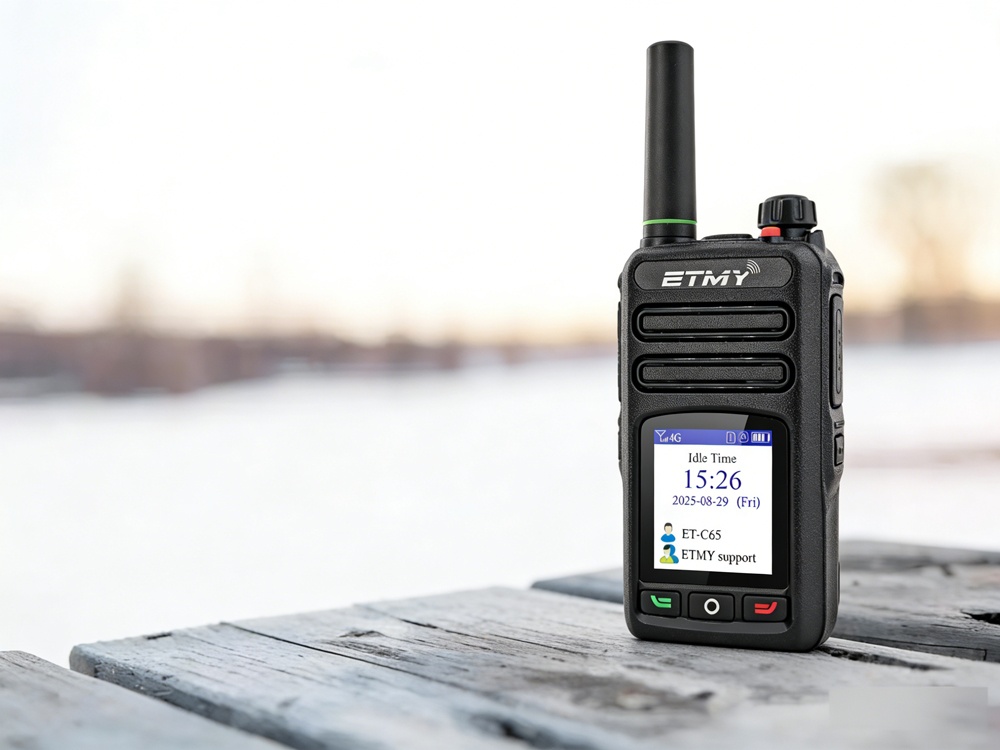
A recent industry report highlights PoC radio adoption for faster, long-distance team communication. Designed for cellular network connectivity, these radios improve coordination in public safety, logistics, and field operations, while offering beginner-friendly setup guidance to ensure reliable activation and compliance.
How exactly do you use a newly acquired PoC radio?