
What's the difference in the price of hand-held walkie-talkies from dozens of dollars to thousands of dollars?
2021-12-16

source:pttcn.net
What's the difference in the price of hand-held walkie-talkies from dozens of dollars to thousands of dollars?
1. Solution level gap
In terms of performance, the performance of integrated chips is relatively weaker than that of discrete circuits. Generally, the sensitivity of integrated chip-level solutions is about -116~120dB, which may not be achieved if the design ability is poor. The sensitivity of discrete devices from manufacturers such as Motorola and Hytera can reach -122db or higher when debugged. The price is: the integrated chip uses two chips of baseband + radio frequency, which can be realized by using a 4-layer printed circuit board, while the handheld table of a discrete device is generally built with 8-10 layers. The cost of circuits and components alone will be doubled. For some bugs, small manufacturers of chip solutions do not have the ability to solve them. If problems occur, the improvement cycle is long, and it is difficult to find the problem. If it is at the circuit level, it will not be modified until the next time it is taped out (maybe a few years later).
2. Device level
We have disassembled common brand antennas and Motorola antennas that have been used for 3 years. The common brand antennas have been broken due to multiple bending at the root metal, while Motorola’s antenna has a blue plastic reinforcement at the bottom of the different material, and the antenna performance remains the same. Very reliable. We asked the antenna manufacturers we encountered in China. It was either that the process was not up to the standard, or the mold had to be re-opened, which was very costly (this kind of design is rarely used in domestic antennas). If you want to buy it, the Motorola antenna is priced at 120 yuan.
This is still a small accessory. There are also batteries. Now first-class manufacturers’ batteries have built-in single-chip microcomputers to realize temperature management and automatic identification of battery performance. Inferior batteries are just a case of batteries. Safe batteries should withstand high temperature and low temperature drops, short-circuit overcharge, and even nail a nail. In all cases, it is necessary to ensure that they do not cause harm to the user (such as fire and combustion), and inferior batteries basically do not go through these.
Now the standard "semi-reflective transflective screen" of high-end walkie-talkies is basically customized, and the cost of a customized one is in the millions. If a piece of equipment produces tens of thousands of units, the cost to each table is still dozens of.
In addition, the components are commercial/industrial or military-grade, whether the crystal oscillator has temperature compensation, the reliability of the knob/keys, and even a resistor and capacitor. It may lead to instability of the indicator, of course, the price difference is also large, several times are common, this depends on the trade-off. These stories have happened in the research and development.
3. Design requirements
The waterproof level is determined by the accuracy of the mold and the production process, which directly affects the cost. The use time is determined by the design scheme and model selection, maintenance requirements/secondary development requirements, and the degree of playability is different. The R&D personnel invested are also different. The easiest way to develop a walkie-talkie is to invest only in a project manager, and a large-scale team of hundreds of people may be invested.
4. Verification
Walkie-talkie verification requires a large number of tests: high and low temperature, aging, shock, vibration, and drop require corresponding equipment and a long time. The establishment of a test environment for antenna radiation efficiency starts at tens of millions of levels (most of the electromagnetic compatibility laboratory construction costs are 100 million level), the delivery test fee is also extremely high, and many small manufacturers can ignore it, and the performance is naturally not as good as that of the large manufacturers.
In summary, component costs + R&D costs + product risks + brand premiums have caused the current price difference of walkie-talkies. For personal walkie-talkies, if they are used as toys, just a few hundred yuan can be played. For professional level equipment, especially public safety and disaster relief level equipment, are often directly related to human lives and huge amounts of property, and can withstand the cost increase introduced by massive testing and excessive safety & performance design (in fact, for this application, how safe is it? The requirements are not excessive, and the higher the performance, the better. You are welcome to say that the current products are a compromise between technology and cost).
Pakistan Police Awards Body-Worn Camera Contract to Hytera
Hytera PMR Radios to be Distributed by Virgin Megastore in New Deal with Global Beam Telecom
Related Article

A practical guide to testing two-way radio coverage in the environment where people will actually depend on it.
Why a Radio Coverage Test Can Pass— and the System Still Fails in Real Operation

Most radio operators never take grounding seriously—until their gear is fried. This piece exposes three fatal grounding traps, from shallow rods to mixed signal-and-power grounds, then hands you a six-step, code-compliant checklist drawn from NEC Article 810 and IEEE Std 142. Copy this homework instead.
A grounding error can instantly fry your radio—Installation guide for radio system lightning protection

Professional walkie talkie earpiece guide covering how to put on, wear, and use earpieces correctly. Features brand-specific tips for Motorola, Hytera, Baofeng, and more with structural comparisons for optimal comfort and performance.
How to use walkie talkie earpiece?- The Complete Guide to Walkie Talkie Earpiece Setup
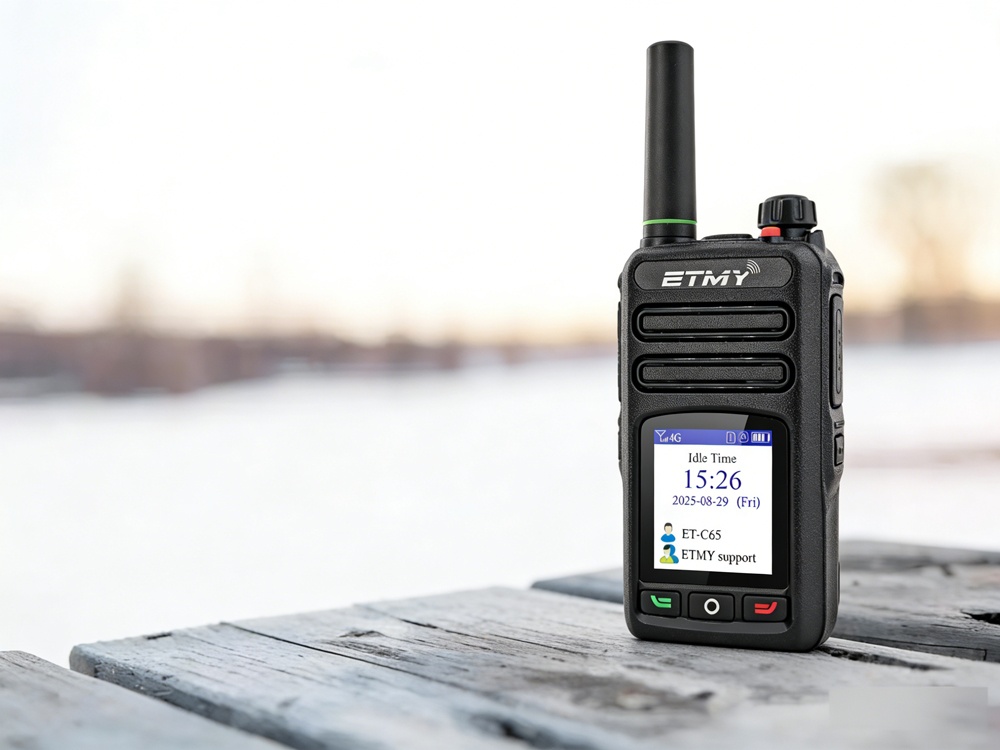
A recent industry report highlights PoC radio adoption for faster, long-distance team communication. Designed for cellular network connectivity, these radios improve coordination in public safety, logistics, and field operations, while offering beginner-friendly setup guidance to ensure reliable activation and compliance.
How exactly do you use a newly acquired PoC radio?