
Hytera releases the "Public Private Convergence White Paper" to help private network communications transform to the next generation of key communications technologies
2021-12-21

source:hytera.com
With the gradual improvement and large-scale application of new technology ecosystems such as 5G, artificial intelligence, Internet of Things, and big data, it will have a profound impact on private network communications. Broadband and intelligence have become an inevitable trend in the development of private networks. The needs of users in key communications industries are diversifying. In addition to traditional voice scheduling, the needs of multimedia transmission, intelligent applications, and big data analysis are also growing rapidly. At the same time, it is necessary to ensure high security and high reliability. To this end, Hytera focuses on user needs and launches public-private integration solutions to help users in various industries realize digital and intelligent business transformation.
Based on the development trend of the private network communication market, Hytera recently released the "Public Private Convergence White Paper" (hereinafter referred to as the "White Paper"), which aims to deeply understand the needs of industry users through industry insights, technical elaboration, and lighthouse use cases. Provide development suggestions for industry users to help private network communications evolve to the next generation of key communications.
The only way for the development and evolution of the key communication industry
Critical communications refer to professional communications used by government departments that perform the responsibility of ensuring national and social security and industries that ensure the normal operation of the national economy and the people’s livelihood, including mission-critical and business-critical types. The development of key communication technologies has brought major changes to the key communication industry. Currently, the following three trends are mainly presented:
First, PTToC is becoming more and more mature: 2020 is a turning point for PTToC's global ecosystem to mature. In the next 5 years, the number of PTToC users will continue to grow at a compound annual growth rate of 17%, and PTToC technology and solutions are rapidly expanding globally;
The second is the acceleration of broadband evolution: The maturity of mobile broadband LTE technology and the success of commercial networks have helped industry users enable more intelligent applications, have more diversified choices of basic networks, and put forward higher requirements for communication terminals;
The third is intelligent transformation: PTToC has gained richer multimedia service development capabilities, and the combination of LTE/5G, MEC and AI has also brought a broader range of key intelligent applications.
Based on the future development of the industry, users in public safety, public utilities, industry and commerce and other industries need to combine their own conditions and digital strategies to implement the transformation of key communication infrastructure, upgrade communication networks, build communication platforms, choose suitable PTToC technology, and equip them with terminals that meet actual combat conditions. , And integrate it into the digital transformation technology architecture to better achieve transformation and upgrading.
In addition, the broadband private network lacks frequency spectrum, and the construction cost of a wide coverage network is high. In summary, making full use of the public network to develop the industry PTToC has become the best choice. Therefore, while strengthening and optimizing the narrowband, it is necessary not only to do a good job in the intercommunication between the narrowband and the broadband, but also to achieve true multi-network integration, build the next generation of key communication networks, and bring more unique value to the development of the industry and customer services.
"Application + platform + network + terminal" public and professional integration solutions, creating value for users
Based on a deep understanding of industry customers’ business, Hytera pointed out in the white paper that public-private integration is not a simple interconnection, but a multi-level deep integration of private and public networks. Its architecture includes services, platforms, networks, and terminals. Multi-layered collaboration, the white paper elaborated on 4 dimensional characteristics:
1. Deep integration and unification of network elements at all levels, including a total of 14 "system-level" integration capabilities. (It's not just the interconnection of gateways)
2. Converged systems should bring convenience to user network upgrades and security, including 6 benefits including smooth upgrades to reduce operation and maintenance, unified authentication and end-to-end encryption.
3. Focus on the availability and continuity of key communications, realize seamless voice through in-depth collaboration, and 10 capabilities such as global positioning to ensure ubiquitous full connectivity and business consistency.
4. Enabling application innovation and empowering users in actual combat: Realize a total of 10 business integration innovation applications in multiple forms of voice/video/app, improve the response efficiency of front-line personnel, and provide standard API interfaces for business platforms to facilitate more agile development .
Hytera's public-private integration solutions can help users achieve application integration, platform integration, network integration, and terminal integration through a number of innovative technologies, and provide end-to-end security solutions. Achieved "multi-system-level integration, smooth network evolution and upgrade to reduce TCO, voice interconnection and intercommunication and seamless handover, enabling intelligent service integration and innovation" four aspects of capability innovation and core values
Public-private integration promotes the reshaping of the industry’s technical architecture, de-stacking the network, and gradually realizes the vertical decoupling and horizontal integration of the network and the business, opens up data islands and communication block isolation, and finally realizes the target architecture of “one platform, one network” , One terminal, one picture". The converged communication and business capability engine can also help users quickly realize innovative and convergent intelligent applications. At the same time, the open architecture, integrated platform, and standard interfaces lay the foundation for the next step of integrating with 5G networks to help the industry's digital transformation.
While bringing value to industry users, it also helps build an open industry ecosystem. In terms of the benefits of infrastructure upgrades, there are three values that help balance the investment in narrowband and broadband networks, the smooth evolution of the network, and the coordination of multi-mode converged terminals.
In terms of expanding user business and actual combat capabilities, it includes four values such as facilitating the development of group defense and group governance, terminal integration and burden reduction, undifferentiated wide and narrow voice, and indoor positioning. In terms of product innovation to achieve unique value, including seamless voice, global positioning, multi-mode same number, media application, ruggedness and other 9 benefits.
Practical test, large-scale landing
At present, Hytera's public-private integration solutions have been successfully applied to public security, emergency fire protection, railways, airports, real estate and other industries, serving users in a variety of key industries.
For example, in the public safety industry, in Kunming’s public-private integration project, auxiliary police and academic police are equipped with professional intercom terminals to realize the interconnection and intercommunication with civilian police PDT, which solves the problem of poor communication and command of daily and major activities. COP15 The Convention on Biological Diversity Conference provides strong guarantees.
Xiamen Public Security Bureau adopts Hytera's public-private integration system, and through cooperation with operators, realizes unified command and dispatch and daily management of civilian police and auxiliary police, group defense and group governance.
In the fire emergency industry, through public-private integration solutions and innovative technologies, the seamless command and communication of the entire process of "all disasters and major emergency" from emergency dispatch, on the way to the scene, 1/2/3 level network interconnection, and PDT Deep integration has realized the large-scale emergency command communication of "horizontal to edge and vertical to the end".
In the transportation industry, Sri Lanka Railway has built the world's first MCS railway system based on LTE network. Hytera provides end-to-end communication solutions, systems and terminal equipment for it, mainly including: remote owners, The key mission MCS server, converged gateway, converged communication platform and dispatching user terminal, vehicle-mounted station, IP phone, hand station and configuration accessories distributed in three regions of the country are provided. The system provides MCS-based various train dispatch communications and operational communications services through the operator’s network.
Beijing Daxing International Airport adopts Hytera's public-private integration solution to integrate TETRA private network and public network, balance business needs and network investment, expand communication range, and realize the interconnection of staff in various regions and positions. At the same time, multi-mode smart terminals support integrated applications such as real-time video return, rapid key data query, and efficient mobile office. One terminal efficiently completes complex work processes, reduces the burden on staff, and reduces communication equipment investment and management costs. In addition, the intelligent terminal management system realizes the unified and batch management of terminals, reduces the workload of operation and maintenance, and effectively improves the efficiency of airport operations.
In China, the standardization of public-private integration will bring more user value, broader market space, and a more prosperous ecosystem to the key communications industry. It will also lead the leap-forward development and application of public-private integration in various industries.
In the next step, Hytera will continue to combine theory and practice, continue to promote industry standards and improve technical solutions, while bringing value to industry users, while helping to build an open industry ecosystem, and further promoting a new generation of public-privateged products and Large-scale commercial use of the solution in various vertical industries.

About GMRS: The Difference Between Simplex & Repeater Channels
How important is the antenna?
Related Article

A practical guide to testing two-way radio coverage in the environment where people will actually depend on it.
Why a Radio Coverage Test Can Pass— and the System Still Fails in Real Operation

Most radio operators never take grounding seriously—until their gear is fried. This piece exposes three fatal grounding traps, from shallow rods to mixed signal-and-power grounds, then hands you a six-step, code-compliant checklist drawn from NEC Article 810 and IEEE Std 142. Copy this homework instead.
A grounding error can instantly fry your radio—Installation guide for radio system lightning protection

Professional walkie talkie earpiece guide covering how to put on, wear, and use earpieces correctly. Features brand-specific tips for Motorola, Hytera, Baofeng, and more with structural comparisons for optimal comfort and performance.
How to use walkie talkie earpiece?- The Complete Guide to Walkie Talkie Earpiece Setup
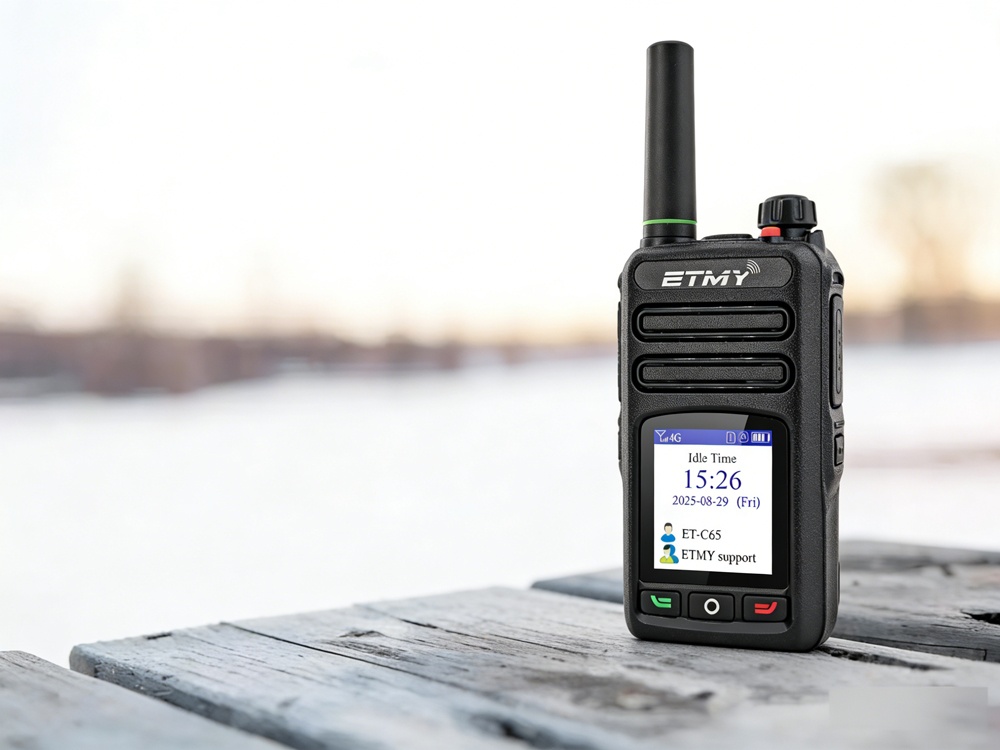
A recent industry report highlights PoC radio adoption for faster, long-distance team communication. Designed for cellular network connectivity, these radios improve coordination in public safety, logistics, and field operations, while offering beginner-friendly setup guidance to ensure reliable activation and compliance.
How exactly do you use a newly acquired PoC radio?