
Dialogue with Wang Ke, Vice President of Hytera: The integration of public and professional schools sounded the clarion call for the development of the next generation of key communication industries
2022-01-14
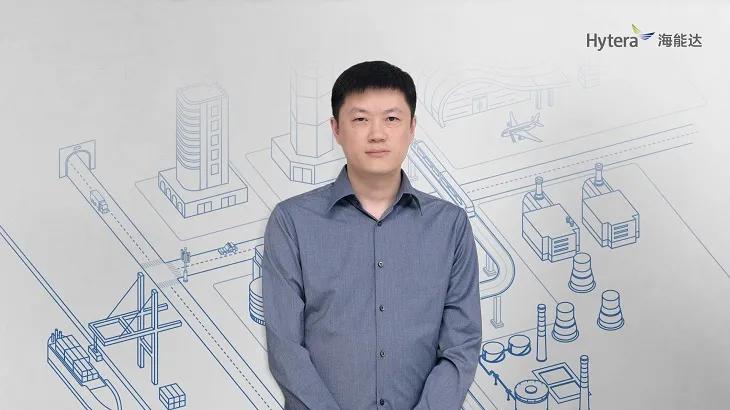
In response to the development trend of the next-generation industry-private network, communication, and public-private integration, Hytera has recently released the "Public-Private Integration White Paper" (hereinafter referred to as the "White Paper"), which aims to gain an in-depth understanding through industry insights, technical explanations, and lighthouse use cases. According to the needs of industry users, it provides development suggestions for industry users and helps private network communications evolve to the next generation of key communications.
So, why does private network communication need public-private integration? What challenges are facing the current stage of public-university integration? What practical cases are there for reference? In this regard, Wang Ke, Vice President of Hytera gave us a detailed interpretation in an exclusive interview with C114. He said: Public-private integration is not only a technical solution, but also hopes to sound the clarion call for the development of the next generation of key communication industries.
01 The road of public-private integration is more suitable for users in key communication industries
In the digital age, in order to meet the diverse business needs of industry customers, private networks and public networks will be more deeply integrated. In Wang Ke's view, the need for public-university integration is mainly due to the following considerations:
First of all, for many industry users, private network communication has always been used. Among them, narrowband private network is relatively mature. Users rely on private network group voice communication to solve mission-critical communication problems. Facts have proved that narrowband private network will exist for a long time.
However, in the digital age, only narrowband-based voice is not enough. Broadband applications such as data, video, and multimedia are also needed to help solve more business problems. However, the pure private network broadband model has problems such as large investment, lack of spectrum, high cost, and immature proprietary standard industry chain. The industry's attempts in broadband private networks are generally not too successful. Therefore, the choice to build a pure broadband private network very few.
At the same time, the global development and popularization of 4G/LTE networks has been very successful. Wang Ke believes: "4G/LTE is a good way to meet the broadband needs of industrial customers at a low cost. Moreover, the private network and user's services have been deeply integrated, and users' usage habits should be retained; after the integration, broadband-based capabilities, It is also necessary to keep the user habits consistent. Therefore, public-private integration is a more suitable path for users in the key communications industry.”
Previously, there were vague directions and concepts in the industry, such as wide-narrow integration, public-universal integration, and public-professional integration, but they were not practical in general. For example, the broadband private network does not yet exist, and the wide-bandwidth integration and wide-narrow integration have little practical significance; while the public-private combination is used separately, the terminals are also separated, and the network is still vertically chimneyed, resulting in poor interconnection; Most of the previous public-private integration solutions have basically separated the network, platform, and terminal, mainly on-demand customization at the business layer to achieve integration. The actual combat experience of front-line personnel and the openness and evolution of the network are far from expectations.
Wang Ke said, "With regard to the confusion faced by the future evolution of the key communication industry, Hytera summarizes its experience, proposes in-depth public-private integration based on years of industry accumulation and exploration and research, and publishes the "Public-Private Integration White Paper", hoping to help the industry clarify the future Direction of development."
02 Facing challenges and creating value for users
At present, the investment of many manufacturers in the real public-professional integration is quite limited. Most of the public-private integrations on the market only achieve the interconnection of PoC and narrowband, which is just a simple integration of voice and a few simple functions. Does not solve the actual user problem.
In Wang Ke's view, the main challenges facing public-private integration at the current stage include: the usage habits cannot be kept consistent, the real integration function has not been realized; there is no way to achieve unified call processing in terms of business; due to the fragmentation of the network, It is difficult to manage, operate, and maintain in a unified manner; it is also impossible to implement a unified security management strategy.
In response to the above-mentioned business pain points and challenges, Wang Ke said: Hytera proposes P-PoC for deep public-private integration, and Hytera's public-private integration solution can help users achieve application integration, platform integration, network integration through a number of innovative technologies. Convergence, terminal integration, and provide end-to-end security solutions, including: multi-level system-level integration, smooth network evolution and upgrade and TCO reduction, voice interconnection and seamless handover, enabling intelligent business integration innovation, end-to-end security, etc. The five characteristics will bring the following three key values to customers:
The first is the deep integration and unification of network elements at all levels, supporting 14 "system-level" integration capabilities. In terms of network construction, it solves the difficulties in the process of customer key communication transformation, realizes rapid network upgrades, reduces TCO, reduces burden and increases efficiency equivalent value. For example: optimizing infrastructure investment, saving users' investment in deploying narrowband base stations in high-cost areas (indoor, remote), and facilitating the network to quickly support services; reducing the complexity of network evolution and new maintenance workload, unified operation and maintenance and management Help reduce burden and increase efficiency. In addition, the open technical architecture helps to promote the remodeling of the industry network architecture, remove the "chimney" of the network, realize the vertical decoupling and horizontal integration of the network and business, open up the isolation of data islands and communication blocks, and realize "one platform, one platform". A net, a terminal, a picture".
The second is the deep integration of business logic at all levels and unified and enhanced multi-layer in-depth collaboration, supporting 10 key communication capabilities such as seamless voice and global positioning, realizing ubiquitous full connection and business consistency, ensuring the availability and continuity of communication , to keep users' usage habits consistent and seamless. After the public-private integration, users do not care whether the service runs on the narrowband or broadband network, but pay more attention to whether it can provide a unified user experience and more intelligent applications. Hytera's converged solution enables the innovation capability of the application layer, integrates a total of 10 converged innovative applications such as voice/video/app, improves the response efficiency of front-line personnel, and provides standard API interfaces for the business platform to facilitate more agile development and support Customers quickly deploy new services. It has the ability to bring unique user experience to users on different networks, different devices, and different terminals. For example, front-line workers only need to be equipped with a multi-mode terminal, which can meet the needs of communication, video, multimedia and informatization in peacetime and emergency. and other job requirements. At the same time, the public-professional integration system helps the new police mechanism to realize cross-regional and multi-departmental communication, which is conducive to the implementation of the joint logistics linkage mechanism, pulls together social auxiliary forces such as "group prevention and group governance" and "mini fire station", and realizes "horizontal and multi-departmental communication". To the side, vertical to the end" communication and command and dispatch.
Third, the fusion system brings convenience to the implementation of security solutions, supports unified authentication and end-to-end encryption and other capabilities, and dispels users' security concerns. Industry users, especially mission-sensitive high-end industry users such as public security, have very strict security requirements. Hytera's public-private integration solution supports security assurance solutions together with industry partners, integrates into the industry's existing security policies to form a standard system, and combines unified authentication/service security/terminal security control/end-to-end encryption/APN/VPDN/IPSEC and other mature Security technology, comply with national security level protection standards, and build a multi-level, end-to-end security system based on defense-in-depth, based on best practices and continuous development.
03 Flowering in many places, the actual combat polishing can be implemented
In the implementation process, many factors need to be considered, and the biggest challenge is that there is no precedent for reference.
"The deep integration of public schools and colleges proposed by Hytera is by no means an empty slogan, but a practical solution that has been polished on the client side, proven to be implemented on the client side, and can bring actual value to users." Wang Ke said , At present, Hytera's public-private integration solutions have been successfully applied in public safety, emergency fire protection, railways, airports, urban management, property and other industries, serving a variety of key industry users.
For example, in the public safety industry: Kunming's public-professional integration project, auxiliary police and academic police are equipped with professional intercom terminals to achieve interconnection with the police PDT, which solves the problem of block-based command of daily and major activities. The Convention on Biological Diversity provides strong guarantees. Xiamen Public Security Bureau adopts Hytera's public-private integration system, and cooperates with operators to realize unified command, dispatch and daily management of civilian police, auxiliary police, and group defense and group governance. The Nanjing Public Security Public-Special Integration Project is equipped with dual-mode terminals and ROIP technical solutions, focusing on the use of one policeman and one number, multiple groups of waiting, conversational recording, end-to-end encryption and other capabilities, which solves the major problem of carrying multiple walkie-talkies and important communications. Pain points such as missed calls and poor indoor narrowband communication.
In the fire emergency industry, the Guangdong Fire Brigade’s public-professional integration project, to build a powerful and innovative emergency communication platform, to break through the technical difficulties of public network and narrowband direct seamless voice global, and to cooperate with China Mobile to realize “all-disaster emergency” from emergency dispatch 、The whole process of seamless command and communication on the way to the scene, the interconnection of 1/2/3-level networks, and the deep integration with PDT, meet the emergency command and communication of "horizontal to side, vertical to the end".
In the transportation industry, the Sri Lanka Railway built the world's first MCS railway system based on LTE network, and Hytera provided it with end-to-end communication solutions, systems and terminal equipment.
In the airport industry, Beijing Daxing International Airport adopts Hytera's public-private integration solution to integrate the TETRA private network and the public network, balance business needs and network investment, expand the scope of communication, and realize the interconnection of staff in various regions and positions. The modular intelligent terminal supports integrated applications such as real-time video return, quick query of key data, and efficient mobile office. One terminal can efficiently complete complex workflows, reduce the burden on staff, reduce the investment and management costs of communication equipment, and realize the intelligent terminal management system. Unified, batch management, reduce the workload of operation and maintenance, and effectively improve the efficiency of airport operation. In the construction of Changsha Smart Airport, the narrowband private network plays an irreplaceable role in key voice and command and dispatch, and the public network has also become an important supplement to the basic private network. Unified command, dispatch and management of the whole scene.
It is worth noting that, judging from the practice of Hytera’s public-professional integration, it seems that Hytera’s business model is also undergoing subtle changes – Hytera’s public-professional integration is a key communication business for Chinese industry customers, and it adopts innovative enhancements. The technical solution P-PoC, while sharing the operator's advanced LTE network, and the multi-level deep integration of the PDT private network, solves the difficulties in the process of key communication transformation and makes the public-private integration more practical. While the business model is changing, Hytera's original ecosystem is also expanding. In particular, more and more operators are cooperating to serve industry customers. In the future, it is expected to work with operators to find killers in the 5G-enabled industry. Advanced applications, helping operators to land more 5G networks in vertical industries.
"The public network has great advantages in network coverage, operation and maintenance, resource sharing, industrial ecology, etc., and will play a major role in the development of broadband in the industry. For a long time in the future, for users in the key communication industry, the The broadband represented by 3GPP LTE/5G is not a replacement for narrowband, but an increment, and the coexistence of the two is an industry consensus and a long-term trend. The concept, technology, architecture, and standards of the P-PoC proposed by Hytera's deep integration of public and private sector are all It is the industry leader, especially in the exploration of the integration of public and private schools. It can be said that Hytera is a well-deserved leader in the field of public-professional integration. The public-private integration solution and industry standardization will catalyze the next generation. The key communication brings greater customer value to the industry, a symbiotic ecosystem, several times the scale of the industry and the leap-forward growth of China's key communication. We are looking forward to working with partners, equipment manufacturers, and operators to expand the ecosystem and serve Customer actual combat, solve customers' practical problems, strengthen China's key communications, and increase social benefits." Wang Ke said: Hytera also looks forward to exporting China's advanced technology and standards to other countries, so that Chinese technology and Chinese standards are the key to the world. play an important role in the next-generation evolution of communication standardization.
source:hytera.com
Beijing Winter Olympics Security Forces Select POCSTARS Push-to-talk Solution
New invention: Antenna is expected to replace battery 5G network becomes wireless network
Related Article

A practical guide to testing two-way radio coverage in the environment where people will actually depend on it.
Why a Radio Coverage Test Can Pass— and the System Still Fails in Real Operation

Most radio operators never take grounding seriously—until their gear is fried. This piece exposes three fatal grounding traps, from shallow rods to mixed signal-and-power grounds, then hands you a six-step, code-compliant checklist drawn from NEC Article 810 and IEEE Std 142. Copy this homework instead.
A grounding error can instantly fry your radio—Installation guide for radio system lightning protection

Professional walkie talkie earpiece guide covering how to put on, wear, and use earpieces correctly. Features brand-specific tips for Motorola, Hytera, Baofeng, and more with structural comparisons for optimal comfort and performance.
How to use walkie talkie earpiece?- The Complete Guide to Walkie Talkie Earpiece Setup
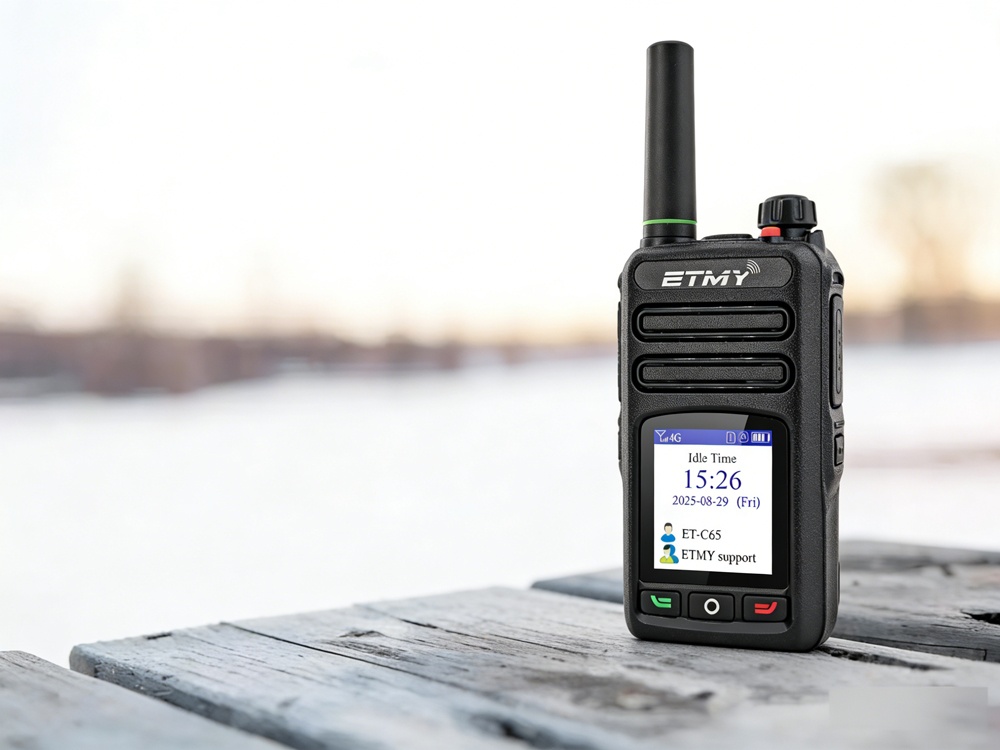
A recent industry report highlights PoC radio adoption for faster, long-distance team communication. Designed for cellular network connectivity, these radios improve coordination in public safety, logistics, and field operations, while offering beginner-friendly setup guidance to ensure reliable activation and compliance.
How exactly do you use a newly acquired PoC radio?