
Hytera CTO Sun Pengfei: Challenges and opportunities for 5G private network development, vertical industry is a major explosion
2022-01-18

2021 is the year when the tide of the digital economy emerges. As the infrastructure for the development of the digital economy, information and communication plays a role as a solid foundation.
In the past year, driven by the digital economy, the field of information and communication has been surging, 5G construction has continued to develop, network intelligence has reached a new level, and the development of optical fiber broadband has continued to accelerate. At the same time, 2021 is also the year when the private network establishes itself with the promotion of 5G.
Compared with the public network, most people are relatively unfamiliar with the private network. In fact, from the perspective of historical development, private network communication appeared earlier than public network communication, and was mainly used in some special scenarios, such as the walkie-talkie used by the police when performing official duties.
To put it simply, private network communication is usually a private network established to meet the needs of user organization management, safety production, dispatching and command, etc. The network is more reliable and secure. Its main application fields are public security, public utilities and industry and commerce. The service objects are large in scale, strong in strength, and have higher requirements for service products.
In recent years, with the rapid development of the domestic telecommunications industry, the market size of private network communications has grown rapidly. According to data released by the Prospective Industry Research Institute in April 2021, the scale of my country's private network communication market reached 16.2 billion yuan in 2016. Private network communication has already become an important force that cannot be ignored in the field of communication in my country.
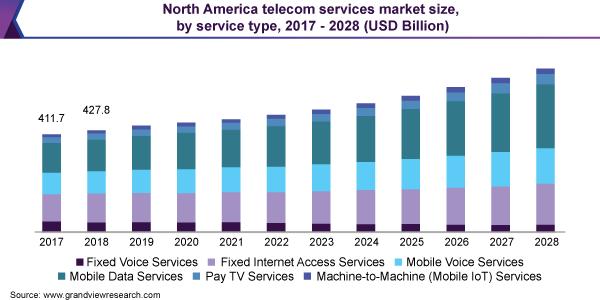
However, with the rapid development of 5G technology, "public network private use" can also be achieved through network slicing, edge computing and other technologies, and some people have begun to question whether private networks still exist.
In this regard, the interview column "Foresighters" of this issue of the Foresight Economist invited Mr. Sun Pengfei, Chief Technology Officer (CTO) of Hytera, to discuss the development direction and future trends of private networks in the context of 5G.
Established in 1993, Hytera is the world's leading provider of dedicated communications and solutions, with the second largest share in the global walkie-talkie terminal market. Over the past 20 years, Hytera started with a walkie-talkie and has grown into one of the few high-tech companies in the world that fully masters TETRA, DMR, PDT, LTE, 5G and other leading technologies and has mature applications.
1. Will the private network be replaced by the 5G public network?
In response to the above-mentioned questions, Sun Pengfei said that, first of all, let go of the comparison of the differentiation of private networks and public networks, and return to the essence of communication - that is, to transmit information to the destination in a timely, accurate and safe manner. "Timely" includes two levels of meaning: one is that it can be transmitted if you want (the network is controllable), the other is that it can be delivered within a specified time range (the delay is controllable); "accurate" means that during the transmission process It cannot be lost or made mistakes (authorized spectrum interference is controllable); "safety" means that information cannot be stolen or tampered with during the delivery process.
Different user groups have different requirements for the above three elements, and factors such as the cost and price paid to different degrees, differentiate into two different networks: self-invested and self-built private networks and operators' public networks.
The early private network (Private Network) is the network that users invest in construction and operation and maintenance. It is mainly a narrowband large-scale regional control system. It has the characteristics of independent and controllable network, safe and reliable information transmission, and controllable transmission delay. The demand for data transmission, due to the low network investment and operation and maintenance costs, and high cost performance, users can afford.
With the advent of the 4G era, the high-speed and large-bandwidth services of the public network have stimulated the potential demand of private network users for broadband services. However, the self-built private network with large bandwidth has encountered problems such as shortage of authorized spectrum resources and unaffordable network construction and operation and maintenance costs.
In addition, the public network focuses on the development of mobile Internet in the 4G era. The main target customers are the public, not industry users. The timely, accurate and security performance of information transmission cannot meet the requirements of public security user groups, so currently only timely Inquiries, one-way uploads and other services that do not require high sexuality have enabled the public network transmission pipeline, and superimposed the mobile police service with security measures.
With the advent of the 5G era, the public network provides higher speed, smaller delay and larger capacity, and the target group of services has expanded to industry users and things and things communication.
In order to meet the needs of industry users for private networks, 5G also supports slicing technology, which can provide some private network attributes. It is precisely because of this that some people once again put forward the view that the public network replaces the private network, thinking that the public network can meet all the requirements of the private network, and the private network does not need to exist.
Actually not! First of all, the public network is difficult to satisfy the three characteristics of the private network:
One is the autonomy and controllability of the network;
Second, communication security is more guaranteed;
The third is controllable delay.
These three characteristics are the basic requirements of private networks, and are particularly important for industry users who use private networks, especially public safety users.
Secondly, there is an irresolvable contradiction in the dedicated 5G public network. Even if an operator provides a theoretically feasible L4-level slicing service with exclusive carrier frequency, from an economic point of view, it is impossible for an operator to build a physically isolated independent core network and base station for each industry user. After all, the number of industry groups is huge. , N times the network investment makes it a problem for operators to make profits. Industry users can't afford to invest and operate and maintain, and operators can't make profits. This is nothing more than switching the investment entity from industry users to operators. The essence has not changed.
There is an assumption that the physical physical network of the operator is shared, and the logical division method is used to provide the lower-level fully shared or partially exclusive slices (L2\L3), but this violates the security bottom line principle of important departments such as public security. , is an irresolvable contradiction. Operators' 5G slicing, user-built base stations, and O-RAN of some core networks combined with UPF sinking technology can meet the broadband communication needs of users in some industries. In short, the private network does not exclude 5G technology, what is needed is to make good use of 5G technology.
Finally, narrowband private networks and public networks are complementary and will coexist for a long time. In the development of private networks, it is an inevitable trend to provide larger bandwidths, but broadband and narrowband are not substitutes, but coexist and complement each other.
The narrowband large-area private network has low network construction and operation and maintenance costs, and is suitable for users to build a national-scale large-scale network; while the broadband community-based private network is suitable for local small-scale or hot spots. Although broadband networks can carry narrowband services within the coverage area, the cost performance is lower than that of narrowband systems, and the combination of broadband and narrowband is more cost-effective. Therefore, Sun Pengfei believes that it is currently impossible for the public network to completely replace the private network. It is possible to replace the private network of some industry users who do not have high security requirements.
2. The key to whether 5G private network can become a business opportunity lies in spectrum resources
It is currently unlikely that the 5G public network will completely replace the private network, and with the vigorous development of the digital economy and the vigorous promotion of digital transformation, the private network industry has ushered in a new "window".
Industry insiders also generally believe that the industry private network has taken off in an all-round way, and the 5G public network will no longer be a one-man show in the future. In the era of intelligent manufacturing and digital transformation, the 5G private network will become a major explosion point for 5G applications.
According to data from Grandview Research, the global 5G private network market size in 2020 will be 920 million US dollars, and the compound growth rate from 2020 to 2027 will reach 37.8%. The 5G private network market scale will grow rapidly with the demand of vertical industry customers. If my country accounts for 20% of the world, the size of my country's 5G private network market will be close to US$2 billion by 2027, or even higher.
With the support of policies and the rapid development of the industry, Chinese equipment manufacturers Huawei, ZTE, Ericsson, Inspur, Hytera, etc., Internet giants Alibaba, Tencent, etc. have entered the construction of 5G private networks.
For a long time, the public network has received a large amount of capital investment due to the convergence of user needs, and the iteration is faster; while the private network with a longer history is difficult to develop on a large scale due to factors such as scattered demand and strong customization, and it is less obtained. Capital favors.
Today, as major equipment manufacturers and Internet giants have taken the lead in laying out the 5G private network track, the above situation has ushered in a change. In this regard, Sun Pengfei believes that the development of 5G can be seen from the development of 4G.
After nearly ten years of development, the mobile Internet led by 4G has produced huge economic benefits and brought earth-shaking changes to our lives. However, 4G was also questioned in the early stages of development. At that time, many people thought that 3G was fast enough and sufficient. Is 4G still necessary? However, as smart phones and various applications based on smart phones have driven the leap-forward development of the entire mobile Internet industry, this doubt has disappeared.
Similarly, in the early stage of 5G development, everyone still has such doubts, but no one wants to be left behind. In the future development process, no one dares to predict whether another miracle will happen.
Sun Pengfei said that with the popularization of 5G, the demand for video transmission and data transmission of users in the private network communication industry based on daily scheduling and emergency scheduling will usher in explosive growth. For example, fields such as smart manufacturing, smart energy, and smart cities will all be important application scenarios for 5G private networks.
"Based on Hytera's years of private network experience, the key to whether a 5G private network can become a business opportunity lies in spectrum resources," said Sun Pengfei. With the private network spectrum, industry users can independently build networks and realize a truly safe and controllable private network, otherwise they will be restrained to a certain extent.
The three major operators have now joined the O-RAN Alliance. If industry users are willing to invest in the construction of base stations, the problems of high base station equipment and operating electricity costs that operators currently encounter will be solved, which shows that everyone has a common interest point. However, operators certainly do not want to lose the industry user as the gold owner, so they keep a trump card in their hands, which is spectrum resources.
At present, the self-built industry 5G private network still needs to use the operator's spectrum and access the operator's core network. At most, the user configures UPF and MEC. Once the industry user cannot pay the high service fee or lose the operator's support, or the link or core network fails, part of the private network invested and built by itself becomes waste. If some base stations of the public network stop operating, it will be difficult for the public to notice. After all, there are base stations all over the surrounding area, even if it is out of operation for a few minutes, it will not be a problem. But once the private network is out of service, even a few seconds may face immeasurable losses.
To solve this problem, users must be allowed to build their own core network. Even a simple backup core network can allow users to experience a little sense of security.
3. Hytera’s 5G private network empowers the digital transformation of vertical industries
With the deepening of the understanding of 5G in all walks of life and the increasing demand for digitalization, the concept of dedicated communication has begun to break the circle, and a wide range of cross-border integration has been carried out, and a wider range of application scenarios have emerged as the times require.
With nearly 30 years of accumulation in the field of private network communications and in-depth understanding of the business scenarios and functional requirements of customers in vertical industries, Hytera began to focus on how to empower the industry with 5G innovative applications and innovative formats as early as three years ago. . Sun Pengfei said that a major value of 5G private networks lies in enabling the digital transformation of vertical industries.
However, due to the different vertical industry segmentation scenarios, there are many industry customization and differentiated needs. Hytera should give full play to its technical advantages and resource advantages in communications and set a good example for the model point.
At present, Hytera's 5G independent private network has received good practical results in typical applications in three key industries: smart factories, smart mines, and smart ports.
For example, in Hytera's own Longgang Smart Factory, the visual inspection link in the SMT production line used to be manual inspection. The single board took 2-3 minutes, and 10 lines required at least 10 inspectors, which was very labor-intensive. , the false detection rate is difficult to control within 5%. Now using 5G combined with edge computing for intelligent visual inspection, the average inspection time of a single board is shortened to less than 5 seconds, the false detection rate is reduced to less than 1‰, and only 2 operation and maintenance personnel are required, which greatly reduces labor intensity and labor consumption. , greatly improving the production efficiency and product quality.
In addition, in the case of a large vehicle factory in Nanjing, the factory has two workshops of tens of thousands of square meters. It is difficult to ensure seamless coverage of the entire workshop by using wifi technology, but the use of 5G wireless private network can greatly improve the efficiency of production scheduling. More importantly, taking advantage of the large bandwidth and low latency of 5G, more than 300 unmanned intelligent dispatch material transport vehicles arrive at the exact location on time to complete the material delivery.
According to incomplete statistics, the transportation efficiency is increased by 50% compared to manual labor, and the cost is reduced by 30%. These are all reference model points that are at the forefront of the industry.
At the same time, under the good social effect formed by these model sites, Hytera is also actively building a "5G+ Industrial Internet Ecosystem", using the rich industry experience and project experience accumulated over the past 30 years, as well as the industry's leading "management" and "" We will actively empower upstream and downstream partners to work together to expand the industry and achieve win-win cooperation.
"This is also the basic idea of our Hytera's 5G+ industrial Internet business." Sun Pengfei said sincerely.

4. What is the trend of the private network market in 2022?
In a blink of an eye, 2021 is over; in full anticipation, we usher in a brand new year.
Looking forward to the new year, Sun Pengfei revealed to us some plans for Hytera.
First of all, since its establishment in 1993, Hytera has been focusing on the private network field. Although the initial narrowband communication has been extended to broadband and even 5G, Hytera's original intention will not change, and it will continue to develop and specialize in the private network market.
Secondly, Hytera hopes to gain more development opportunities from 5G; in emerging markets, it strives to bridge the technological gap to provide more services to industry customers.
Finally, Hytera will make some new attempts, such as the layout of the Internet of Things, etc., so as to tap more industry opportunities.
When predicting the trend of the private network market in 2022, Sun Pengfei said that with the strong support of policies, the 5G private network will usher in a stage of rapid development. Although there are still some problems and difficulties mentioned above, more companies will join the industry in the new year to jointly promote the solution of the problem. Especially after a certain period of exploration, how to cooperate with industry customers, private network manufacturers and operators will also work out a better solution.
"On the whole, I am still very optimistic about the 5G private network, and there are very good opportunities!"
source:hytera.com
German Bavarian Network of Integrated Control Centers to Implement Important Functional Enhancements
Motorola Solutions Introduces Curve Wi-Fi Enhanced Business Radio with Voice Assistance
Related Article

A practical guide to testing two-way radio coverage in the environment where people will actually depend on it.
Why a Radio Coverage Test Can Pass— and the System Still Fails in Real Operation

Most radio operators never take grounding seriously—until their gear is fried. This piece exposes three fatal grounding traps, from shallow rods to mixed signal-and-power grounds, then hands you a six-step, code-compliant checklist drawn from NEC Article 810 and IEEE Std 142. Copy this homework instead.
A grounding error can instantly fry your radio—Installation guide for radio system lightning protection

Professional walkie talkie earpiece guide covering how to put on, wear, and use earpieces correctly. Features brand-specific tips for Motorola, Hytera, Baofeng, and more with structural comparisons for optimal comfort and performance.
How to use walkie talkie earpiece?- The Complete Guide to Walkie Talkie Earpiece Setup
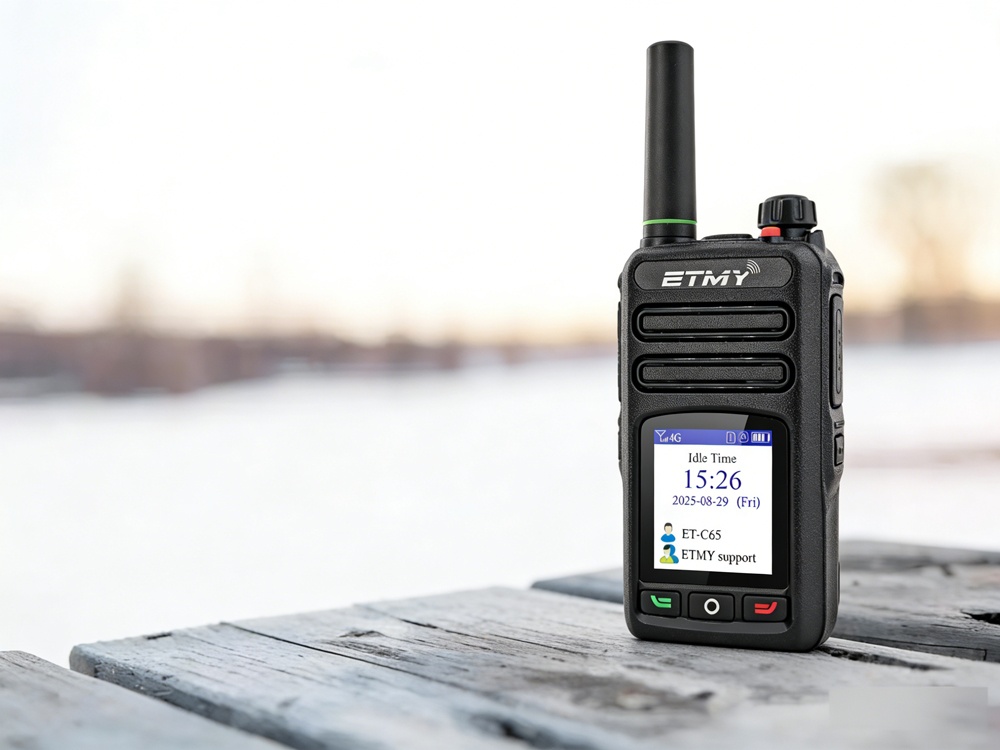
A recent industry report highlights PoC radio adoption for faster, long-distance team communication. Designed for cellular network connectivity, these radios improve coordination in public safety, logistics, and field operations, while offering beginner-friendly setup guidance to ensure reliable activation and compliance.
How exactly do you use a newly acquired PoC radio?