
Amateur Radio Club competes in global Field Days
2021-08-16
source:columbusmessenger.com
The Madison County Amateur Radio Club conducted Field Day exercises at the Deercreek Township Hall in Lafayette. The exercise involves setting up temporary radio stations and, over a 24-hour period, contacting other amateur stations across the country.
The Madison County group began its operation at 2 p.m. June 26 and, using three low-power transmitters, wire antennas and some emergency power, made a total of 581 contacts with amateurs in 47 states and seven countries. Notable contacts outside the United States included stations in Australia and Indonesia, as well as three Canadian provinces.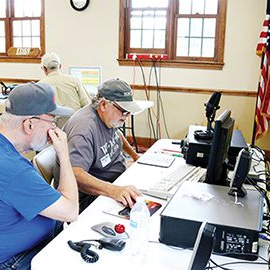
The contacts were made using a variety of communications modes, including voice, Morse Code, and digital modes. One contact with a Michigan station was made via amateur satellite as its orbit passed overhead. Club members used their own equipment and some owned by the club. Each contact was logged into a networked computer system, and each operator’s contacts were identified by the logging program. Scores have been reported but no competition results are available at this time.
Field Day is sponsored by ARRL, the national association for amateur radio, and has been an annual event since 1933. This year’s operations involved more than 40,000 ham radio operators from across North America.
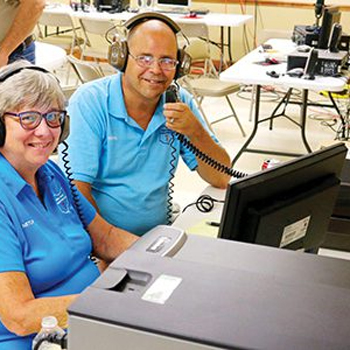
Madison County Amateur Radio Club member Robert Pusch (WD8NVN) participates in Field Day exercises.
The Madison County Amateur Radio Club conducted Field Day exercises at the Deercreek Township Hall in Lafayette. The exercise involves setting up temporary radio stations and, over a 24-hour period, contacting other amateur stations across the country.
The Madison County group began its operation at 2 p.m. June 26 and, using three low-power transmitters, wire antennas and some emergency power, made a total of 581 contacts with amateurs in 47 states and seven countries. Notable contacts outside the United States included stations in Australia and Indonesia, as well as three Canadian provinces.
The contacts were made using a variety of communications modes, including voice, Morse Code, and digital modes. One contact with a Michigan station was made via amateur satellite as its orbit passed overhead. Club members used their own equipment and some owned by the club. Each contact was logged into a networked computer system, and each operator’s contacts were identified by the logging program. Scores have been reported but no competition results are available at this time.
Field Day is sponsored by ARRL, the national association for amateur radio, and has been an annual event since 1933. This year’s operations involved more than 40,000 ham radio operators from across North America.
Madison County Amateur Radio Club member Robert Pusch (WD8NVN) participates in Field Day exercises.
New program will help police in Mississauga and across Ontario field crisis calls
GSPS What3Words Used to Locate Two Lost Mountain Bikers
Related Article
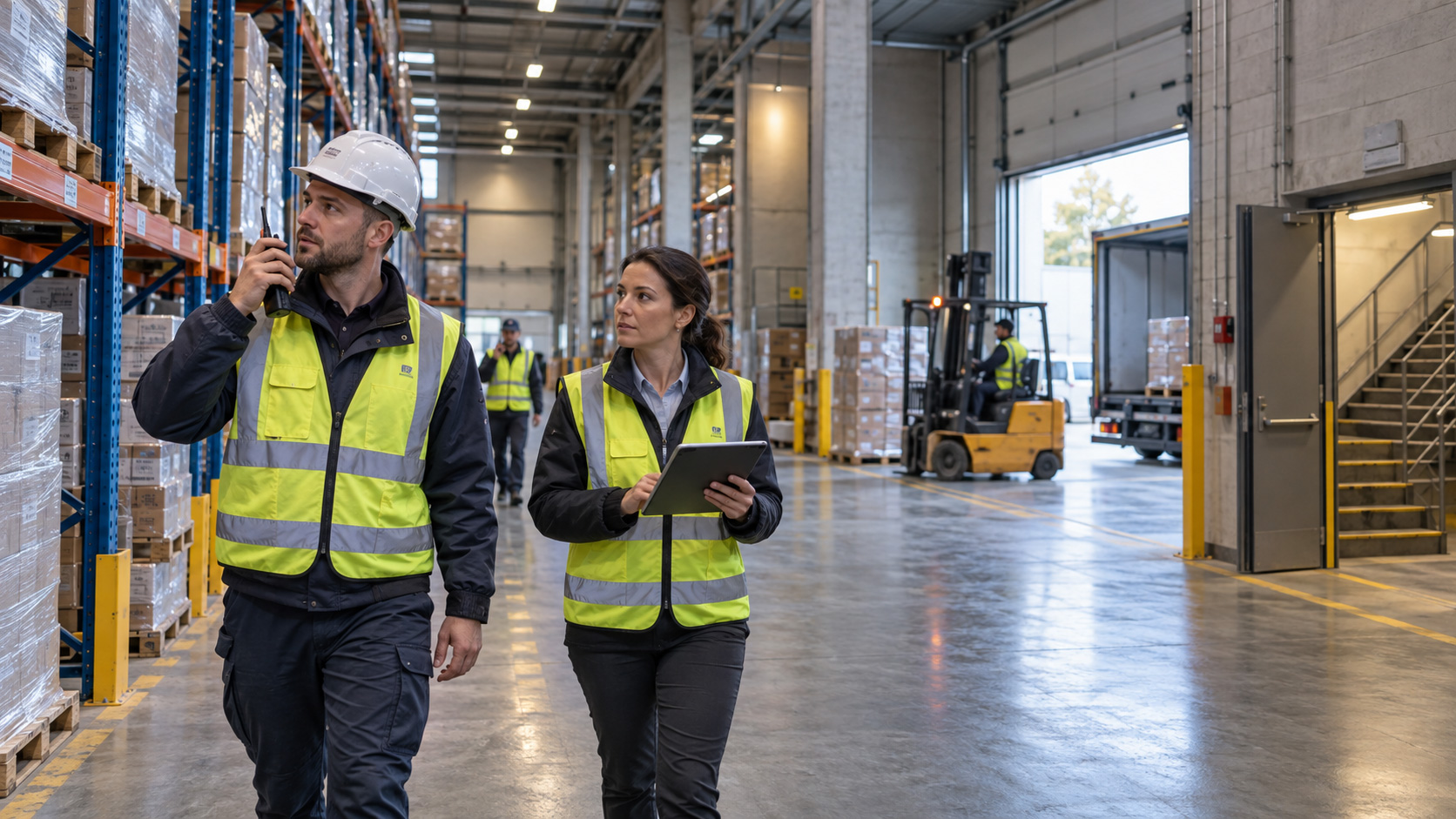
A practical guide to testing two-way radio coverage in the environment where people will actually depend on it.
Why a Radio Coverage Test Can Pass— and the System Still Fails in Real Operation

Most radio operators never take grounding seriously—until their gear is fried. This piece exposes three fatal grounding traps, from shallow rods to mixed signal-and-power grounds, then hands you a six-step, code-compliant checklist drawn from NEC Article 810 and IEEE Std 142. Copy this homework instead.
A grounding error can instantly fry your radio—Installation guide for radio system lightning protection

Professional walkie talkie earpiece guide covering how to put on, wear, and use earpieces correctly. Features brand-specific tips for Motorola, Hytera, Baofeng, and more with structural comparisons for optimal comfort and performance.
How to use walkie talkie earpiece?- The Complete Guide to Walkie Talkie Earpiece Setup
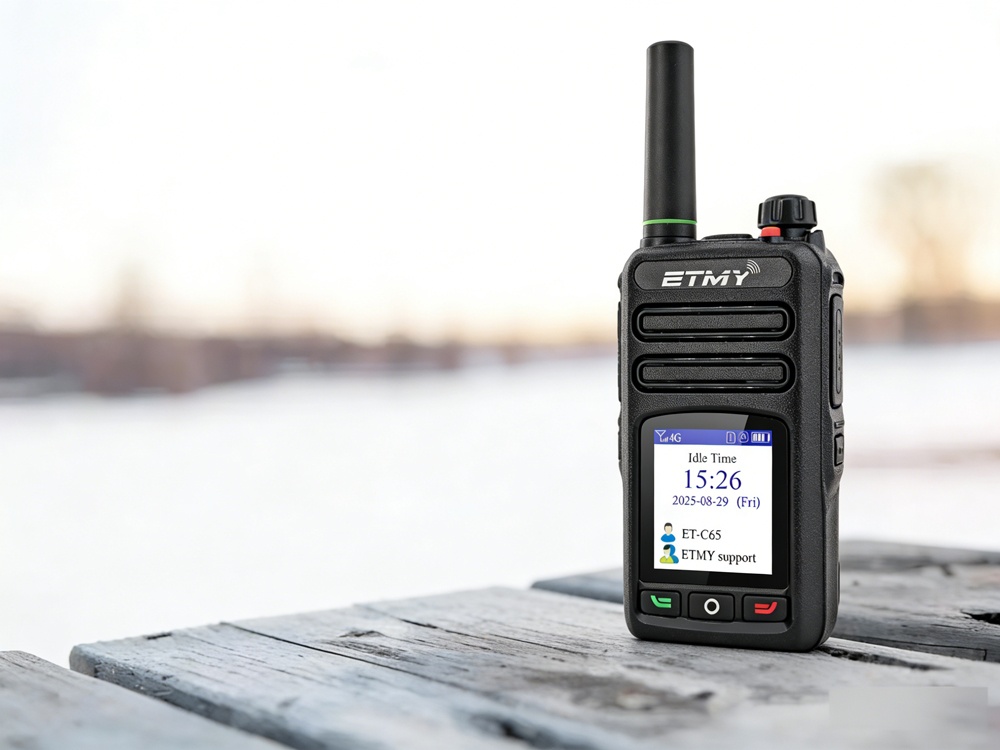
A recent industry report highlights PoC radio adoption for faster, long-distance team communication. Designed for cellular network connectivity, these radios improve coordination in public safety, logistics, and field operations, while offering beginner-friendly setup guidance to ensure reliable activation and compliance.
How exactly do you use a newly acquired PoC radio?