Amateur Radio Fundamentals
.jpg?imageMogr2/format/webp/thumbnail/!10p/format/webp)
If you watch an increasing number of YouTube channel collections, you will find videos describing people’s recent activities, comment on videos they’ve watched, and you will start to notice that people in the entire community are greeting each other. The same is true for social media.
The same is true for live events. Taking the competition as an example, you will hear the descriptions of other contestants and share their experiences and lessons, which may affect the way you conduct the next competition. The same applies to working DX, operating any digital mode, running a broadcast network, running SOTA activation, etc.
The point is that you will be influenced by others, and everything you do will affect someone elsewhere, and the latter will affect the next person who might affect you. The chain on the chain continues to grow.
This chain of knowledge can be traced back to our hobby early science, the work of James Clerk Maxwell, who first combined electricity, magnetism and light as different manifestations of the same phenomenon in 1864.
We know this because he published his work and can see the original without leaving home. With the help of the PDF on the Royal Society website, anyone can read it in the comfortable living room today.
The point is that Maxwell recorded his work and shared it with the world.
In our hobby, we have gone through the process of manufacturing our devices with unobtainium, requiring you to build actual components before you actually assemble them together and use them for the intended purpose. You can buy new components from the shelf and connect them to the etched circuit board. This evolved into the ability to design circuit boards, order them online, build them for cents, and ship them to our door. Then, we continued to look for parts from other equipment, obtained excess equipment, and went through a stage.
Today, more and more of our hobbies are developed around software, which has unique transient characteristics.
Unlike physical components, software is intangible. You imagine how something works, you describe it in an imaginary language, and convert it into something that can run on a computer. If you do it right, the result will provide the basis for your next experiment.
When the software reaches a certain level of complexity, it becomes impossible to remember. You adjust something here, and things change there, unless you can put all of this in your brain as a cohesive model of imagination, you will soon encounter a brick wall.
If you are a software developer, you may have heard of tools such as CVS, SVN, and git. They are examples of version control. They are widely used in software development, but increasingly they are used to track changes in documents, legislation, and constantly changing places.
By the way, if you load the legal requirements of various versions of the license into revision control, you will quickly find that your license is slowly evolving over time, for better or worse. Based on personal experience, I know that it is really interesting to do so for Australia’s radio communications licensing conditions.
Like using a soldering iron and soldering a wick, it is used for physical undoing of experiments.
Each of these tools enables you to adjust something, track it, and if it doesn’t work, return to where you started the experiment.
When I talk about open source software, I'm not only talking about the ability to look inside and add features, I'm also talking about accessing the history related to it.
Open source software is usually only effective when it has a revision history. A discovery path is outlined on the screen to show effective methods, reasons, and methods. There are usually options to show who made which changes, which changes occurred at the same time, and the ability to extract that specific change. All necessary ingredients needed for the experiment.
Closed source software can do all these things, but they are done in private. It is also likely to use revision control tools, even if they are the same as open source, but these discoveries are made internally, behind closed doors, and used by a few people. The software develops within the organization, but there is no insight into or from the outside world.
Of course, everyone has the right to keep their things secret, but if you want to contribute to society outside of the walled garden life, the only way out is to publish and share your work as scientists did well before the royal. The society held its first meeting on November 28, 1660.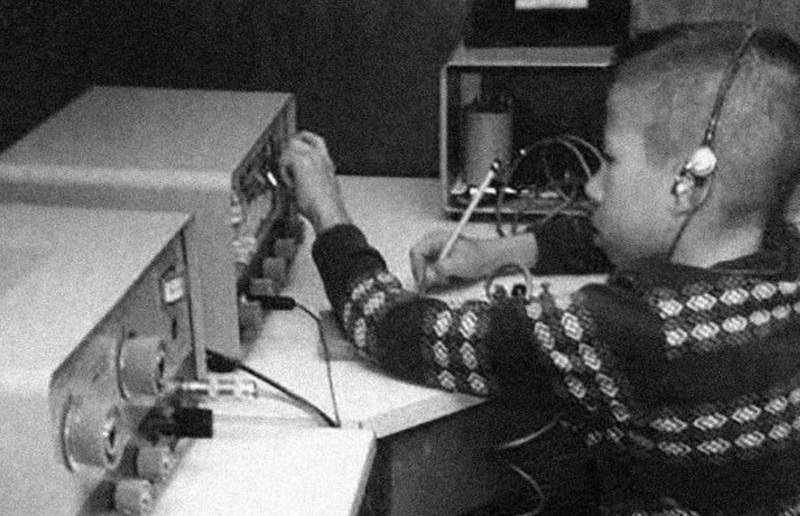
(Source: southgatearc.org)
ETMY-ET-D446-datasheet
ETMY-ET-D889-datasheet
Related Article