
Do walkie talkies work in cars? How to choose and use a suitable mobile radio?
2024-01-06
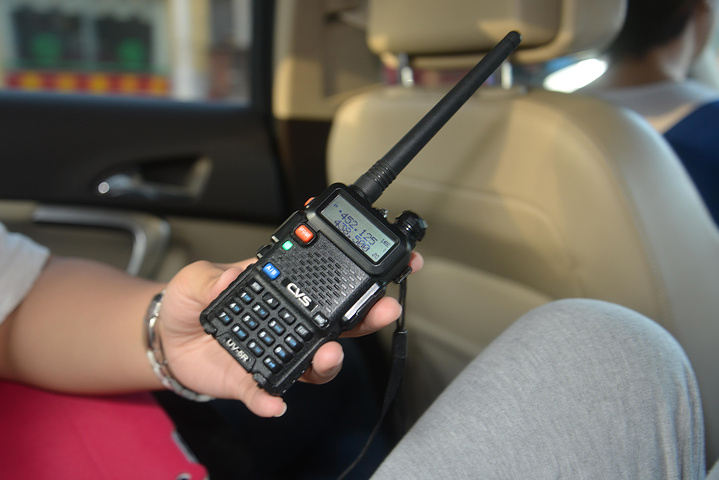
Handheld walkie talkies can be used in cars. But why do we need to install mobile radio when we have walkie talkies?
With the increasing number of car owners, the team of amateur radio enthusiasts is also growing. Many car enthusiasts who love self driving can install a radio station and connect with other HAMs using their own call signs after obtaining an operation certificate and setting up a personal radio station. But when it comes to using handheld walkie talkies for mobile radio, many people may also feel a bit conflicted. In fact, the advantages and disadvantages of mobile radio and handheld walkie talkies are still very obvious. By understanding these issues, I believe you will not suffer from choice difficulties again.
1. Power and communication distance
Handheld walkie talkies: The power is small, usually around 3-5 watts, and the corresponding communication distance is also relatively close. In urban areas, the communication distance is generally 1-3 kilometers, while in open plains, it can reach up to 5-8 kilometers.
Mobile radio: It has a high power output, generally between 25~100W, and has a long communication distance. It can be used in normal environments for over 10km, and even up to 30km in plain areas. It should be noted that higher power is not necessarily better for mobile radios, as higher power also results in greater radiation.

2. Installation
Handheld walkie talkie: No installation required, can be carried with you, remember to bring a backup battery.
Mobile radio: It needs to be fixed in the car, considering the selection and power wiring issues. Mobile radios with low power can be directly powered by a cigarette lighter, while those with a power of 50W or above need to be connected to a battery for use. It is best to install the antenna outside the car, as it has less radiation interference on the inside of the car and better signal reception.
It is best to choose a mobile radio with the host and panel separated for easy positioning and installation.
3. Travel
(1) Fleet travel
Handheld walkie talkie: suitable for short convoy travel, it is convenient to listen to road conditions and chat with teammates;
Mobile radio: suitable for leading car exploration and trailing car formation, and can also be used as a relay in the middle.
(2) Traveling alone
Handheld walkie talkies: have a small range for distress calls, but can be carried with you;
Mobile radio: It has a large range of calls for help but cannot be moved.
4. Price
The price of handheld walkie talkies generally ranges from tens to hundreds of yuan, and expensive ones can also range from thousands.
Car radios are generally more expensive than handheld walkie talkies, and devices with dual frequency and dual display, as well as high power, are more practical.
Overall, the communication distance of car mounted radios is longer, while handheld walkie talkies are more convenient to carry. When traveling outdoors in a convoy, it is best to use a combination of a vehicle platform and a handheld device to cope with complex outdoor environments.
How to choose and use a suitable mobile radio?
Mobile radio first needs to be installed and used in the car, usually powered directly from the car battery. So when using it, try to keep the engine on as much as possible. The power of mobile radio can generally be maintained at around 25-50W, and with high-frequency antennas, the communication distance can be around 30 kilometers.
Attention: Frequency band is the most important concern!
First, you need to understand the frequency bands that need to be connected to prevent buying the wrong ones and not being able to connect. Secondly, the frequency bands of walkie talkies sold on the market are usually between 136-174M at 100M and 400-470M at 400M.
Based on experience summary for everyone's reference:
1. Differentiate by population
Personnel fixation: can be done without a screen
Personnel are not fixed: it is best to have a screen for easy frequency modulation
2. Dual frequency/single frequency difference
A typical self driving tour is organizing a group of people to go out and play, with low requirements in reality. A single frequency can meet the requirements, but from the perspective of scalability, there is high personnel mobility, and dual frequency is the best. For example, if someone in the tour uses an old single frequency, or if some friends use an old car platform, it may be low frequency. In this case, if everyone is dual frequency, it can ensure the tolerance of low frequency friends.

3. The distinction between high and low quality
When choosing a car mounted walkie talkie, we should also choose one with guaranteed quality, especially in terms of after-sales service, so that we can have no worries when using it. When choosing it, we should pay attention to its frequency range, so that we can better find rescue when encountering problems. We also need to pay attention to the transmission power. If the transmission power is too small, It's very likely that we won't be able to send out our rescue, which is also very troublesome. It is best to choose a vehicle platform with separate panels and main unit for easy installation. The ETMY MT-690 is a cost-effective vehicle with a power of 100W and a communication distance of up to 25 kilometers. It can be displayed in four frequency bands and can be freely selected.
What walkie talkies are good for dealing with outdoor environments?
Why is walkie talkie not working? Common faults and maintenance methods of walkie talkies
Related Article

A practical guide to testing two-way radio coverage in the environment where people will actually depend on it.
Why a Radio Coverage Test Can Pass— and the System Still Fails in Real Operation

Most radio operators never take grounding seriously—until their gear is fried. This piece exposes three fatal grounding traps, from shallow rods to mixed signal-and-power grounds, then hands you a six-step, code-compliant checklist drawn from NEC Article 810 and IEEE Std 142. Copy this homework instead.
A grounding error can instantly fry your radio—Installation guide for radio system lightning protection

Professional walkie talkie earpiece guide covering how to put on, wear, and use earpieces correctly. Features brand-specific tips for Motorola, Hytera, Baofeng, and more with structural comparisons for optimal comfort and performance.
How to use walkie talkie earpiece?- The Complete Guide to Walkie Talkie Earpiece Setup
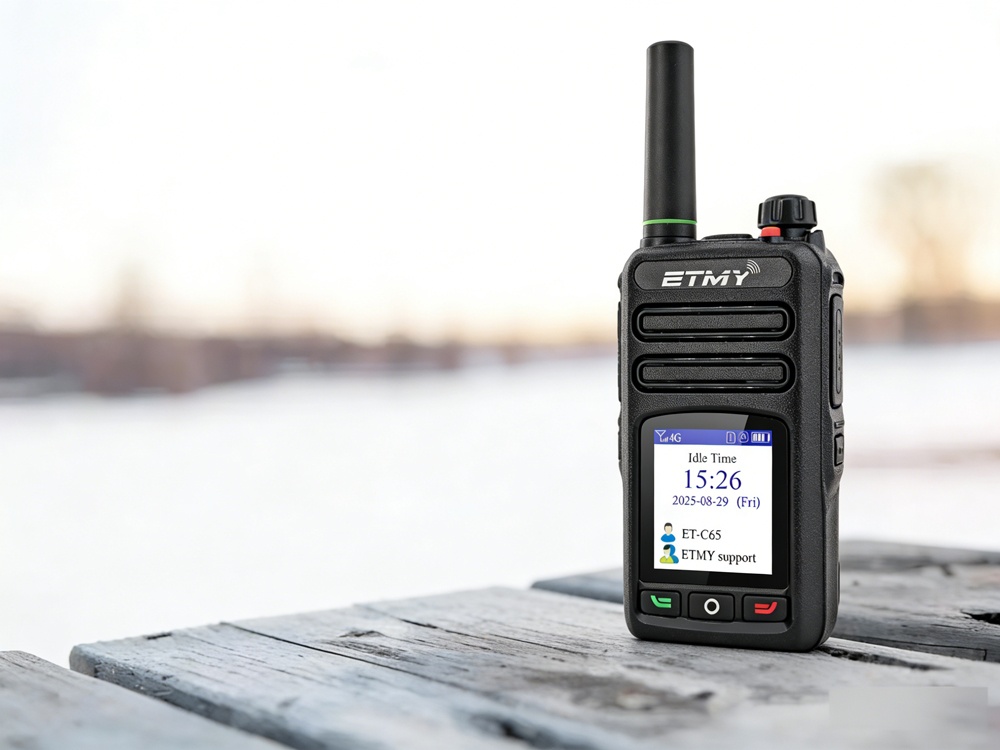
A recent industry report highlights PoC radio adoption for faster, long-distance team communication. Designed for cellular network connectivity, these radios improve coordination in public safety, logistics, and field operations, while offering beginner-friendly setup guidance to ensure reliable activation and compliance.
How exactly do you use a newly acquired PoC radio?