
Can I use a walkie-talkie during a thunderstorm?
2024-05-07
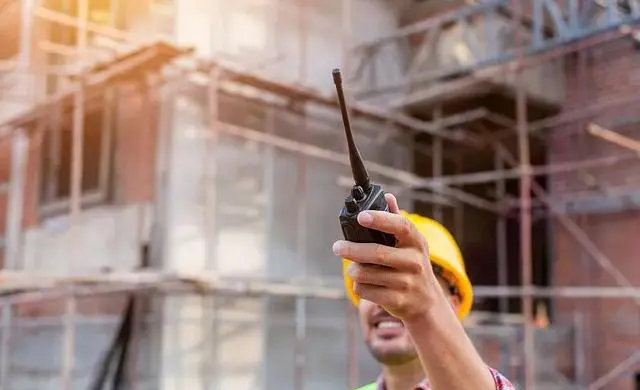
I often see reports that people can be electrocuted to death by using mobile phones during thunderstorms, and I often hear people say that people should not use mobile phones during thunderstorms. After seeing these false remarks, more and more people believe them to be true. Even many professional communication engineers just say it through hearsay without thinking. I really can’t sit still and want to say a few words. It'll be fine if you use your mobile phone during thunder. Don't worry, just use it.
1. The occurrence of lightning hazards
Lightning hazards are divided into direct lightning and induced lightning. A direct lightning strike is easy to understand. It means that lightning strikes you directly. As long as you are in a house with regular design and construction and lightning protection measures, you will not be directly struck by lightning.
There are two main types of induction mines: electrostatic induction and electromagnetic induction. Clouds are positively or negatively charged, and metal objects on the ground will induce the opposite charge, which is called electrostatic induction. Because the lightning current is huge and changes instantaneously, a huge instantaneous electromagnetic field is generated in the surrounding space. The electromagnetic field of nearby metal objects changes instantaneously. A huge electromagnetic field will produce a very high electromotive force, which is called electromagnetic induction.
If induction mines are difficult to understand, let me put it simply. Even if the lightning does not directly hit a metal object, the metal object will be charged due to induction, causing damage. The size of the damage depends on the size and location of the metal object. It has something to do with the environment.
There are two main types of induction mines: electrostatic induction and electromagnetic induction. Clouds are positively or negatively charged, and metal objects on the ground will induce the opposite charge, which is called electrostatic induction. Because the lightning current is huge and changes instantaneously, a huge instantaneous electromagnetic field is generated in the surrounding space. The electromagnetic field of nearby metal objects changes instantaneously. A huge electromagnetic field will produce a very high electromotive force, which is called electromagnetic induction.
If induction mines are difficult to understand, let me put it simply. Even if the lightning does not directly hit a metal object, the metal object will be charged due to induction, causing damage. The size of the damage depends on the size and location of the metal object. It has something to do with the environment.
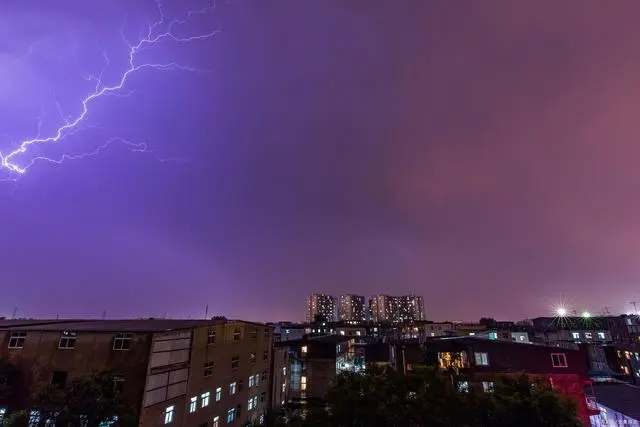
It doesn’t have to be a mobile phone. As long as it is a metal object, even a metal button on your clothes, it will be affected by induction lightning. It’s just that the buttons and mobile phones are too small, and the energy induced is also very small, so they cannot hurt people.
2. Common sense about the principles of walkie-talkies
Mobile phones, walkie-talkies, radios, these radio wave communication devices receive radio wave signals through antennas, then process and amplify the signals, and turn the electrical signals into sounds through earphones. Or use a microphone to turn the sound into an electrical signal, amplify and process it, turn it into a radio wave signal and send it into the air, which is received and processed by the base station and forwarded to the person you are talking to.
In fact, the radios emitted by base stations and mobile phones permeate the entire space. In addition to your mobile phone signals, there are also many radios in the air, such as TV, radio, signals from other people’s mobile phone calls, and even induction mines. Interference signal. Your call signal is not only available near your mobile phone, nor is it only when you turn on the phone or make a call that the signal "flies" from other people's mobile phones to your mobile phone. Instead, your phone will receive all
signal and can "pick" your call out from other radio signals. It’s just that when the mobile phone transmits, the nearby signal is stronger.
The walkie-talkie antenna is a metal object, so it can receive (actually I prefer to use the word induction here rather than receive) the radio. As long as there is a metal object, even a metal button on your clothes, it can receive radio signals in the air. The induction principle is the same as that caused by lightning, but the button cannot process the signal and cannot separate your calls from other radio signals." Pick out. As long as you don't want to talk, there is no difference in the effect if you use a metal button mobile phone (whether you turn it on or off) to receive radio and receive induced lightning. They are too small in size and shielded by the house. The lightning-induced energy they receive is too small, not much larger than a radio signal, and it is impossible to hurt you.
I also said that the walkie-talkie will amplify the signal, but will it "amplify" the lightning induction and hurt people? Don’t worry about this. This “amplification” actually means that the signal energy received by the mobile phone antenna is too small. If the mobile phone battery has more energy, use the energy provided by the mobile phone battery to repeat the signal again so that you can use it. You can hear it through earphones, but the cell phone battery is not dead anyway. For example, you say something to a person with a lower voice, and then he tells the sentence to a person with a louder voice, and then the person with the louder voice shouts the sentence, so others can hear it better. Know that no matter how loud your voice is, it will not deafen your ears.
Mobile phones, walkie-talkies, radios, these radio wave communication devices receive radio wave signals through antennas, then process and amplify the signals, and turn the electrical signals into sounds through earphones. Or use a microphone to turn the sound into an electrical signal, amplify and process it, turn it into a radio wave signal and send it into the air, which is received and processed by the base station and forwarded to the person you are talking to.
In fact, the radios emitted by base stations and mobile phones permeate the entire space. In addition to your mobile phone signals, there are also many radios in the air, such as TV, radio, signals from other people’s mobile phone calls, and even induction mines. Interference signal. Your call signal is not only available near your mobile phone, nor is it only when you turn on the phone or make a call that the signal "flies" from other people's mobile phones to your mobile phone. Instead, your phone will receive all
signal and can "pick" your call out from other radio signals. It’s just that when the mobile phone transmits, the nearby signal is stronger.
The walkie-talkie antenna is a metal object, so it can receive (actually I prefer to use the word induction here rather than receive) the radio. As long as there is a metal object, even a metal button on your clothes, it can receive radio signals in the air. The induction principle is the same as that caused by lightning, but the button cannot process the signal and cannot separate your calls from other radio signals." Pick out. As long as you don't want to talk, there is no difference in the effect if you use a metal button mobile phone (whether you turn it on or off) to receive radio and receive induced lightning. They are too small in size and shielded by the house. The lightning-induced energy they receive is too small, not much larger than a radio signal, and it is impossible to hurt you.
I also said that the walkie-talkie will amplify the signal, but will it "amplify" the lightning induction and hurt people? Don’t worry about this. This “amplification” actually means that the signal energy received by the mobile phone antenna is too small. If the mobile phone battery has more energy, use the energy provided by the mobile phone battery to repeat the signal again so that you can use it. You can hear it through earphones, but the cell phone battery is not dead anyway. For example, you say something to a person with a lower voice, and then he tells the sentence to a person with a louder voice, and then the person with the louder voice shouts the sentence, so others can hear it better. Know that no matter how loud your voice is, it will not deafen your ears.
3. Some errors
Some people say that "radio waves cause thunder and lightning." This is a misconception. Only conductive metal lines can cause induction lightning. Radio waves are not conductors and will not cause lightning. Radio waves are everywhere at any time. If they can attract thunder and lightning, we will die no matter where we hide.
When listening to your mobile phone during thunder, you will sometimes hear a "click" sound, which sounds quite scary. However, this is just the interference of thunder and lightning on call quality, and it does not mean that your mobile phone is about to explode.
Why are there reports of people dying using mobile phones during lightning storms? There are many reasons for this erroneous reporting. People who were killed by lightning due to other reasons.
When listening to your mobile phone during thunder, you will sometimes hear a "click" sound, which sounds quite scary. However, this is just the interference of thunder and lightning on call quality, and it does not mean that your mobile phone is about to explode.
Why are there reports of people dying using mobile phones during lightning storms? There are many reasons for this erroneous reporting. People who were killed by lightning due to other reasons.
On the classification of walkie talkie earphones
Why do mines use walkie-talkies instead of mobile phones for communication?
Related Article

A practical guide to testing two-way radio coverage in the environment where people will actually depend on it.
Why a Radio Coverage Test Can Pass— and the System Still Fails in Real Operation

Most radio operators never take grounding seriously—until their gear is fried. This piece exposes three fatal grounding traps, from shallow rods to mixed signal-and-power grounds, then hands you a six-step, code-compliant checklist drawn from NEC Article 810 and IEEE Std 142. Copy this homework instead.
A grounding error can instantly fry your radio—Installation guide for radio system lightning protection

Professional walkie talkie earpiece guide covering how to put on, wear, and use earpieces correctly. Features brand-specific tips for Motorola, Hytera, Baofeng, and more with structural comparisons for optimal comfort and performance.
How to use walkie talkie earpiece?- The Complete Guide to Walkie Talkie Earpiece Setup
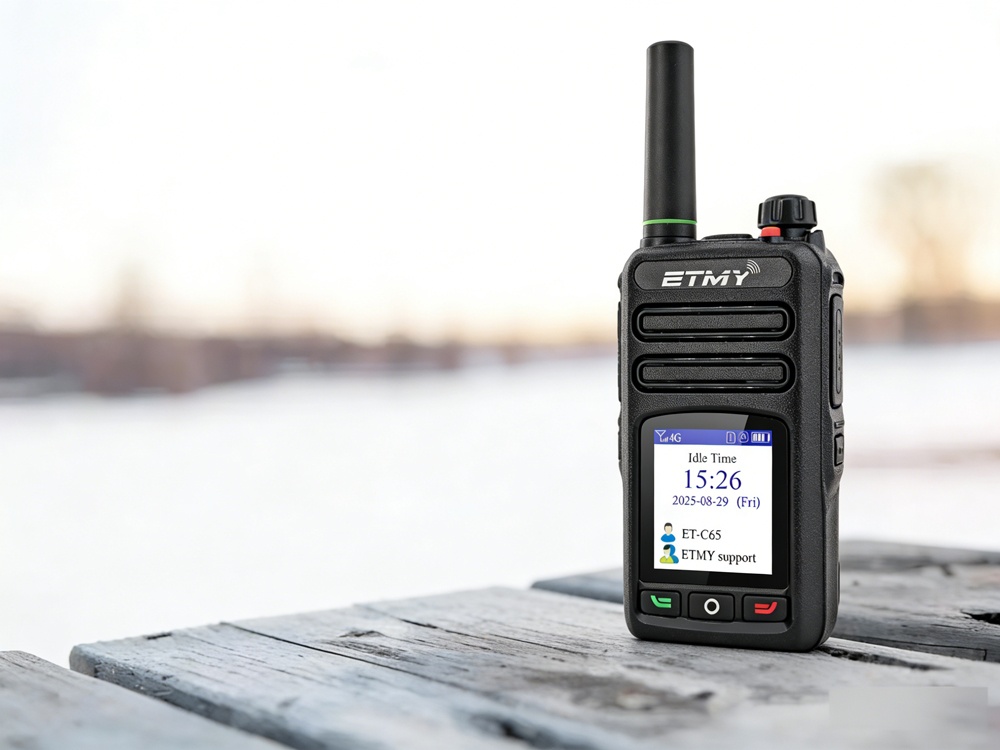
A recent industry report highlights PoC radio adoption for faster, long-distance team communication. Designed for cellular network connectivity, these radios improve coordination in public safety, logistics, and field operations, while offering beginner-friendly setup guidance to ensure reliable activation and compliance.
How exactly do you use a newly acquired PoC radio?