Buying a Two Way Radio Repeater: 4 Pitfalls to Check Before You Pay
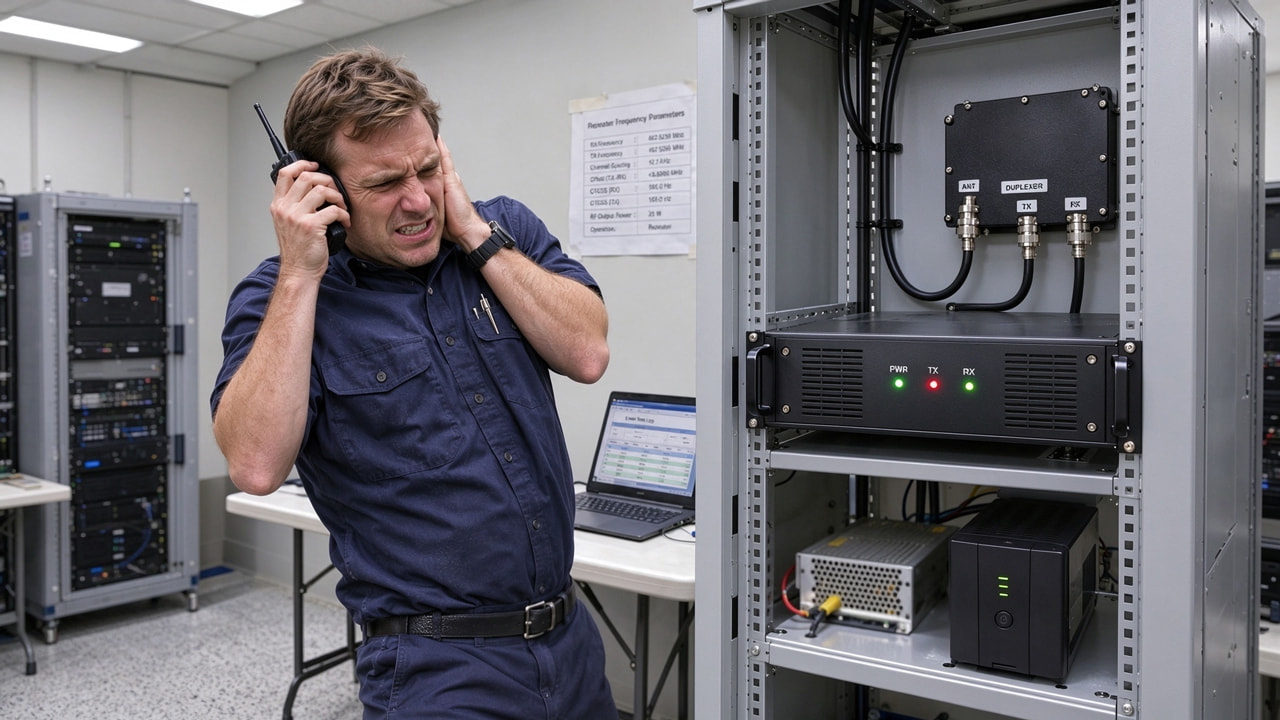
Mike bought a brand new 50W High power two way radio repeater for his fleet, and the sales rep said "plug in an antenna and it works." He carried it into the machine room, connected the antenna, ran a loop test, and heard himself drowning in his own noise floor, loud enough to hear from the driveway. Ten minutes in the room later, he understood that "plug in an antenna and it works" was only half true: a radio repeater does its job only when four links are all in place.
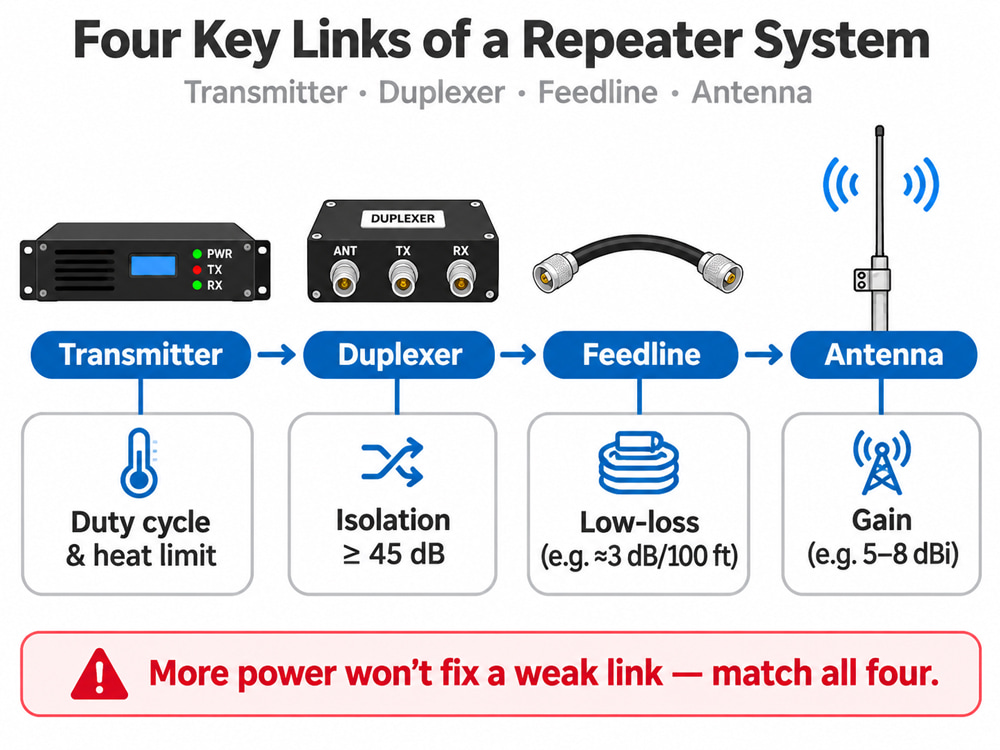
Transmitter, antenna, feedline, duplexer. Any one of them under spec and the unit cannot do its job. Below are the four pitfalls to check before you pay, in the order a repeater buying guide should run.
The duplexer lets one unit transmit and receive simultaneously by filtering the two directions. The number that matters is duplexer isolation, measured transmit port to receive port, in dB. Ask one question:
"Isolation, transmit to receive, in dB?"
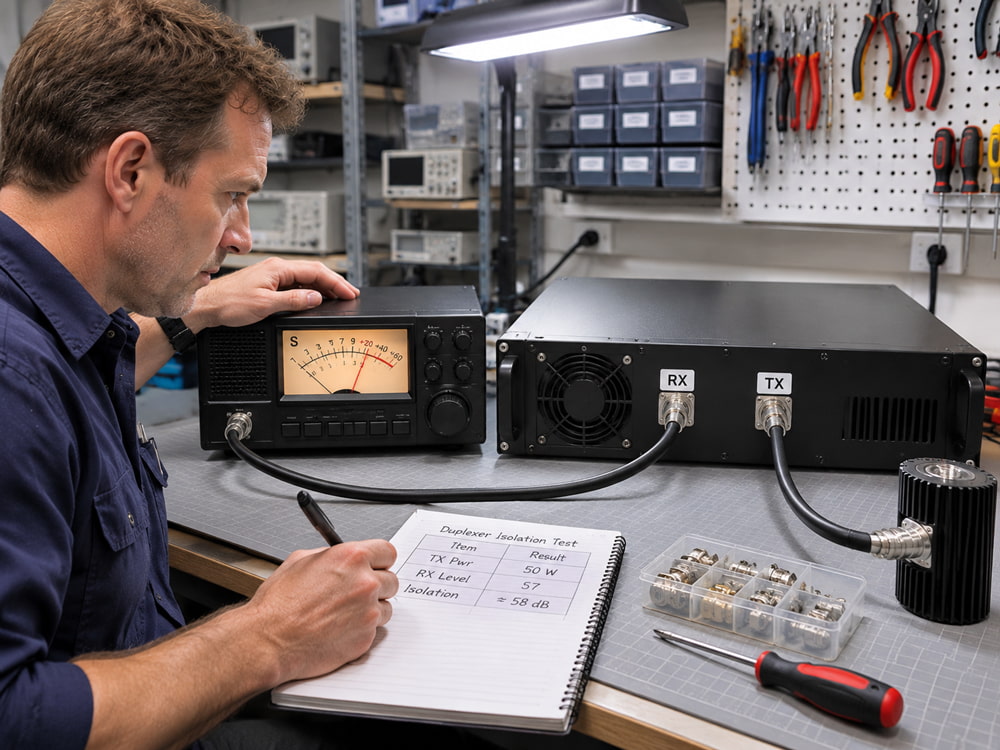
45 dB is the bare minimum for clean operation. 60 dB or more gives you desense-free receive under a strong out-of-band transmit. Six less dB and your weak-signal receiver sits one step down the noise floor, and the small stations disappear. Most repeaters that transmit and receive but cannot hear the small guys fail here, and the repeater desense test is the only way to find that before you power it up.
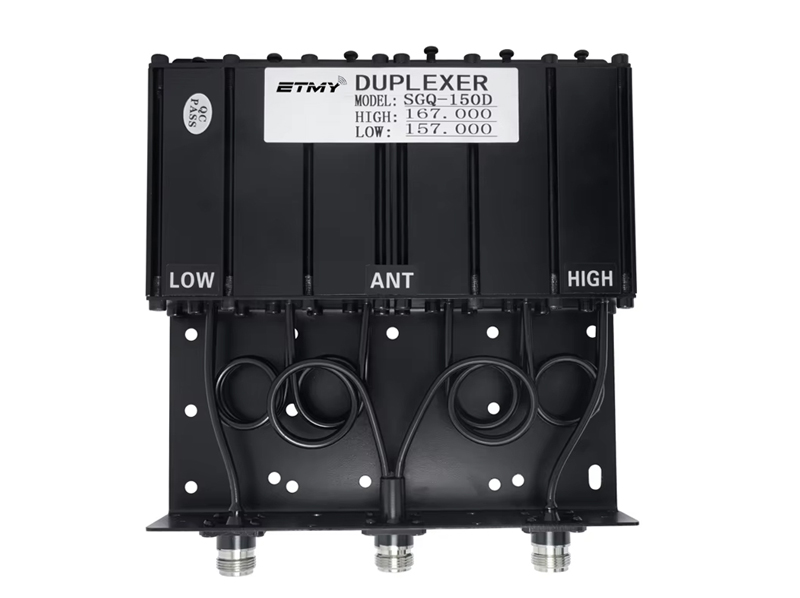
Test it yourself: full power into the TX port, a receiver with an S meter on the RX port, read the level. A spec sheet that states it plainly, and a vendor who lets you measure, is worth ordering from.
Nameplate watts describe a design condition. Sustained output at the antenna port is a different number. Ask for two:
Repeater duty cycle
Continuous or burst rating. Many units are rated on burst power, and the PA thermal budget assumes a low duty cycle. Open the voice gate for a long QSO or a group call and the derate curve starts
Derate trigger point
At what temperature, to what wattage, and does it latch. Mike's unit latched at the third derate stage and never came back to full power. The vendor called it normal protection. The thermal design simply did not leave the margin
Practical test: run it at full power for three minutes, palm on the chassis. Warm is acceptable. Hot is a thermal-design shortfall, and the fix is to run it lower or pick a different model.
The two items most often left out of a repeater order, and the two most expensive to fix afterward:
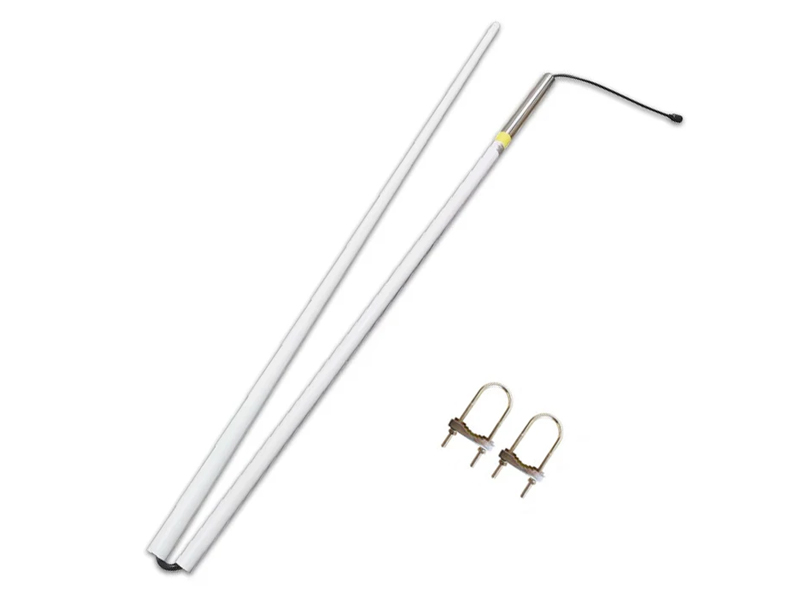
A fiberglass antenna is the standard pick for a rooftop repeater: a solid glass-fiber rod with a stainless flange mount, rated for wind and UV, good for a decade outdoors. A 5 dBi fiberglass whip and an 8 dBi directional element are a factor of two or more in coverage radius apart. Choose the antenna class to match your target coverage before the unit arrives, and do not settle for a rubber duck on the day it ships
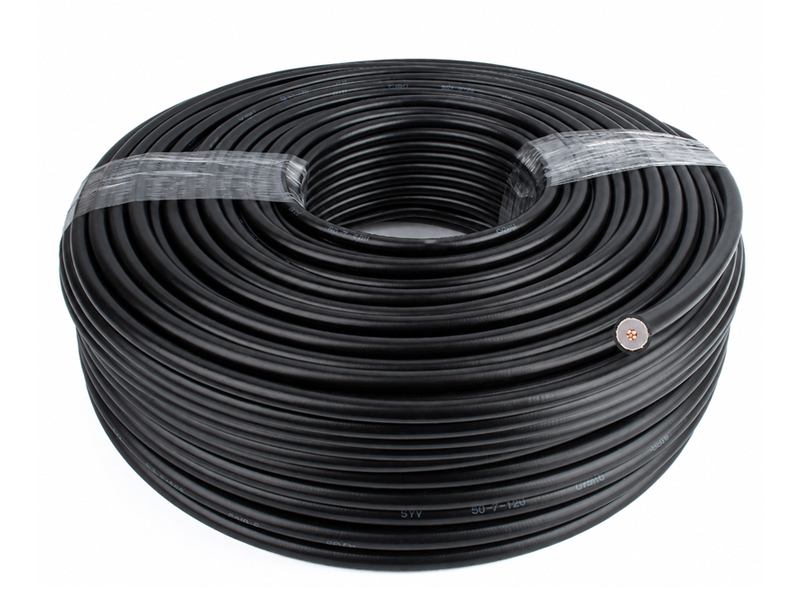
Feedline length and type
RG-58 pulled 20 metres to the roof at 400 MHz is over 2 dB gone before it reaches the sky. A low-loss fully shielded coax class stays near 1.5 dB per 100 ft at 150 MHz and about 3.0 dB per 100 ft at 400 MHz; RG-213 is 10.9 dB per 100 ft at the same frequency, a full order of magnitude apart
For a permanent install, a thin-diameter, high-temperature class feedline is the standard pick. The RG-316, PTFE dielectric, FEP jacket, rated to +200 C, routes cleanly through a building or a vehicle and holds its spec when the PA actually gets warm, which is precisely the condition a 50 W repeater PA creates. Put the antenna, feedline, and connectors on the same order as the unit, so you do not end up adding the lossy pieces separately after the fact.
Two repeaters, same band, same direction, same power, close enough to see each other, will kill each other. Before you order, confirm three things:
1. Your target frequency and offset
2. Who is using this band in your area and who coordinates it
3. The EIRP your target coverage implies, and where your jurisdiction's ceiling sits
The third one is the dealbreaker. The repeater EIRP calculation is arithmetic:
EIRP(dBm) = Tx power(dBm) + antenna gain(dBi) - feedline loss(dB)
50 W is about 47 dBm. Add an 8 dBi element, subtract 1 dB of feedline, and the unit radiates about 54 dBm, roughly 251 W of effective power. Most UHF repeater ceilings sit around 50 W EIRP, and this configuration is well past it. A bigger wattage setting will not fix this; the right-sized combination of power, gain, and loss will.
1. Duplexer isolation: 45 dB is the bare minimum, 60 dB and above is the desense-free tier
2. Duty cycle and margin: three minutes full power, palm on the chassis decides
3. Antenna and feedline: specify them with the unit, do not add them later
4. Coordination and EIRP: who is on this band, who coordinates it, before you talk watts
The four links around the box, transmitter, antenna, feedline, duplexer, set the ceiling for any radio repeater setup, and the weakest one decides what the unit can do.
25W Radio With a 50W Antenna: UHF Antenna Power Rating and the 3 Red Lines That Kill Mobile Radios
Related Article