
Why Your 5W Handheld Radio Can't Hit the Mountain Repeater?
author: z
2026-11-04
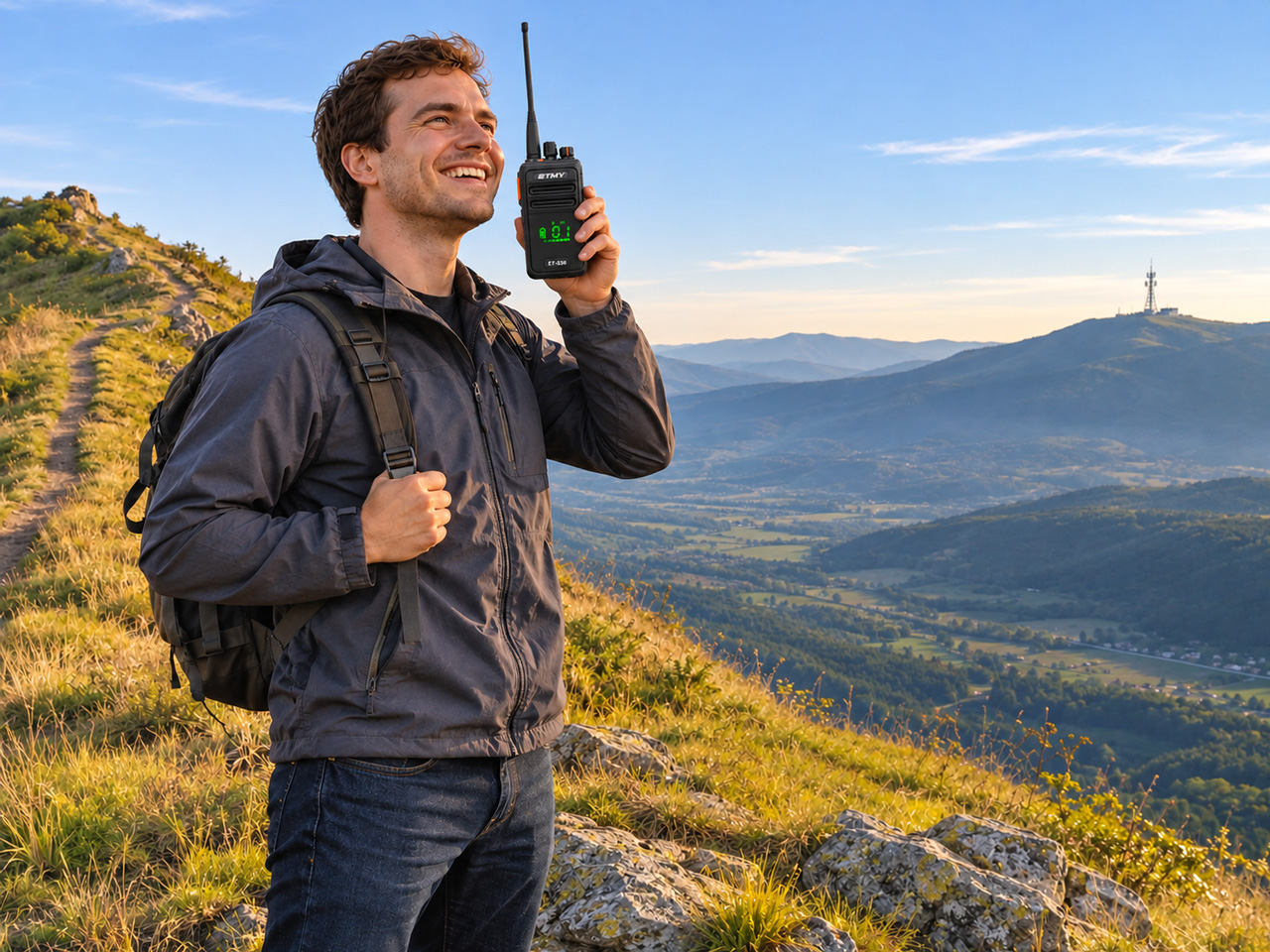
Last month, John obtained his amateur radio license and spent just over 5w handheld radio. He lives in the suburbs, right next to a mountain; there is a local repeater station at the summit, about 8 kilometers away in a straight line, with a completely unobstructed view. Yet, when he pressed the PTT (push-to-talk) button for the first time, the repeater didn't respond at all. He tried calling out—three times—but still got no reaction. Nearby, an experienced "ham" (amateur radio operator) using a 100-watt transceiver from a position on the mountain ridge was able to communicate as clearly as if he were in the same room.
"It’s just a 5w handheld—what’s the difference?" John asked.
The veteran ham didn't even look at him. "It’s not about the power; it’s about the 'ceiling'—you aren't standing at the right altitude, and the mountain isn't doing you any favors."
This is a common misconception among beginners: when a handheld radio fails to trigger a repeater in mountainous terrain, it is rarely because the power is insufficient; rather, it is because the physical path for the signal has been obstructed.
The Physics of Electromagnetic Waves
Electromagnetic waves travel in straight lines through free space, but the Earth is curved. For an antenna at a height of *h* (in meters), the approximate line-of-sight range is:
*d* ≈ 4.12 × √*h* (km)
The maximum communication distance between two antennas is the sum of their respective line-of-sight ranges:
*D* ≈ 4.12 × (√*h₁* + √*h₂*) km
Let’s look at a typical scenario:
- A 5-watt handheld radio with an antenna height of ~1.5 meters: 4.12 × √1.5 ≈ 5 km
- A repeater antenna at an elevation of 50 meters: 4.12 × √50 ≈ 29 km
- Theoretical maximum: approximately 34 km (in practice, this is usually reduced to 60–70% of that value due to terrain and atmospheric conditions).
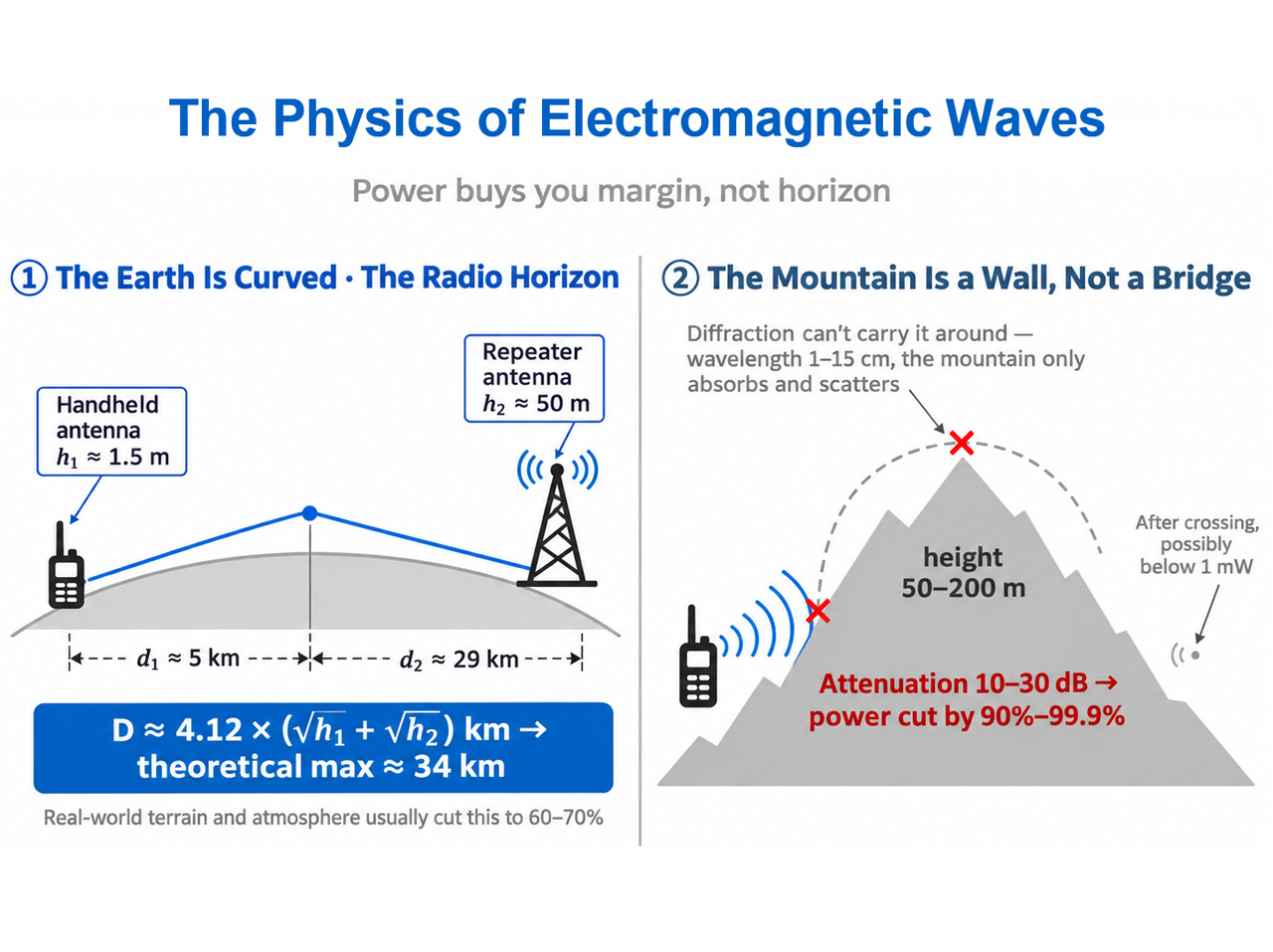
This means that for the 5w walkie talkie. in your hand—regardless of whether it’s rated at 5W, 10W, or even 50W—as long as the antenna height remains the same, the signal’s maximum reach will still be limited to just a few kilometers. Increasing power only provides a "little extra margin" for the final stretch; it does not extend the horizon itself.
In mountainous terrain, the situation is even worse.
Many people imagine that electromagnetic waves can "flow around" the base of a mountain, much like water flowing around a rock. In reality, this is not the case.
VHF/UHF signals (in the 2m/70cm bands) have wavelengths ranging from 1 to 15 centimeters—far too small compared to the scale of a mountain (which spans meters to hundreds of meters). Mountains primarily absorb or scatter these waves rather than allowing them to diffract around the obstacle.
VHF/UHF signals (in the 2m/70cm bands) have wavelengths ranging from 1 to 15 centimeters—far too small compared to the scale of a mountain (which spans meters to hundreds of meters). Mountains primarily absorb or scatter these waves rather than allowing them to diffract around the obstacle.
In practice, a medium-sized mountain (50–200 meters high) typically attenuates VHF/UHF signals by 10–30 dB—or even more in extreme cases. A 10 dB loss means 90% of the power is gone; a 30 dB loss means 99.9% is lost. If you transmit with a 5W handheld radio, the signal reaching a repeater on the other side of a mountain might drop to less than 1 milliwatt—well below the receiver's sensitivity threshold.
A mountain acts as a "wall," not a "bridge." To get past a mountain, you must go *over* it (by increasing your antenna height); you cannot go *around* it.
When you transmit from a valley toward a repeater located on a mountain peak, the signal must undergo multiple reflections and diffractions off the mountain terrain before reaching the receiving antenna. These multipath signals interfere with one another—some reinforcing the signal, others canceling it out. The result:
• Intermittent reception (known as "fast fading").
• Poor audio quality, even when the signal is received (due to multipath distortion).
• A "worst-case" scenario where both your transmitted signal and the incoming signal from the repeater are weak.
• Intermittent reception (known as "fast fading").
• Poor audio quality, even when the signal is received (due to multipath distortion).
• A "worst-case" scenario where both your transmitted signal and the incoming signal from the repeater are weak.
This is why, using the same 5W handheld radio, you might be completely unable to trigger a repeater from the base of a mountain, yet find that moving to the summit—even if it’s only 15 meters higher—allows you to establish a clear connection instantly. Increasing your elevation by just 15 meters might extend your line-of-sight range from 5 km to 5.4 km; however, the moment you cross the ridgeline—moving from "behind the wall" to "in front of it"—you achieve a qualitative leap, not merely a quantitative gain.
Regarding Transmit Power
"Can't I just increase the power?" You could, but the effect is limited.
• 1W → 5W: A 4-fold increase in power, equivalent to +6 dB (10 × log₁₀(4) = 6 dB).
• 5W → 25W: A further 5-fold increase, equivalent to +7 dB.
• Yet, penetrating a mountain requires 10–30 dB of additional signal strength—the equivalent of a 10- to 1000-fold increase in power.
In short: boosting a 5W handheld radio to 50W provides a 10 dB gain in free space, which sounds impressive—but when faced with the 20–30 dB attenuation caused by a mountain, this increase is negligible.
The correct order of priorities:
1. First, move your antenna to the highest possible point (e.g., stand on the ridgeline).
2. Then, use higher power to gain a bit more margin for those final few kilometers.
3. If you frequently operate in mountainous terrain, consider using a mobile or base station (50–100W) paired with an antenna placed at a high elevation.
Use the formula D ≈ 4.12×(√h₁+√h₂) km km to verify whether you and the repeater antenna are within the theoretical communication range. Assess mountain attenuation: Is your line of sight to the repeater antenna obstructed by the mountain? Such an obstruction typically causes 10+ dB of attenuation—a barrier that a 5W handheld radio will struggle to overcome. Try to increase your elevation: Moving to a ridgeline or a plateau just 10–20 meters higher is often enough for a 5W handheld radio to "clear the obstacle" and establish a successful connection.
Why a Radio Coverage Test Can Pass— and the System Still Fails in Real Operation
Related Article

A practical guide to testing two-way radio coverage in the environment where people will actually depend on it.
Why a Radio Coverage Test Can Pass— and the System Still Fails in Real Operation
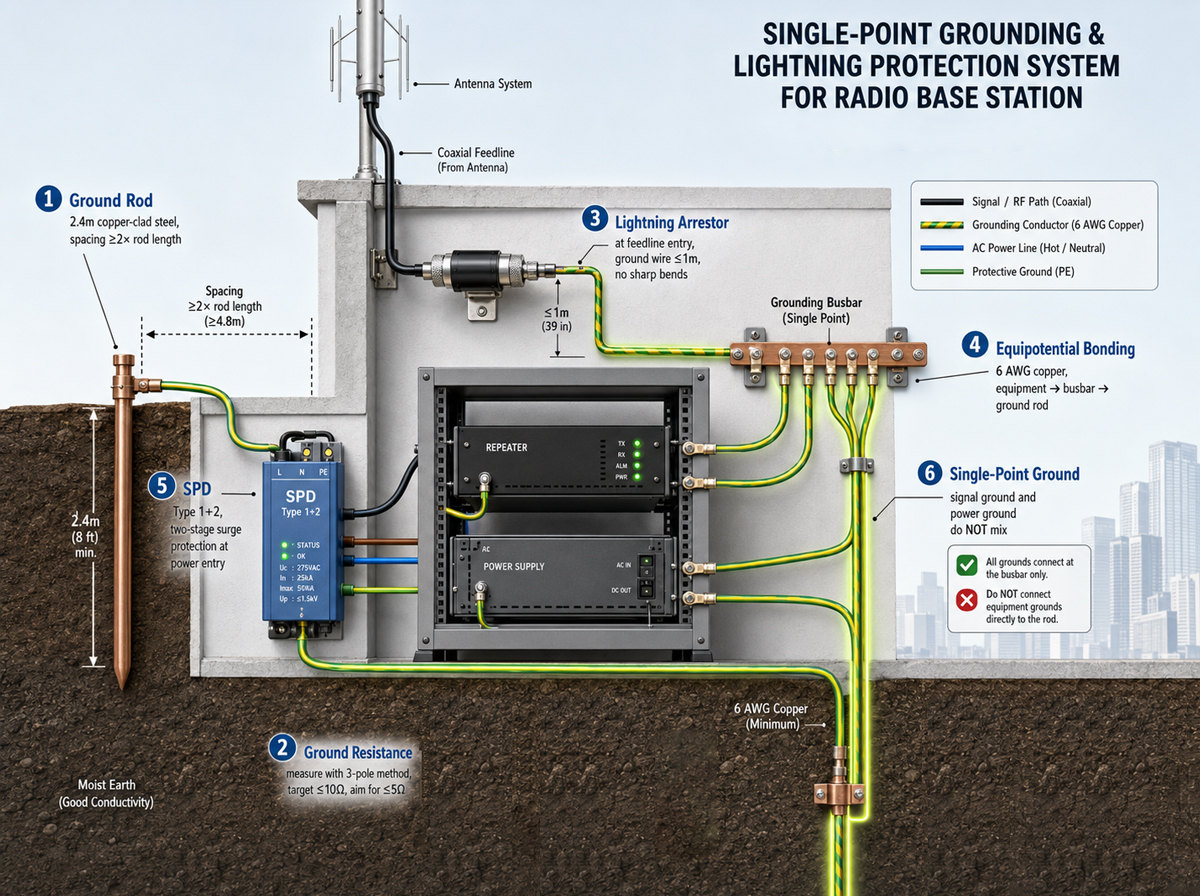
Most radio operators never take grounding seriously—until their gear is fried. This piece exposes three fatal grounding traps, from shallow rods to mixed signal-and-power grounds, then hands you a six-step, code-compliant checklist drawn from NEC Article 810 and IEEE Std 142. Copy this homework instead.
A grounding error can instantly fry your radio—Installation guide for radio system lightning protection

Professional walkie talkie earpiece guide covering how to put on, wear, and use earpieces correctly. Features brand-specific tips for Motorola, Hytera, Baofeng, and more with structural comparisons for optimal comfort and performance.
How to use walkie talkie earpiece?- The Complete Guide to Walkie Talkie Earpiece Setup
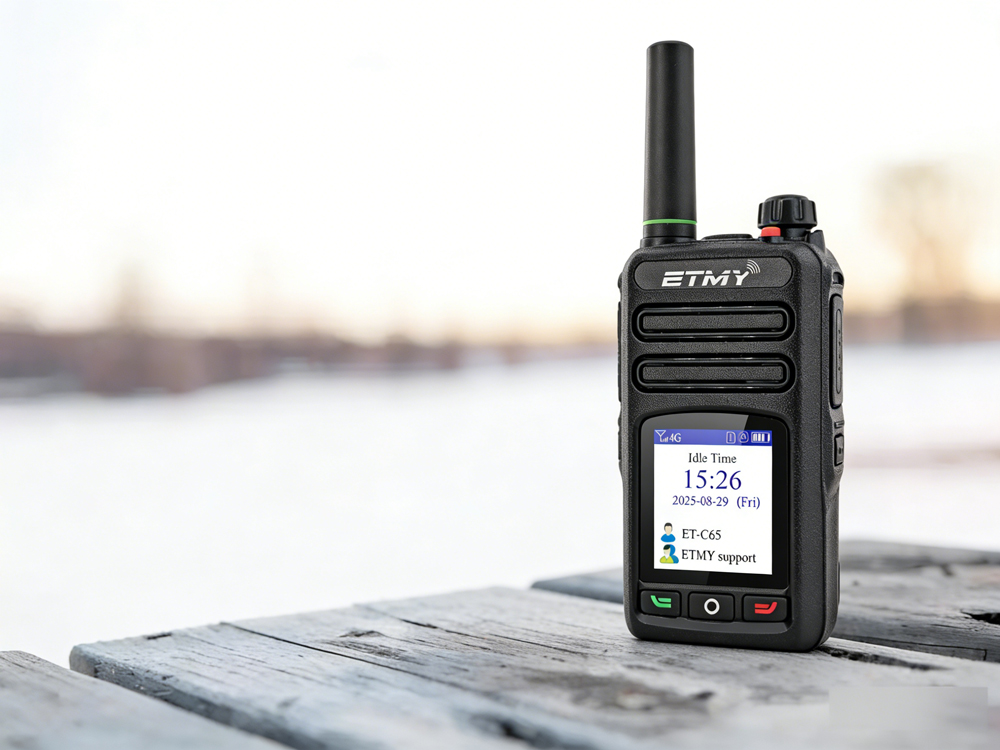
A recent industry report highlights PoC radio adoption for faster, long-distance team communication. Designed for cellular network connectivity, these radios improve coordination in public safety, logistics, and field operations, while offering beginner-friendly setup guidance to ensure reliable activation and compliance.
How exactly do you use a newly acquired PoC radio?