
BAPCO interview: onwards and upwards
2022-02-14

What do you hope to achieve as the new BAPCO chief operating officer? What are your hopes for the organisation and for the sector?
BAPCO continues to grow as an association and as an influencer, and I am convinced that it has a healthy future. The association must, however, ensure that it remains relevant to all its members.
It is with the membership that I really want to start to make a difference. We need to be so much more diverse across our membership, be that in terms of age, gender or ethnicity. I want to work with public safety organisations and suppliers to find ways that we can achieve this together – to be more reflective of the society in which we live.
Why is BAPCO an important organisation?
BAPCO provides an important platform for our public safety community, bringing the user and commercial worlds together. So often in the public sector, process drives a wedge between the buyer and suppliers, but BAPCO provides the stage where ideas can be explored, experiences shared, and knowledge enhanced.
The association must continue to innovate, finding new ways to help improve public safety communications and information technology for everybody’s benefit. Above all, it must continue to be the leading UK-based association for all professionals using or developing public safety technology.
How has it benefited you over the years?
I became an active member of BAPCO in 1998, joining the Commercial Advisory Group (CAG). I stepped up to chair the CAG from May 2000 until April 2004 and believe that I brought a new sense of purpose to commercial members within the association. I ensured that we had a regular column in the BAPCO Journal, occasionally asking a few awkward questions of the hierarchy. The group was also instrumental in arrangements for the annual conference and exhibition.
This involvement enabled me to help make a difference, but to also network with the user community and better understand their needs and wants. Looking at how the association meets the needs of commercial members will be a key objective in my first few months as COO.
What are the most important challenges currently facing UK public safety communications?
One of the biggest challenges in the UK is how to make the best of the Emergency Services Network – it could, and should, be so much more than just a ‘replacement for Airwave’. We saw in the early days of Airwave how suppliers were able to innovate, driving functionality up and pricing down. We also need to see this happen with ESN.
BAPCO has a role to play here too, providing the opportunity for our commercial members to showcase their products and services.
What are the most exciting opportunities?
An exciting area for BAPCO is helping to showcase the ‘best of British’ to the rest of the global mission-critical community.
For instance, with ESN we are very much at the leading edge of using 4G LTE networks to support mission-critical communications. Therefore, sharing more widely the lessons we are learning while providing insights as to what went well is invaluable.
There is also enormous opportunity for new technology to help drive change within emergency services control rooms. That could be in relation to providing better situational awareness, as well as helping the public make more effective contact with first-responders in times of great stress.
source:bapco-show.co.uk
All systems go for BAPCO 2022
GSMA Unveils MWC Barcelona ‘Committed Community’
Related Article

A practical guide to testing two-way radio coverage in the environment where people will actually depend on it.
Why a Radio Coverage Test Can Pass— and the System Still Fails in Real Operation

Most radio operators never take grounding seriously—until their gear is fried. This piece exposes three fatal grounding traps, from shallow rods to mixed signal-and-power grounds, then hands you a six-step, code-compliant checklist drawn from NEC Article 810 and IEEE Std 142. Copy this homework instead.
A grounding error can instantly fry your radio—Installation guide for radio system lightning protection

Professional walkie talkie earpiece guide covering how to put on, wear, and use earpieces correctly. Features brand-specific tips for Motorola, Hytera, Baofeng, and more with structural comparisons for optimal comfort and performance.
How to use walkie talkie earpiece?- The Complete Guide to Walkie Talkie Earpiece Setup
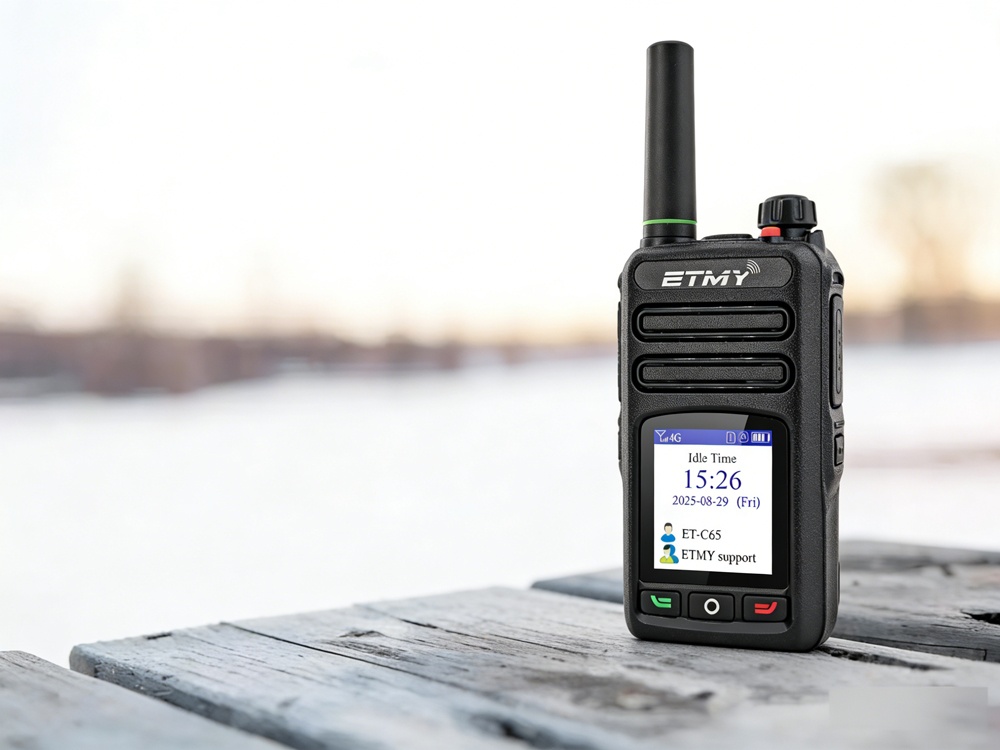
A recent industry report highlights PoC radio adoption for faster, long-distance team communication. Designed for cellular network connectivity, these radios improve coordination in public safety, logistics, and field operations, while offering beginner-friendly setup guidance to ensure reliable activation and compliance.
How exactly do you use a newly acquired PoC radio?