
Delco moves forward with new 911 communications system
2021-08-14
source:delcotimes.com
In the fall of 2019, the county 911 center noted four or five separate instances in which emergency personnel were not able to reach the county 911 center with their portable radios because of a situation called "ducting." Earlier this year, brand new mobile Kenwood radios were distributed to 1,200 full- and part-time police officers and 800 firefighters. Two-hundred are being disbursed to Emergency Medical Services personnel and other emergency management and special operations units. These devices use a two-band system that allow users to operate outside of the band causing interference.
And, now, the county is anticipated to move ahead with the creation and installation of a new radio system."The best practice has been to write a thorough, detailed and achievable specification that can be built," Boyce said, adding that only high-level national radio manufacturers will be able to meet Delaware County's needs.
Boyce said if council approves the RFP's, the manufacturers who respond will have about two to three months to present their best designs with the goal of having county staff and elected officials choosing a manufacturer in December.
Boyce explained that the emergency communications system has two parts. One is the infrastructure such as the computers and the radio towers and second is the subscribers such as the police officer, firefighter and medic on the street.
"Our system needs to be very robust," he said, adding that all of the components must be compatible with each other. "We want to make sure that one fits the other. We don’t want to) buy a feature that they don’t want. We don’t get a feature that is not critical to their success.”
The first part of this was county council's $3 million purchase of radios for emergency responders, Boyce explained.
"This is the first time the county has bought the radios that police officers have," he said, adding that every officer in the county has the same high quality radio regardless of the abundance or lack of wealth in their community.Unfortunately, Boyce said the interference problem does still exist, although it is occasional and sporadic.
He said the basic problem is television signals from South Carolina and Boston, Mass. When it's 60 degrees in the morning and 90 degrees by 10 a.m., the temperature layers make the radio waves shoot off even farther.
And, that's why the system is being overhauled with ACD Engineers developing the technical specifications for the system earlier this year."Obviously COVID delayed our ability to meet with people and bring in people," Boyce said, adding, however, that his team worked to find radio towers on which they could rent space.
There's also operational differences among the emergency responders - a police officer uses their radios differently than firefighters; a police motorcycle unit is different than a bicycle unit.
All need emphasis on hearing, officer safety and functionality in the radios, Boyce said.The director said as the system becomes more seamless, that radio anywhere in Delaware county will be able to connect to anyone in Delaware county.
He explained that this system is one that's meant to last the next 10 to 15 years.
"Everything that we are looking to do is out there," Boyce said. "We want the best tool that serves both our first responders and is responsible to the taxpayer."
He said there's only four or five manufacturers large enough to handle a project of this size - and all of them are excited to do it.
In the fall of 2019, the county 911 center noted four or five separate instances in which emergency personnel were not able to reach the county 911 center with their portable radios because of a situation called "ducting." Earlier this year, brand new mobile Kenwood radios were distributed to 1,200 full- and part-time police officers and 800 firefighters. Two-hundred are being disbursed to Emergency Medical Services personnel and other emergency management and special operations units. These devices use a two-band system that allow users to operate outside of the band causing interference.
And, now, the county is anticipated to move ahead with the creation and installation of a new radio system."The best practice has been to write a thorough, detailed and achievable specification that can be built," Boyce said, adding that only high-level national radio manufacturers will be able to meet Delaware County's needs.
Boyce said if council approves the RFP's, the manufacturers who respond will have about two to three months to present their best designs with the goal of having county staff and elected officials choosing a manufacturer in December.
Boyce explained that the emergency communications system has two parts. One is the infrastructure such as the computers and the radio towers and second is the subscribers such as the police officer, firefighter and medic on the street.
"Our system needs to be very robust," he said, adding that all of the components must be compatible with each other. "We want to make sure that one fits the other. We don’t want to) buy a feature that they don’t want. We don’t get a feature that is not critical to their success.”
The first part of this was county council's $3 million purchase of radios for emergency responders, Boyce explained.
"This is the first time the county has bought the radios that police officers have," he said, adding that every officer in the county has the same high quality radio regardless of the abundance or lack of wealth in their community.Unfortunately, Boyce said the interference problem does still exist, although it is occasional and sporadic.
He said the basic problem is television signals from South Carolina and Boston, Mass. When it's 60 degrees in the morning and 90 degrees by 10 a.m., the temperature layers make the radio waves shoot off even farther.
And, that's why the system is being overhauled with ACD Engineers developing the technical specifications for the system earlier this year."Obviously COVID delayed our ability to meet with people and bring in people," Boyce said, adding, however, that his team worked to find radio towers on which they could rent space.
There's also operational differences among the emergency responders - a police officer uses their radios differently than firefighters; a police motorcycle unit is different than a bicycle unit.
All need emphasis on hearing, officer safety and functionality in the radios, Boyce said.The director said as the system becomes more seamless, that radio anywhere in Delaware county will be able to connect to anyone in Delaware county.
He explained that this system is one that's meant to last the next 10 to 15 years.
"Everything that we are looking to do is out there," Boyce said. "We want the best tool that serves both our first responders and is responsible to the taxpayer."
He said there's only four or five manufacturers large enough to handle a project of this size - and all of them are excited to do it.
GSPS What3Words Used to Locate Two Lost Mountain Bikers
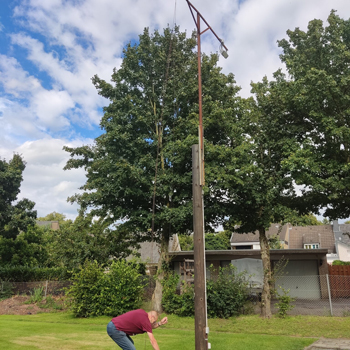
Radio enthusiast's last antenna measurement day
Related Article

A practical guide to testing two-way radio coverage in the environment where people will actually depend on it.
Why a Radio Coverage Test Can Pass— and the System Still Fails in Real Operation

Most radio operators never take grounding seriously—until their gear is fried. This piece exposes three fatal grounding traps, from shallow rods to mixed signal-and-power grounds, then hands you a six-step, code-compliant checklist drawn from NEC Article 810 and IEEE Std 142. Copy this homework instead.
A grounding error can instantly fry your radio—Installation guide for radio system lightning protection

Professional walkie talkie earpiece guide covering how to put on, wear, and use earpieces correctly. Features brand-specific tips for Motorola, Hytera, Baofeng, and more with structural comparisons for optimal comfort and performance.
How to use walkie talkie earpiece?- The Complete Guide to Walkie Talkie Earpiece Setup
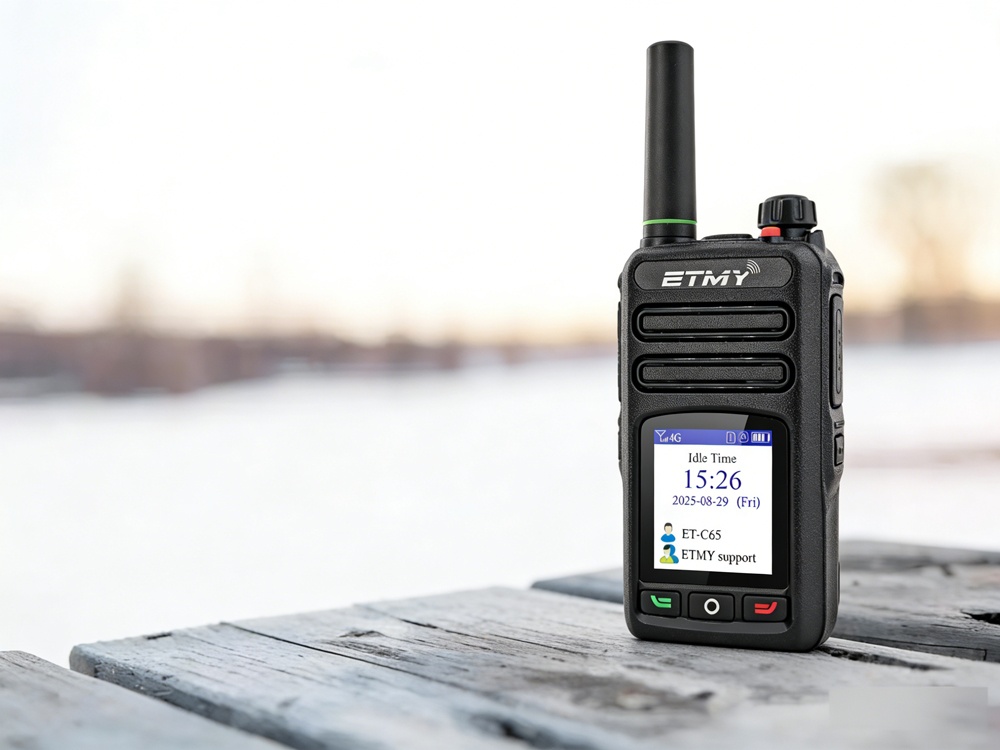
A recent industry report highlights PoC radio adoption for faster, long-distance team communication. Designed for cellular network connectivity, these radios improve coordination in public safety, logistics, and field operations, while offering beginner-friendly setup guidance to ensure reliable activation and compliance.
How exactly do you use a newly acquired PoC radio?