
Emergency radio operators help provide damage reports
2021-08-31
source:wdam.com
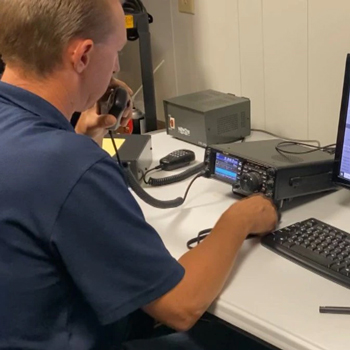
The organization is called the "Amateur Radio Emergency Service" and is a group of licensed amateur radio operator volunteers. We were told that they were trained in emergency communications and could help transfer information from the field to the central location.
With their equipment, field operators can send damage reports for the entire affected area. At WDAM, operators can share damage reports with the newsroom. Gleason said that about 14 local operators sent back damage reports at the scene.
"We use our equipment and our knowledge to provide communications during natural disasters," said Justin Gleason, a regional emergency coordinator for the Southeast Mississippi region.
"Basically, what we are doing here, we have established a VHF or a local radio station and an HF radio station for long-distance communication, as long as there is a damage report, we can provide them to the news room, and they can Use it for their broadcast."
The International Amateur Radio Union (IARU) is a worldwide federation of national amateur radio organizations. The membership of IARU includes more than 160 member associations from many countries and independent territories. It is the top institution of amateur radio in the world. The members of IARU are made up of its member societies, which have been voted as members by existing member societies.
Each country or separate territory can only have one member society. The Wireless Research Institute in Australia is recognized as the highest institution for amateur radio in Australia.
IARU is recognized by the United Nations as a non-governmental organization and non-governmental organization due to its consultative status with other United Nations agencies (such as the International Telecommunication Union (ITU)).
"We have a HAM radio operator working with the police department. He is on duty and he radioed us some information about the road blockage where the flood occurred, and I was able to write it down and report it," Gleason said.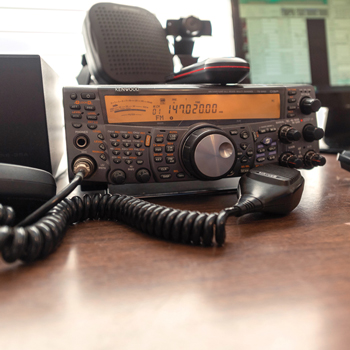
IARU has cooperated with ITU for nearly a century. It is a sector member of the Radiocommunication Sector (ITU R) and fully participates in the work of ITU R because it affects the amateur radio spectrum. It is also a development sector (ITU D). The state is related to emergency communications.
The organization is called the "Amateur Radio Emergency Service" and is a group of licensed amateur radio operator volunteers. We were told that they were trained in emergency communications and could help transfer information from the field to the central location.
With their equipment, field operators can send damage reports for the entire affected area. At WDAM, operators can share damage reports with the newsroom. Gleason said that about 14 local operators sent back damage reports at the scene.
"We use our equipment and our knowledge to provide communications during natural disasters," said Justin Gleason, a regional emergency coordinator for the Southeast Mississippi region.
"Basically, what we are doing here, we have established a VHF or a local radio station and an HF radio station for long-distance communication, as long as there is a damage report, we can provide them to the news room, and they can Use it for their broadcast."
The International Amateur Radio Union (IARU) is a worldwide federation of national amateur radio organizations. The membership of IARU includes more than 160 member associations from many countries and independent territories. It is the top institution of amateur radio in the world. The members of IARU are made up of its member societies, which have been voted as members by existing member societies.
Each country or separate territory can only have one member society. The Wireless Research Institute in Australia is recognized as the highest institution for amateur radio in Australia.
IARU is recognized by the United Nations as a non-governmental organization and non-governmental organization due to its consultative status with other United Nations agencies (such as the International Telecommunication Union (ITU)).
"We have a HAM radio operator working with the police department. He is on duty and he radioed us some information about the road blockage where the flood occurred, and I was able to write it down and report it," Gleason said.
IARU has cooperated with ITU for nearly a century. It is a sector member of the Radiocommunication Sector (ITU R) and fully participates in the work of ITU R because it affects the amateur radio spectrum. It is also a development sector (ITU D). The state is related to emergency communications.
Motorola Solutions Powers ‘Safe Cities’ with Integrated Technology Ecosystem
The Parish of St. Charles was hit hard by Hurricane Ida
Related Article

A practical guide to testing two-way radio coverage in the environment where people will actually depend on it.
Why a Radio Coverage Test Can Pass— and the System Still Fails in Real Operation

Most radio operators never take grounding seriously—until their gear is fried. This piece exposes three fatal grounding traps, from shallow rods to mixed signal-and-power grounds, then hands you a six-step, code-compliant checklist drawn from NEC Article 810 and IEEE Std 142. Copy this homework instead.
A grounding error can instantly fry your radio—Installation guide for radio system lightning protection

Professional walkie talkie earpiece guide covering how to put on, wear, and use earpieces correctly. Features brand-specific tips for Motorola, Hytera, Baofeng, and more with structural comparisons for optimal comfort and performance.
How to use walkie talkie earpiece?- The Complete Guide to Walkie Talkie Earpiece Setup
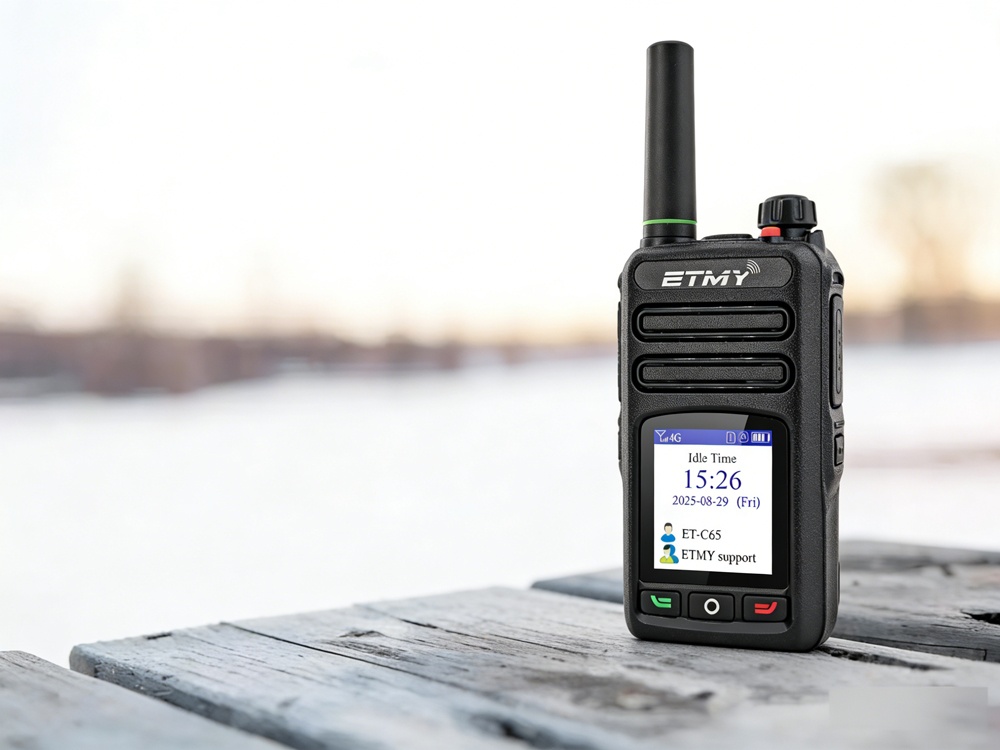
A recent industry report highlights PoC radio adoption for faster, long-distance team communication. Designed for cellular network connectivity, these radios improve coordination in public safety, logistics, and field operations, while offering beginner-friendly setup guidance to ensure reliable activation and compliance.
How exactly do you use a newly acquired PoC radio?