
EU issues at the World Radio Conference WRC-23
2021-12-08
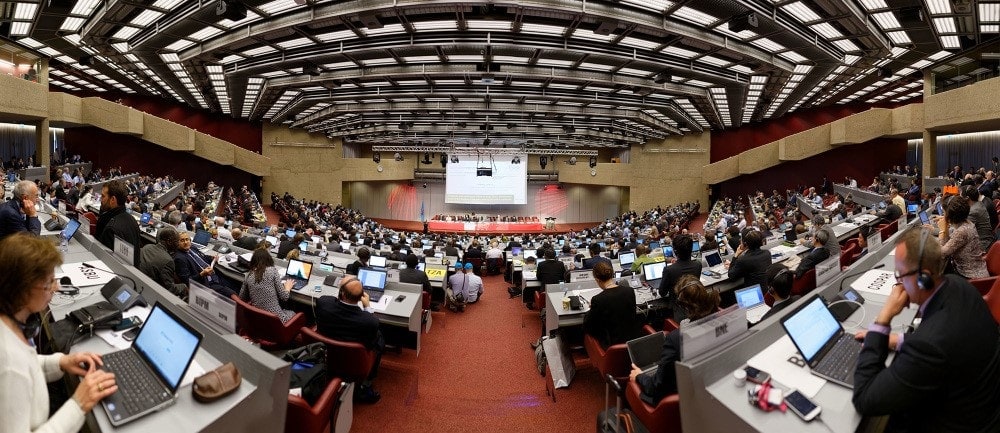
source:srrc.org.cn
The Radio Spectrum Policy Group (RSPG), the spectrum advisory body of the European Commission, issued preliminary opinions on the topics of the World Radiocommunication Conference (WRC) in 2023 and identified key topics closely related to EU policies. RSPG will publish final recommendations on these topics in 2022.
Topic 1.2: IMT centimeter wave frequency band.
RSPG said that this frequency band is the key to all citizens of EU member states to obtain 5G ultra-high broadband. The 6GHz frequency band achieves a good balance between system capacity and coverage, and provides room for future demand growth. This topic involves the 3.3-3.8GHz, 6GHz and 10GHz frequency bands. RSPG believes that the protection of satellite uplinks is the focus of EU policy on this topic, mainly involving international coordination issues. The Copernicus Imaging Microwave Radiometer (CIMR) will use the 6425-7250MHz frequency band worldwide. RSPG said that the use of this frequency band will enhance the Copernicus plan as a tool to achieve the EU's green agreement (climate change) objectives.
Topic 1.3: Upgrade the 3.6-3.8GHz frequency band to mobile services
RSPG believes that the use of this frequency band for 5G systems can achieve better network connections outside the European Union. This frequency band has been allocated as the main 5G frequency band within the European Union and is clearly used for continuous urban 5G coverage.
RSPG's views on other issues of concern to the EU are as follows:
Topic 1.7:Air traffic control.
RSPG suggests that the VHF band may be used for air traffic control in remote areas to better handle emergency situations.
Topic 1.11:GMDSS.
The development of the upgrade of the Global Maritime Distress and Safety System (GMDSS) and the introduction of electronic navigation requires the protection of EU scientific policies. RSPG stated that the proposal submitted to the International Maritime Organization (IMO) is currently inconsistent with the EU's position.
Topic 1.12:Active radar detector.
RSPG pointed out that as part of the EU Copernicus plan, there is currently no plan to implement a "spaceborne radar detector".
Topic 1.14:250GHz passive earth exploration service.
Some frequency bands need to be adjusted for the EUMETSAT polar system for launch in 2024.
Topic 1.16:Non-GSO earth station.
he European Union is considering building a non-geostationary satellite constellation to strengthen secure broadband access across the continent.
Topic 1.18:Spectrum requirements for mobile satellite services.
RSPG pointed out the need to speed up the application of the Internet of Things and machine-to-machine communication in order to reduce reliance on non-EU institutions' narrowband mobile satellite systems. The 2010-2025 MHz frequency band needs to be protected for ground-to-air operations, program production and special events.
Item 9.1(b):Amateur satellite service.
RSPG clarified that the Galileo system is the EU's global satellite navigation system, and will use the E6 (1260-1300MHz) frequency band for high-precision positioning services, commercial certification services and public regulatory services.
RSPG will form final opinions after soliciting opinions from all parties, and put forward suggestions for actions of EU member states.
Connect.Communicate. HMF at PMRExpo
How to intercept the telegram sent by the enemy's radio station, and what is the principle?
Related Article

A practical guide to testing two-way radio coverage in the environment where people will actually depend on it.
Why a Radio Coverage Test Can Pass— and the System Still Fails in Real Operation

Most radio operators never take grounding seriously—until their gear is fried. This piece exposes three fatal grounding traps, from shallow rods to mixed signal-and-power grounds, then hands you a six-step, code-compliant checklist drawn from NEC Article 810 and IEEE Std 142. Copy this homework instead.
A grounding error can instantly fry your radio—Installation guide for radio system lightning protection

Professional walkie talkie earpiece guide covering how to put on, wear, and use earpieces correctly. Features brand-specific tips for Motorola, Hytera, Baofeng, and more with structural comparisons for optimal comfort and performance.
How to use walkie talkie earpiece?- The Complete Guide to Walkie Talkie Earpiece Setup
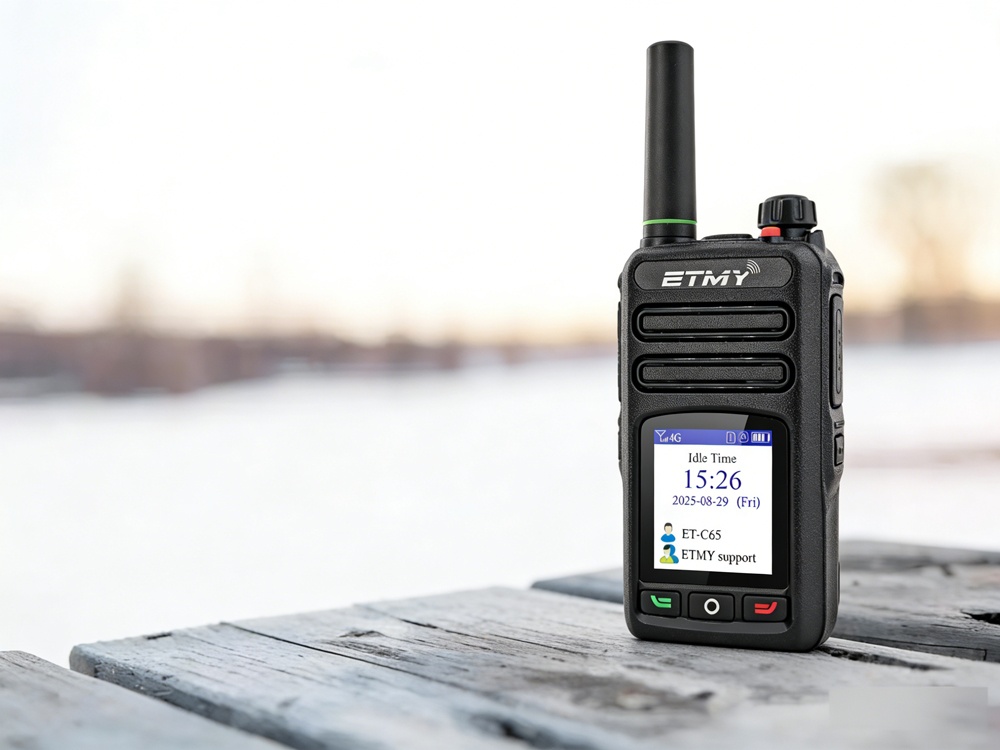
A recent industry report highlights PoC radio adoption for faster, long-distance team communication. Designed for cellular network connectivity, these radios improve coordination in public safety, logistics, and field operations, while offering beginner-friendly setup guidance to ensure reliable activation and compliance.
How exactly do you use a newly acquired PoC radio?