
Former CEO of American Electric Power Dies at 94 IEEE also mourns the loss of other members
2021-08-12

source:spectrum.ieee.org
When Dewitt was a youngster, he was an avid sailor and an amateur radio operator. He joined the U.S. Navy after earning a bachelor's degree in electrical engineering in 1951 from Rensselaer Polytechnic Institute, in Troy, N.Y.
He worked in managerial positions in New York, Ohio, and Virginia, then became AEP's chief executive in 1976 and served in that role until he retired in 1991.
White was the first American chair of the International Conference on Large High-Voltage Electric Systems. He was a member of the board for several companies and organizations including Bank of New York Mellon, Irving Trust, the Edison Electric Institute, and the National Association of Manufacturers.
He was appointed by U.S. President George H.W. Bush as a private-sector representative to the presidential economic delegation to Poland.
White served on the board of visitors at Virginia Tech and was vice rector and rector there. He also served as a director of the Virginia Tech Foundation. He was a trustee of Randolph-Macon Woman's College, in Lynchburg, Va.
He earned a bachelor's degree in electrical engineering from the Virginia Polytechnic Institute, now Virginia Tech, and received a master's degree in industrial management as a Sloan Fellow at MIT. He was awarded an honorary doctorate in business administration by Indiana University in Bloomington. He also was a member of the IEEE–Eta Kappa Nu honor society.
The Navy assigned him to work at aircraft manufacturer Convair, in San Diego. He was part of a team there developing missile and rocket systems, including the Atlas missile, which was used in Friendship 7.
After DeWitt was discharged from the Navy he left Convair to work on an early digital voltmeter at Electro Instruments. While there, he suggested the company build more accurate calibration systems. But Electro didn't act on his idea, so he left in 1957 to start his own venture, Holt Instrument Laboratories, in his hometown: Oconto, Wis.
Holt provided AC and DC voltage and current calibration instruments to all branches of the U.S. military and the companies that served them—including Boeing, Lockheed Martin, and Northrop Grumman. It also was a leader in measurement instruments.
Holt supplied calibration and measurement systems used for NASA's Apollo, Gemini, and Mercury programs, and the company's devices are still used today. Holt helped develop a simulator that trained the Apollo astronauts how to land on the Moon. The company also developed a way to conserve fuel during landing and takeoff of the Apollo 11 lunar landing module.
Johnson served in the U.S. Army for two years after he earned a bachelor's degree in engineering at the University of California, Los Angeles. While enlisted, he worked on radio electronics for radar vans at the Army's Aberdeen Proving Ground, in Maryland. Following his honorable discharge, he returned to UCLA to pursue a master's degree.
After graduating, he joined Collins Radio—now Collins Aerospace—headquartered in Cedar Rapids, Iowa. During his career, he designed 14 patented electromechanical filters.
He was an IEEE member for 60 years and presented several papers at the organization's conferences. He also wrote Mechanical Filters in Electronics, the first book in a series about the design, fabrication, and uses of filters.
Johnson championed civil rights and participated in protests and marches, according to his obituary in the Los Angeles Times. He was a longtime board member of the Fair Housing Council of Orange County and a founder of the Orange County Community Housing Corp. The OCCHC builds apartments and homes in low-income neighborhoods. Johnson helped write the book A Different Shade of Orange: Voices of Orange County, California, Black Pioneers.
Worth was drafted into the U.S. Army in 1950 after receiving a bachelor's degree in electrical engineering in 1949 from Iowa State University, in Ames.
He served for two years and was stationed at Fort Monmouth in New Jersey. He left the Army with the rank of sergeant. He briefly worked at Maytag and left the commercial appliance manufacturer to join Iowa Power and Light. He retired from there in 1992.
When Dewitt was a youngster, he was an avid sailor and an amateur radio operator. He joined the U.S. Navy after earning a bachelor's degree in electrical engineering in 1951 from Rensselaer Polytechnic Institute, in Troy, N.Y.
He worked in managerial positions in New York, Ohio, and Virginia, then became AEP's chief executive in 1976 and served in that role until he retired in 1991.
White was the first American chair of the International Conference on Large High-Voltage Electric Systems. He was a member of the board for several companies and organizations including Bank of New York Mellon, Irving Trust, the Edison Electric Institute, and the National Association of Manufacturers.
He was appointed by U.S. President George H.W. Bush as a private-sector representative to the presidential economic delegation to Poland.
White served on the board of visitors at Virginia Tech and was vice rector and rector there. He also served as a director of the Virginia Tech Foundation. He was a trustee of Randolph-Macon Woman's College, in Lynchburg, Va.
He earned a bachelor's degree in electrical engineering from the Virginia Polytechnic Institute, now Virginia Tech, and received a master's degree in industrial management as a Sloan Fellow at MIT. He was awarded an honorary doctorate in business administration by Indiana University in Bloomington. He also was a member of the IEEE–Eta Kappa Nu honor society.
The Navy assigned him to work at aircraft manufacturer Convair, in San Diego. He was part of a team there developing missile and rocket systems, including the Atlas missile, which was used in Friendship 7.
After DeWitt was discharged from the Navy he left Convair to work on an early digital voltmeter at Electro Instruments. While there, he suggested the company build more accurate calibration systems. But Electro didn't act on his idea, so he left in 1957 to start his own venture, Holt Instrument Laboratories, in his hometown: Oconto, Wis.
Holt provided AC and DC voltage and current calibration instruments to all branches of the U.S. military and the companies that served them—including Boeing, Lockheed Martin, and Northrop Grumman. It also was a leader in measurement instruments.
Holt supplied calibration and measurement systems used for NASA's Apollo, Gemini, and Mercury programs, and the company's devices are still used today. Holt helped develop a simulator that trained the Apollo astronauts how to land on the Moon. The company also developed a way to conserve fuel during landing and takeoff of the Apollo 11 lunar landing module.
Johnson served in the U.S. Army for two years after he earned a bachelor's degree in engineering at the University of California, Los Angeles. While enlisted, he worked on radio electronics for radar vans at the Army's Aberdeen Proving Ground, in Maryland. Following his honorable discharge, he returned to UCLA to pursue a master's degree.
After graduating, he joined Collins Radio—now Collins Aerospace—headquartered in Cedar Rapids, Iowa. During his career, he designed 14 patented electromechanical filters.
He was an IEEE member for 60 years and presented several papers at the organization's conferences. He also wrote Mechanical Filters in Electronics, the first book in a series about the design, fabrication, and uses of filters.
Johnson championed civil rights and participated in protests and marches, according to his obituary in the Los Angeles Times. He was a longtime board member of the Fair Housing Council of Orange County and a founder of the Orange County Community Housing Corp. The OCCHC builds apartments and homes in low-income neighborhoods. Johnson helped write the book A Different Shade of Orange: Voices of Orange County, California, Black Pioneers.
Worth was drafted into the U.S. Army in 1950 after receiving a bachelor's degree in electrical engineering in 1949 from Iowa State University, in Ames.
He served for two years and was stationed at Fort Monmouth in New Jersey. He left the Army with the rank of sergeant. He briefly worked at Maytag and left the commercial appliance manufacturer to join Iowa Power and Light. He retired from there in 1992.
Search for missing elder in Juneau sparks questions about Alaska’s Silver Alert system
A nationwide emergency alerts test is the reason you might be hearing alarms coming from your phone or TV
Related Article

A practical guide to testing two-way radio coverage in the environment where people will actually depend on it.
Why a Radio Coverage Test Can Pass— and the System Still Fails in Real Operation

Most radio operators never take grounding seriously—until their gear is fried. This piece exposes three fatal grounding traps, from shallow rods to mixed signal-and-power grounds, then hands you a six-step, code-compliant checklist drawn from NEC Article 810 and IEEE Std 142. Copy this homework instead.
A grounding error can instantly fry your radio—Installation guide for radio system lightning protection

Professional walkie talkie earpiece guide covering how to put on, wear, and use earpieces correctly. Features brand-specific tips for Motorola, Hytera, Baofeng, and more with structural comparisons for optimal comfort and performance.
How to use walkie talkie earpiece?- The Complete Guide to Walkie Talkie Earpiece Setup
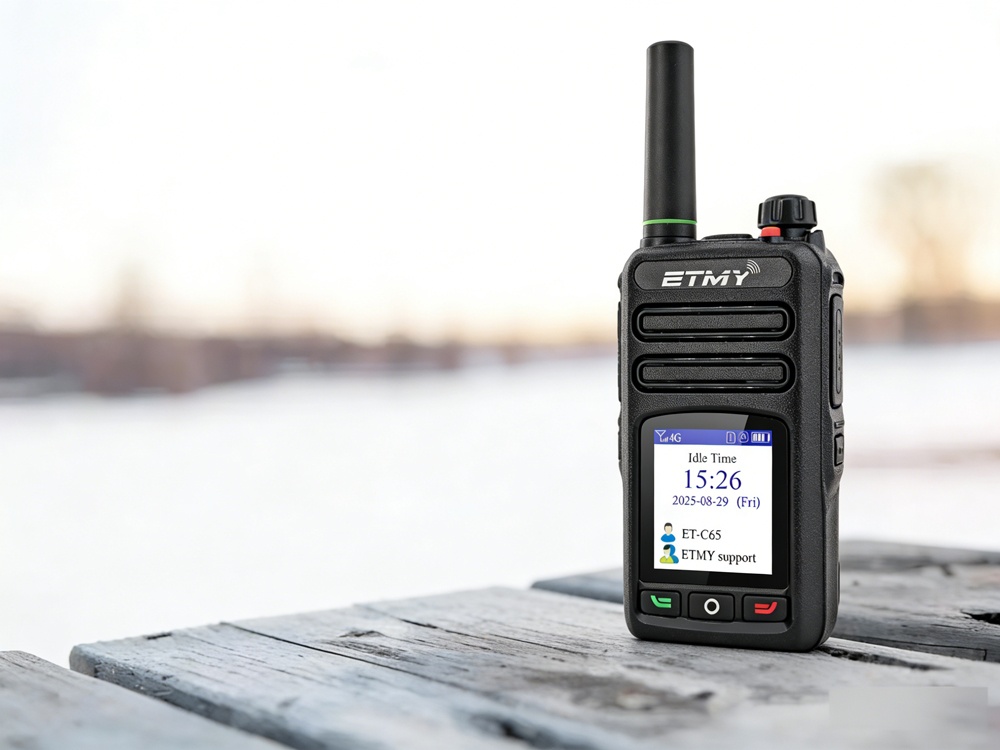
A recent industry report highlights PoC radio adoption for faster, long-distance team communication. Designed for cellular network connectivity, these radios improve coordination in public safety, logistics, and field operations, while offering beginner-friendly setup guidance to ensure reliable activation and compliance.
How exactly do you use a newly acquired PoC radio?