
How important is the antenna?
2021-12-21

source:pttcn.net
Antenna is a relatively common equipment, widely used in broadcasting, television, radio communication, radar, navigation, electronic countermeasures, remote sensing, radio astronomy and other fields. An antenna is a device that can effectively radiate electromagnetic waves in a specific direction in space or can effectively receive electromagnetic waves from a specific direction in space. All devices that transmit signals through electromagnetic waves must carry an antenna.
Some friends are curious that walkie-talkies are nearly half a century earlier than mobile phones, but today's mobile phones have no external antenna, but walkie-talkies still use a long antenna. Why is this? In fact, most of the first old-fashioned mobile phones were equipped with an antenna. Later, with the evolution of technology, the antenna was hidden inside the mobile phone.
First of all, we should clarify a concept: the higher the frequency, the shorter the wavelength, and the shorter the antenna.
The mobile phones we usually use generally communicate on the two frequencies of 900MHz and 1800MHz, while the working frequency of our civilian walkie-talkies is between 409 and 410MHz. In order to transmit the radio signal as much as possible, a longer antenna is needed.
Basic parameters
In our daily life, we find that intentionally or unintentionally turning or stretching the antenna of the radio or TV will affect the signal quality. In fact, the parameters of the antenna are changed, which affects the reception of electromagnetic waves. The transmission and reception effect of the antenna is closely related to the parameters of the antenna. Below we introduce some basic parameters of the antenna.
1. Working frequency
The antenna always works in a certain frequency range (bandwidth), which depends on the requirements of the index. The frequency range that meets the index requirements is the operating frequency of the antenna. Various wireless standards are different, and the frequency bands used by operators are different, so you need to choose an antenna with a suitable frequency band.
2. Gain
Antenna gain refers to the ratio of the power density of the signal generated by the actual antenna and the ideal radiating unit at the same point in space under the condition of equal input power. The gain is closely related to the antenna pattern. The narrower the main lobe of the pattern and the smaller the side lobe, the higher the gain. Antenna gain is used to measure the ability of an antenna to radiate electromagnetic waves in a specific direction. It should be noted that the antenna itself does not increase the energy of the radiated signal, it just concentrates the energy in a certain direction through the combination of antenna elements and changing its feeding mode.
3. Bandwidth
Bandwidth is another basic antenna parameter. Bandwidth describes the range of frequencies within which the antenna can correctly radiate or receive energy. Antennas with very small bandwidth cannot be used for broadband applications.
In real life, in order to meet various practical needs, engineers invented various antennas. The most common is this kind of long antenna, called a vertical monopole antenna (Vertical Antenna), also called a GP antenna, which is commonly found in handheld devices.

This is the famous Yagi antenna, which is composed of multiple units and has strong directivity. The more directors, the stronger the directivity and the higher the gain.

We often see this kind of dish antenna on residential roofs. This is a highly directional antenna specially used for long-distance communication. It has an extremely narrow beam width and a high gain value. It can also be called a high-gain directional antenna.

In fact, although the antenna types are dazzling, the working principles are actually the same.
Hytera releases the "Public Private Convergence White Paper" to help private network communications transform to the next generation of key communications technologies
Launch of Shenzhen Airport Satellite Hall: Hytera's "Seamless Connection" Passenger Itinerary
Related Article

A practical guide to testing two-way radio coverage in the environment where people will actually depend on it.
Why a Radio Coverage Test Can Pass— and the System Still Fails in Real Operation

Most radio operators never take grounding seriously—until their gear is fried. This piece exposes three fatal grounding traps, from shallow rods to mixed signal-and-power grounds, then hands you a six-step, code-compliant checklist drawn from NEC Article 810 and IEEE Std 142. Copy this homework instead.
A grounding error can instantly fry your radio—Installation guide for radio system lightning protection

Professional walkie talkie earpiece guide covering how to put on, wear, and use earpieces correctly. Features brand-specific tips for Motorola, Hytera, Baofeng, and more with structural comparisons for optimal comfort and performance.
How to use walkie talkie earpiece?- The Complete Guide to Walkie Talkie Earpiece Setup
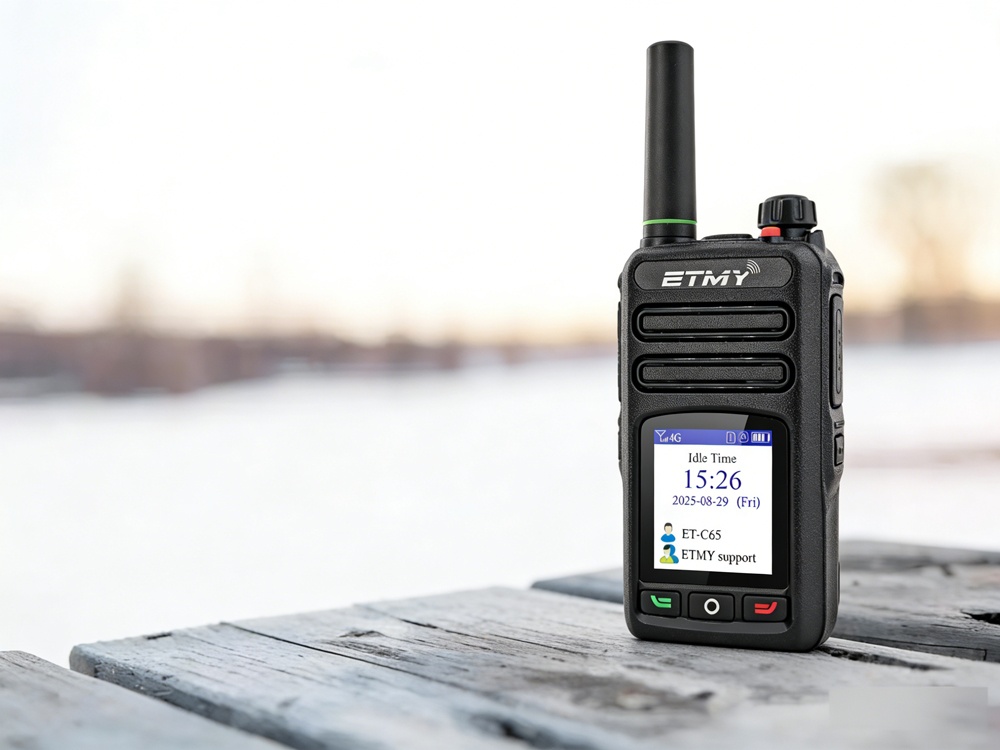
A recent industry report highlights PoC radio adoption for faster, long-distance team communication. Designed for cellular network connectivity, these radios improve coordination in public safety, logistics, and field operations, while offering beginner-friendly setup guidance to ensure reliable activation and compliance.
How exactly do you use a newly acquired PoC radio?