
How to intercept the telegram sent by the enemy's radio station, and what is the principle?
2021-12-08
source:pttcn.net
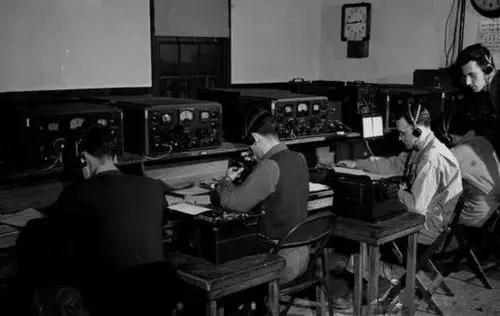
First of all, in World War II, the intelligence communication of various countries using radio stations is mainly divided into two parts. One is the transmission part composed of various types of radio stations, and the other is the encryption part composed of cipher machines and cipher books. In terms of transmission, all countries are similar, and are mainly divided into three types of radio stations: short wave, medium wave, and long wave.
There are some other types of radio stations. At that time, radio stations mainly relied on radio waves to propagate signals, which were characterized by almost no directivity and slow propagation speed. The radio stations at that time were basically similar to today's urban radio stations because they were not directional. Its transmission and reception methods were not peer-to-peer, but face-to-face. The problem caused by this approach is very obvious, that is, anyone can receive your signal.
As long as you tune the band of your own radio to a band similar to that of the other radio, you can receive the signal from them. But whether you can decipher it or not is not certain, because most of the time the enemy does not use plaintext to communicate. The so-called plaintext is to send according to the standard Morse code. It is encrypted by a cipher machine, which involves the most important part of encryption.
In order to better understand that radio stations in World War II can receive the opposite signal casually, let me give an example first. When the Yamato went to Okinawa for the so-called jade-smashing special attack, a U.S. submarine found traces of the Yamato. It may be overconfident. The U.S. submarine did not encrypt the telegram and sent it directly to the headquarters in plain text. Yamato’s movement. Since this telegram was not far away from the Yamato when it was sent, it was intercepted by the Yamato and learned that the Yamato immediately went straight to Okinawa to die. A few examples of plaintext telegrams in the war.
Another example is Japan during World War II. As we all know, in 1941, Pearl Harbor in the United States was attacked by Japan and the Pacific Fleet suffered heavy losses. The director behind this scene was the famous Japanese admiral, Fifty-Six Yamamoto. So the United States hates it deeply. In early 1943, two Japanese submarines struck a rock in the Western Pacific and sank one after another. Of course, the United States will not give up this excellent opportunity and send a submarine to check it out. It really made major discoveries on it and obtained a large number of top-secret documents, including the newly activated codebook by the Japanese Navy. This codebook was then sent to the U.S. intelligence agency for intelligence deciphering. On April 14, 1943, the U.S. military intelligence department deciphered a very important telegram. The detailed itinerary of Yamamoto 56 is on it, and even the plane looks like and how many planes there are. The U.S. military will never give up this and kill it. Yamamoto's great opportunity. On the 18th, the US military sent 16 P-38 "Lightning" fighter jets to destroy Yamamoto's land plane in one fell swoop and kill Yamamoto in one fell swoop. This shows the importance of cipher books.
When a telegrapher receives a telegram, what he receives is not a string of words, but a string of symbols in different sequences. This is the Morse code. The function of the cipher is to allow the telegrapher to compare this string of symbols with the cipher to get the text. The function of the cipher machine is to scramble the letters represented by each symbol on the cipher book. This is the telegram encryption during World War II, which is called a double replacement cipher, and other encryption methods are still mixed with secret words, such as "box". '(Referring to the wounded or supplies) and so on. Although the interceptor can perform deciphering by means of "blind guessing", the amount of work involved in this method is very large, and the enemy often changes the codebook regularly to prevent leakage of information. The repeated "blind guess" method is undoubtedly very energy consuming, and for the cipher machine that adopts the double-type replacement password encryption method, such simple and crude "blind guess" deciphering is basically impossible.
But if you know the working principle of the opponent's cipher machine, you can know how the opponent will scramble the symbols, so that you can easily compare the intelligence transmitted by the opponent. Here is an example from World War II, which is the Enigma machine. The Enigma machine uses the so-called double replacement password, which mainly relies on its internal ``rotor'' for scrambling and encryption. Both the sender and the receiver must each have a cipher machine and set it up according to the same procedure so that both parties can communicate. The various units of the German army have different settings for the Enigma machine, and it is almost impossible for the interceptor to decipher it, because there are almost tens of millions of possibilities.
Therefore, the Allied forces paid great attention to the research project of Enigma in World War II. Because as long as the Enigma machine is thoroughly studied, the Allied forces can also obtain German intelligence like the German receiver. The Allied forces first obtained the actual machine of the German military Enigma cipher machine in 1941, which was found by the British navy on the captured German submarine U110. The Allied forces then organized personnel to decipher and analyze it, and finally completed all the work around 1943. In addition to the transmission part mentioned above, combined with the knowledge of the German password encryption method, the Allied forces have been able to continuously obtain German intelligence since 1943. This is how the telegram is intercepted.
EU issues at the World Radio Conference WRC-23
HMF Supports Horse Show with Analog Radios
Related Article

A practical guide to testing two-way radio coverage in the environment where people will actually depend on it.
Why a Radio Coverage Test Can Pass— and the System Still Fails in Real Operation

Most radio operators never take grounding seriously—until their gear is fried. This piece exposes three fatal grounding traps, from shallow rods to mixed signal-and-power grounds, then hands you a six-step, code-compliant checklist drawn from NEC Article 810 and IEEE Std 142. Copy this homework instead.
A grounding error can instantly fry your radio—Installation guide for radio system lightning protection

Professional walkie talkie earpiece guide covering how to put on, wear, and use earpieces correctly. Features brand-specific tips for Motorola, Hytera, Baofeng, and more with structural comparisons for optimal comfort and performance.
How to use walkie talkie earpiece?- The Complete Guide to Walkie Talkie Earpiece Setup
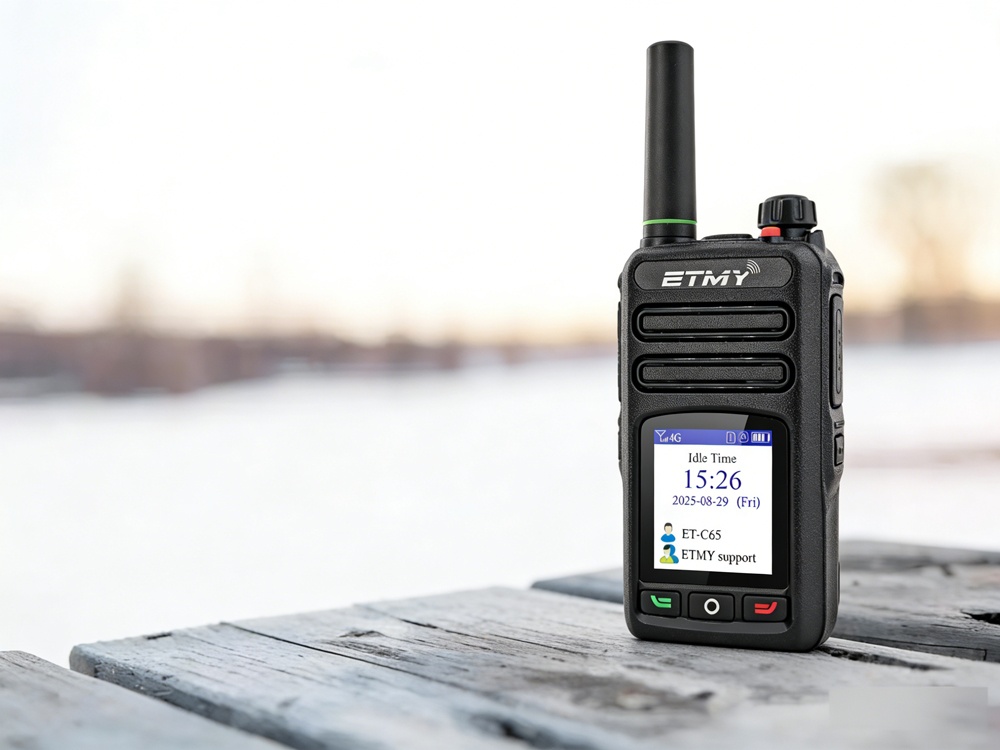
A recent industry report highlights PoC radio adoption for faster, long-distance team communication. Designed for cellular network connectivity, these radios improve coordination in public safety, logistics, and field operations, while offering beginner-friendly setup guidance to ensure reliable activation and compliance.
How exactly do you use a newly acquired PoC radio?