
Radio Knowledge Questions and Answers——Radio Business Knowledge
2022-04-01

1. Radio and radio waves
Radio is the abbreviation of radio technology, which is a science and technology that uses electromagnetic waves as information carriers to spread.
Radio waves refer to electromagnetic waves with frequencies below 3000 GHz that propagate in space without artificial waveguides. It is a ubiquitous physical phenomenon. In all things in the universe and the earth where we humans live, there have been various magnetic fields and rays since their birth. No matter day or night, there are always different wavelengths everywhere on the earth. Different, different intensities, radio waves that cannot be seen, touched, or smelled.
2. History of the Invention of Radio Communication
In 1865, the Englishman Max prevented the main electromagnetic wave from propagating outward in the form of waves, the speed of which is the same as the speed of light. In 1887, the German Hertz conducted the famous electric spark experiment and confirmed the conclusion that electromagnetic energy can propagate across space.
The Italian Marconi in 1895 and the Russian Popov in 1896 independently invented radio communication. In December 1901, Marconi achieved over 2,000 miles of transoceanic radio communication—wireless telegraphy—from England to Canada.
In 1906, Fessenden, who was born in Canada, completed a set of broadcasting devices, adding human voices to radio waves and sending them out, realizing the first radio broadcasting in human history. Since then, radio waves have entered thousands of households.
3. The way of propagation of radio waves
After the radio wave leaves the transmitting antenna at a speed of 300,000 kilometers per second, it reaches the receiving point through different propagation paths. According to these characteristic propagation modes, radio waves are classified into four main types.
(1) Ground waves, which are radio waves that travel along the Earth's surface.
(2) Sky waves, also known as ionospheric waves.
(3) Space waves, the radio waves that reach the receiving point directly from the transmitting antenna are called direct waves. A part of the radio wave is reflected by the ground or other obstacles to reach the receiving point, which is called reflected wave. Direct waves and reflected waves are collectively called space waves.
(4) Scattered waves, when there are uneven clumps in the atmosphere or ionosphere, radio waves may be reflected in all directions by these uneven media, so that part of the energy reaches the receiving point, which is the scattered wave.
4. Simple definition of 3G communication
3G is the abbreviation of 3rd Generation in English, which refers to the third generation of mobile communication technology. Compared with the first generation of analog mobile phones (1G) and the second generation of GSM, TDMA and other digital mobile phones (2G), the third generation of mobile phones generally refers to a new generation of mobile communication systems that combine wireless communication with multimedia communications such as the Internet. . It can handle various media forms such as images, music, and video streams, and provide various information services including web browsing, teleconferencing, and e-commerce. In order to provide this service, the wireless network must be able to support different data transmission speeds, that is, at least 2Mbps (megabytes per second) and 384kbps (kilobytes per second) in indoor, outdoor and driving environments, respectively. And a transfer speed of 144kbps.
5. Four international 3G standards:
W-CDMA: The English name is Wideband CDMA, the Chinese translation is "Wideband Code Division Multiple Access", it can support data transmission rates ranging from 384kbps to 2Mbps, and the supporters are mainly European manufacturers based on the GSM system.
CDMA2000: Also known as CDMA Multi-Carrier, it was proposed by Qualcomm North America as the leading company. Motorola, Lucent and South Korea’s Samsung joined later. South Korea has now become the leader of the standard.
TD-SCDMA: This standard is a 3G standard formulated by China alone. Due to China's huge market, this standard is valued by major telecom equipment manufacturers. More than half of the world's equipment manufacturers have announced that they can support the TD-SCDMA standard.
WiMAX, the full name is Worldwide Interoperability for Microwave Access, also known as 802.16 wireless metropolitan area network, is another broadband wireless connection solution that provides "last mile" for enterprise and home users.
6. What is a 3G mobile phone? What can 3G mobile phones do?
What is a 3G mobile phone? 3G mobile phone refers to a new generation of mobile communication system that combines wireless communication with multimedia communication such as the Internet. Simply put, it is a mobile phone suitable for 3G network. Currently, there are 3G mobile phones with WCDMA standard, 3G mobile phones with CDMA2000 standard, and 3G mobile phones with TD-SCDMA standard. What can 3G mobile phones do? 1. It can complete the voice communication done by the current mobile phone with high quality; 2. The user can write and draw directly on the touch screen of the 3G mobile phone, and send it to another mobile phone in less than one second; 3. You can use the mobile phone to conduct computer conferences, video calls, online Internet access, and watch movies smoothly.
7. 4G overview
On October 6, 2000, the International Telecommunication Union (ITU) established a working group on the next-generation broadband mobile communication system and named 4G "IMT-/Advanced". Since then, the research on 4G in Europe, Japan and South Korea has been carried out one after another. In March 2002, my country officially announced the start of research on 4G communication system. The characteristics of the future 4G mobile communication system are that users can access the network at any place, at any time, and in any way; it can be any type of mobile terminal; users can freely choose services, applications and networks; Advanced mobile e-commerce; new technologies can be easily introduced into systems and businesses.
The future 4G system should have the following basic conditions:
(1) It has high transmission rate and transmission quality. Compared with the existing mobile communication technology, the transmission speed of 4G can be increased by 1000 times. 4G should have functions such as carrying a large amount of multimedia information, asymmetric uplink and downlink rates, continuous coverage of regions, QoS (Quality of Service) mechanism, and low bit overhead;
(2) Flexible and diverse business functions. The future mobile communication network should enable "seamless" connection between various media, communication hosts and networks, so that users can freely roam seamlessly between various network environments;
(3) An open platform. The future mobile communication system should have "openness" in mobile terminals, service nodes and mobile network mechanisms, so that users can freely choose protocols, applications and networks;
(4) Highly intelligent network. The future mobile communication network will be a highly autonomous and adaptive network with good reconfiguration, variability, and self-organization, so as to meet the communication needs of different users in different environments;
(5) Highly reliable authentication and security mechanisms. The future mobile communication network will be based on packet data (IP) network, which should ensure the security and reliability of data and improve the survivability of the entire network.
8. What is electromagnetic radiation?
Electromagnetic radiation is the phenomenon in which electromagnetic energy propagates through space in the form of electromagnetic waves. Electromagnetic radiation sources can be divided into natural electromagnetic radiation sources and man-made sources of electromagnetic radiation. Lightning, sunspot activity, cosmic rays, etc. all produce electromagnetic radiation, which is a natural source of electromagnetic radiation; while man-made sources of electromagnetic radiation mainly include various types of radio equipment, such as mobile phones, wireless walkie-talkies, indoor wireless phones, radio and television transmitters , microwave and satellite communication devices, radar, radio remote control, etc., but also industrial, scientific and medical equipment, such as microwave ovens, high-frequency eye protection lamps, medical magnetic resonance equipment, helium arc welding machines, radio frequency electric heaters, high frequency heat sealing machines , AC high-voltage power lines, transfer switches, motors, generators, televisions, computers, etc.
9. Don't worry too much about electromagnetic radiation
In our daily work and life, electromagnetic radiation is everywhere, from modern office equipment to many devices in the home will produce electromagnetic radiation, such as desktop computers, televisions and lamps. However, due to the necessary measures have been taken in the design, production and use of the above equipment, the radiation will not cause harm to the human body. The state's management of radio wave radiation is very strict, and the technical parameters of radio stations (stations) must comply with relevant regulations to avoid the impact of excessive electromagnetic radiation on human health.
10. Is it safe to live near radio transmitters?
The mobile phone cellular base stations installed on the roofs of tall buildings and even residential areas are set up to ensure the citizens' mobile communication services according to the requirements of the mobile phone system capacity, signal coverage quality and electromagnetic compatibility with other radio equipment. During the construction of these base stations, relevant government departments such as radio management and environmental protection are in accordance with national regulations, requiring each telecom operator to take practical measures to ensure that the technical parameters of the base stations meet the national standards and that the electromagnetic radiation in the surrounding environment is within the safe range. Therefore, it is safe to live near such radio transmitters.
11. Which of the electromagnetic radiation intensity of mobile phone and mobile phone cellular base station has the greatest impact on people?
Mobile phones are small in size, low in power, and have no obvious and eye-catching antennas, so many people think that their electromagnetic radiation intensity is lower than that of mobile phone cellular base stations, but this is not the case. When using a mobile phone, the antenna and the receiver are close to the ear, and the antenna is only 2 to 5 cm away from the head. In this way, the head is in the near-field radiation area of the mobile phone, and the electromagnetic radiation it receives is relatively large. The areas of human activities are generally far away from the mobile phone base station, which belongs to the far-field radiation and is very weak. The mobile phone radiation directly acts on the sensitive part of the human body—the brain, so the electromagnetic radiation of the mobile phone should be paid more attention by people. We know that the farther away from the antenna, the smaller the electromagnetic radiation intensity. In an ideal situation, the electromagnetic radiation intensity (represented by power density) at a certain point is inversely proportional to the square of the distance from the point to the antenna, that is, at a distance from the antenna 1 The intensity of electromagnetic radiation at centimeters is 100 times greater than at 10 centimeters. Suppose we use an ordinary mobile phone with a power of 1 watt and make a call at a distance of 10 cm from the head. In theory, the electromagnetic radiation intensity received at this time is equivalent to the electromagnetic radiation intensity of a base station with a power of 10,000 watts located 10 meters away. . In fact, the power of most public mobile phone cellular base stations is below 20 watts. Therefore, the electromagnetic radiation intensity of public mobile phone cellular base stations to an area 10 meters away is less than one-fifth of that of mobile phones.
12. Does electromagnetic radiation harm human health?
In fact, human beings have always lived in an electromagnetic environment. The earth itself is a large magnetic field, and both thermal radiation and lightning on its surface can generate electromagnetic radiation. In addition, the sun and other planets also generate a steady stream of electromagnetic radiation from outer space. However, the naturally generated electromagnetic radiation is not harmful to the human body. It is the artificially generated electromagnetic radiation that poses a threat to the human body and causes pollution to the environment.
Electromagnetic radiation and electromagnetic pollution are two concepts. Although electromagnetic radiation is ubiquitous and ubiquitous, it is called electromagnetic pollution only when the electromagnetic radiation exceeds a certain intensity (that is, the limit of safety and health standards), which will have negative effects on the human body and even induce certain diseases. Due to the inconsistency of research purposes, methods, conditions (distance, time, biological model of exposure to electromagnetic radiation sources) and other factors, relevant experts and scholars around the world have no influence on whether electromagnetic radiation has any effect on human health, and how much it affects the research results and opinions. Be consistent.
13. Does the radio monitoring station have an impact on the electromagnetic environment?
Radio monitoring does not install any radio transmission equipment, only receives radio waves, and does not send radio waves to the outside world, so it has no impact on the surrounding electromagnetic environment and the health of residents.
14. Excessive "degree" of radio wave radiation will endanger human health
According to the latest information, "In the past few decades, many authoritative independent research groups have studied the possible health effects of radio wave radiation. However, the reported results are often conflicting, and no evidence can be found to prove radio wave radiation. Substantial scientific evidence of a health hazard cannot lead to a definitive conclusion."
my country attaches great importance to the research on the influence of radio wave radiation. The results show that the appropriate electromagnetic wave microthermal effect can promote blood microcirculation, increase the vitality of body cells, and kill pathogens. In modern medicine, electromagnetic radiation of appropriate intensity is often used to perform "physiotherapy" and "health care" on appropriate parts of the human body. The jades, crystals, bracelets, necklaces, etc. worn in Chinese folk traditions are also a kind of physiotherapy method that uses the magnetic field generated by the contact of natural minerals with the human body to achieve the effects of calming the nerves, conditioning and maintaining health. Therefore, the key to the radiation problem is to grasp a degree. Excessive "degree" is harmful.
15. Safety standards for radio wave radiation
In order to ensure safety, the relevant departments of our country have successively formulated a series of national standards on electromagnetic radiation based on the principle of "no harm to anyone". Among them, the "Environmental Electromagnetic Wave Hygiene Standard" has the strictest requirements, the most comprehensive and the strongest operability. The standard divides the allowable electromagnetic radiation intensity into two levels, of which the first level is the safety zone, which refers to all people (including infants, pregnant women, the elderly, the young, the sick and the disabled) who live, work and live under the electromagnetic wave intensity of this environment for a long time. , which will not be affected in any way. The secondary standard is the middle zone, which refers to the area where all people (including infants, pregnant women, the elderly, the weak, the sick and the disabled) who live, work and live for a long time under the electromagnetic wave intensity of this environment may cause potential adverse reactions. Factories and institutions, but are not allowed to build residential houses, schools, hospitals and sanatoriums, etc., which must take appropriate protective measures. Areas exceeding the second-class standard may have harmful effects on human body. Greening or planting of crops can be done in this area, but the construction of residential houses and all public facilities where people often move around is prohibited. If these buildings already exist in this area, the Measures should be taken, or the radiation time should be limited.
16. Believe in science and enjoy life
Ultra-strong lasers can destroy objects thousands of kilometers away because of their high energy, narrow beam and high intensity; low-intensity lasers can be used for precise distance measurement, to remove dirt on the surface of objects, to beautify, to remove Spots on the face, cleaning teeth, etc.
If the transmitting base station without radiation hazards is removed, there will be no mobile phone signal within a radius of several hundred meters of the base station. At that time, no one can call "mobile phones" and send text messages. How do you live like this?
May you believe in science, respect science, and fully enjoy life.
Hytera Announces Global Launch of Next Gen DMR Radio Terminals: H Series
Motorola Solutions Acquires TETRA Ireland Communications, The Provider of Ireland’s National Digital Radio Service
Related Article

A practical guide to testing two-way radio coverage in the environment where people will actually depend on it.
Why a Radio Coverage Test Can Pass— and the System Still Fails in Real Operation

Most radio operators never take grounding seriously—until their gear is fried. This piece exposes three fatal grounding traps, from shallow rods to mixed signal-and-power grounds, then hands you a six-step, code-compliant checklist drawn from NEC Article 810 and IEEE Std 142. Copy this homework instead.
A grounding error can instantly fry your radio—Installation guide for radio system lightning protection

Professional walkie talkie earpiece guide covering how to put on, wear, and use earpieces correctly. Features brand-specific tips for Motorola, Hytera, Baofeng, and more with structural comparisons for optimal comfort and performance.
How to use walkie talkie earpiece?- The Complete Guide to Walkie Talkie Earpiece Setup
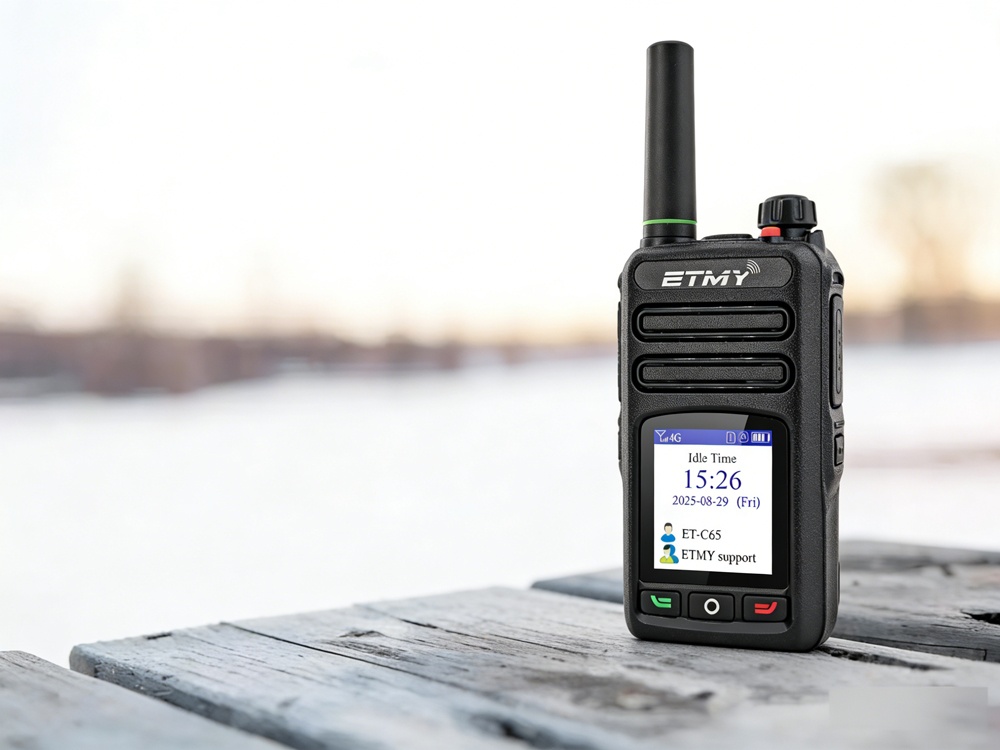
A recent industry report highlights PoC radio adoption for faster, long-distance team communication. Designed for cellular network connectivity, these radios improve coordination in public safety, logistics, and field operations, while offering beginner-friendly setup guidance to ensure reliable activation and compliance.
How exactly do you use a newly acquired PoC radio?