
Introductory knowledge of amateur radio UV section
2021-11-13

source:pttcn.net
New enthusiasts need to understand some basic knowledge, this article will lead you to understand the UV section. Generally, we say that the UV segment refers to 144MHz and 430MHz. Although it is not rigorous, this is the most commonly used term. This article is not a textbook, and may not be fully applicable to your situation. For reference only, please carry out amateur wireless activities based on actual conditions.
When new enthusiasts get the equipment, it is best to learn some basic knowledge and basic operating specifications. The norms vary from place to place, learn from the good and avoid bad practices. Such conflicts often occur, novices make mistakes, and some "old fans" come forward to criticize and criticize. It is normal for novices to make mistakes, and “veterans”’ accusations are not too problematic, but in fact, there are often contradictions. Most of them are "veteran" attitudes and methods. Being superior and self-righteous are unwelcome. And some questions are inherently ambiguous, such as the question of whether to join the association, some friends think it is necessary, some friends think it is not necessary at all. People who hold different opinions, the discussion on this issue is meaningless.
Relay operation may be the first operation method that new enthusiasts come into contact with, and this method is slightly different from other amateur radio methods. Normally, the relayed signal is very clear, so this is very different from shortwave operation.
If you want to connect, switch to the relay frequency and try to call to see if anyone is listening. If someone is there, he will answer you. If no one answers, there is no need to call for a long time. According to requirements, when calling, you must say your call sign instead of just a single "CQ". This is a good practice. If you want to call someone, first let them know who you are.
Inserting, interrupting the conversation of others, we generally think that it is impolite. Unless you are very interested in the topic you are talking about, or have your own opinions and opinions that need to be exchanged. Relay is a shared resource. If someone interrupts your conversation, you should be happy. This shows that you have several interesting topics. No one has exclusive rights to frequencies and repeaters.
In some areas, some relays are specially prepared for emergency. Such relays should be kept quiet. If you are just chatting and there is no urgent matter, don't use it. There are many frequencies and many relays. Since you know that it is specially prepared by certain organizations for emergency purposes, don't use it indiscriminately. This is not a time to ask for fair use of relays. Respect others' labor results and observe the way relays are used. If an emergency relay is occupied by ordinary communication, there will be many problems in the control and use of the relay. Emergency response should follow the principle of emergency, and there needs to be fixed personnel on duty to control the entire network in an emergency. Under normal circumstances, it should remain quiet.
In the strictest sense, the purpose of relay is to expand the communication range of handheld and mobile stations. A fixed station with a reasonable antenna usually does not need a relay to extend the range. I usually use a fixed station at home, and rarely use mobile and mobile stations, so I rarely appear on the relay. However, the use of relay is a common practice for most enthusiasts, and some friends even think that the UV segment is a relay. The relay is a very valuable resource, especially the relay with a large coverage. If you communicate with a station that is very close, try to use direct frequency and leave the relay to those who need it.
A relay is a common resource, and it takes a lot of time and money to keep a relay running normally. Try to give the repeater frequency to those who need it, and try not to interrupt the communication on the repeater. Be polite and respect others. The content of the conversation on the relay needs to be considered, because enthusiasts and unlicensed enthusiasts may be listening to the conversation on the frequency. Any party who speaks dirty words in frequency is guilty, and there is no love or hatred for no reason. This will cause very bad effects.
Repeaters are very powerful and useful tools, they can significantly extend the range of handheld or mobile radio. The relay can also provide extended functions, such as Internet connection. New enthusiasts often come to the conclusion that the only thing worth operating in the UV section is the relay. In fact, this is not the case, direct frequency communication is more interesting. Direct frequency communication is communication without relay. The requirements for antenna type, antenna height, and power are much higher than those for relay. This is a challenge to see how far your signal can reach. When using a relay, your signal only reaches the relay. No matter how far the connection is, it is the credit of the relay and has little to do with your equipment.
For relay operation, the frequency, frequency difference and tone need to be set. Frequency is the transmitting frequency and receiving frequency of the relay. The frequency difference is the offset of the transmit frequency, and the tone is the CTCSS that is usually required to access the relay.
The relay may have malicious interference problems. If you hear such things (interference, swearing, etc.), ignore him. Your certain reaction will only encourage their behavior. In addition, the interference may not be intentional, and some hobbyists will test whether the relay can be turned on.
The 2m and 70cm wavebands are usually line-of-sight propagation. This means that the signal is transmitted to the optical horizon (perhaps farther), and the height increases the distance to the horizon and the propagation distance. This is why the relay is located on the top of a mountain or a tall building.
The FM signal is different from the commonly used single-sideband mode of shortwave, and the FM signal report is also different from the single-sideband mode. A strong signal will make the FM receiver completely noise-free, while a weak signal will cause a lot of noise. So RS signal report is not so suitable for FM mode, you can use light noise, severe noise, etc. to describe. The threshold effect of FM mode, there will be 51 signal reports, that is, the voice is very clear, but the signal strength is not high.
When using a relay, two communication paths are working. The path from the sending station to the relay and the path from the relay to the receiving station. Any of these paths will exhibit noise due to weak signals. If the receiving station has a strong S-meter strength, but the sound sounds very noisy, then the reason is between the sending station and the relay, and the sending station enters the relay with a weak signal. Remember, the signal strength indicated by your S-meter is for the relay, not for the transmitting station. Therefore, through the relay connection, the signal report will appear as 19, the sound is extremely poor, but the intensity is 9 (relay intensity).
In the 2-meter band repeater, the frequency difference is generally 600 kHz; in the 70 cm band, the frequency difference is generally 5MHz.
How do you need to prepare for weather emergencies?
Chen Qingzhou, the founder of Hytera, talks about the impact of the U.S. purchase ban on the company
Related Article

A practical guide to testing two-way radio coverage in the environment where people will actually depend on it.
Why a Radio Coverage Test Can Pass— and the System Still Fails in Real Operation

Most radio operators never take grounding seriously—until their gear is fried. This piece exposes three fatal grounding traps, from shallow rods to mixed signal-and-power grounds, then hands you a six-step, code-compliant checklist drawn from NEC Article 810 and IEEE Std 142. Copy this homework instead.
A grounding error can instantly fry your radio—Installation guide for radio system lightning protection

Professional walkie talkie earpiece guide covering how to put on, wear, and use earpieces correctly. Features brand-specific tips for Motorola, Hytera, Baofeng, and more with structural comparisons for optimal comfort and performance.
How to use walkie talkie earpiece?- The Complete Guide to Walkie Talkie Earpiece Setup
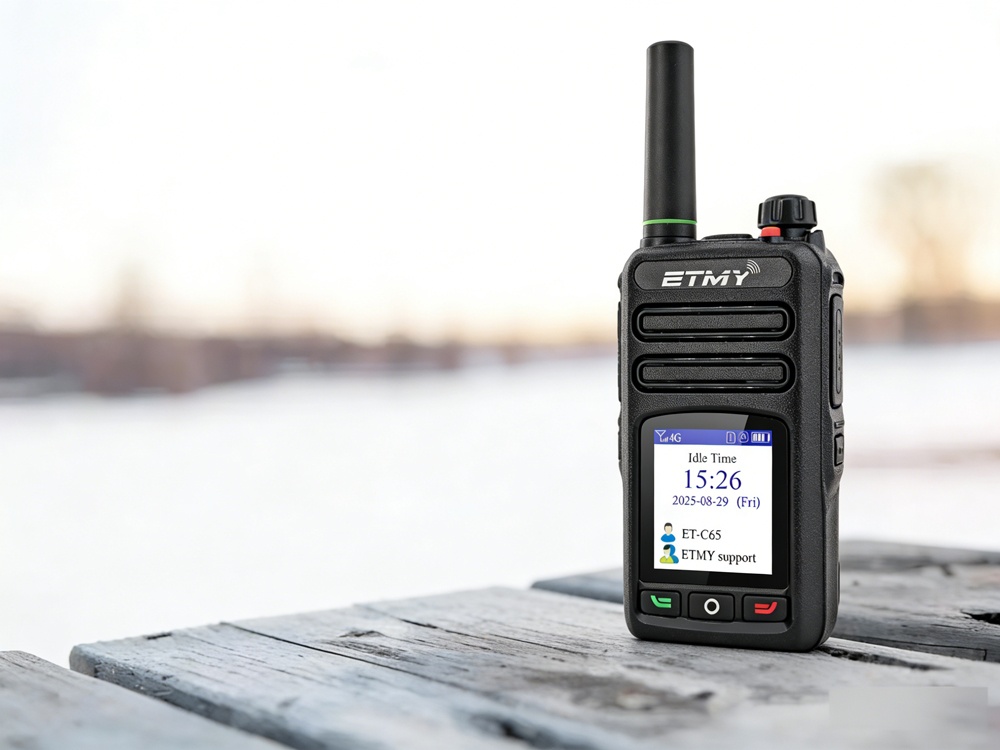
A recent industry report highlights PoC radio adoption for faster, long-distance team communication. Designed for cellular network connectivity, these radios improve coordination in public safety, logistics, and field operations, while offering beginner-friendly setup guidance to ensure reliable activation and compliance.
How exactly do you use a newly acquired PoC radio?