
New invention: Antenna is expected to replace battery 5G network becomes wireless network
2022-01-13

5G networks are highly focused radio technology, but some of the energy isn't used, it's wasted. A group of scientists broke through the technical bottleneck and invented an antenna that can collect the electromagnetic wave energy of 5G network, convert it into electricity, and provide electricity for wearable devices and IoT, which is expected to gradually replace batteries.
Researchers at the Georgia Institute of Technology have developed a Rotman lens-based rectenna system that, for the first time, has successfully converted 5G millimeter waves at 28 GHz into electrical current. The findings were published in the journal Scientific Reports on January 12.
Rotman lenses are commonly used in radar surveillance systems, allowing the system to observe multiple directions at the same time without constantly adjusting the direction of the antenna. Larger antennas are required to collect enough energy to support small devices at farther distances from cell towers.
"We solved the problem of picking up signals from only one direction, and the system has a large coverage," said Aline Eid of Georgia Tech's School of Electrical and Computer Engineering, one of the study's principal investigators.
5G network signal density is much greater than previous generations, using high-frequency bands, and a lot of energy is wasted in addition to communication purposes. "With this innovative technology, we use a large antenna that operates at high frequencies and can receive energy from all directions."
"Researchers have tried to harvest energy in the 24 or 35 GHz band before," Eddy said, "but these antennas have to be aimed directly at the 5G source to work, and our technology can receive in multiple directions and cover a wide area."
The researchers showed their antenna, which looked like a pattern like some circuit diagrams printed on a sheet of sheet material.
According to the study, this "spider"-like layout is an antenna printed on it with three-dimensional printing technology, with the antenna on one side and the beam channel that collects energy to the rectifier on the other.
Test results show that this technology harvests 21 times more energy than other technologies with the same breadth of signal coverage.
The researchers said that this technology will provide power for 5G radio frequency identification devices (RFID) and devices in the Internet of Things. "5G will soon be widespread, especially in urban areas. This technology can replace the batteries of millions, hundreds of millions of wireless sensors, and has a wide range of uses in smart cities, smart agriculture, etc. to be built in the future." Flexible. said Emmanouil M Tentzeris, professor of electronic devices.
Tengelis predicts that in the future, mobile phone providers will provide power services in addition to voice calling services, data services, and power services will become a major business - just as data services have now surpassed call services.
The U.S. Federal Communications Commission's (FCC) approval for 5G networks to use more powerful, denser high-frequency bands is fundamental to the technology's effectiveness. "I've been working on energy harvesting in this field for at least six years, and I haven't been able to find a practical use for this technology," said Jimmy Hester, technical director of Georgia Tech's RFID-affiliated technology company, which is developing 5G RFID technology. is the key, because previously the FCC limited the power and concentration of signals transmitted.”
source:pttcn.net
Dialogue with Wang Ke, Vice President of Hytera: The integration of public and professional schools sounded the clarion call for the development of the next generation of key communication industries
Note: Obtaining the frequency parameters of police walkie-talkies is a crime!
Related Article

A practical guide to testing two-way radio coverage in the environment where people will actually depend on it.
Why a Radio Coverage Test Can Pass— and the System Still Fails in Real Operation

Most radio operators never take grounding seriously—until their gear is fried. This piece exposes three fatal grounding traps, from shallow rods to mixed signal-and-power grounds, then hands you a six-step, code-compliant checklist drawn from NEC Article 810 and IEEE Std 142. Copy this homework instead.
A grounding error can instantly fry your radio—Installation guide for radio system lightning protection

Professional walkie talkie earpiece guide covering how to put on, wear, and use earpieces correctly. Features brand-specific tips for Motorola, Hytera, Baofeng, and more with structural comparisons for optimal comfort and performance.
How to use walkie talkie earpiece?- The Complete Guide to Walkie Talkie Earpiece Setup
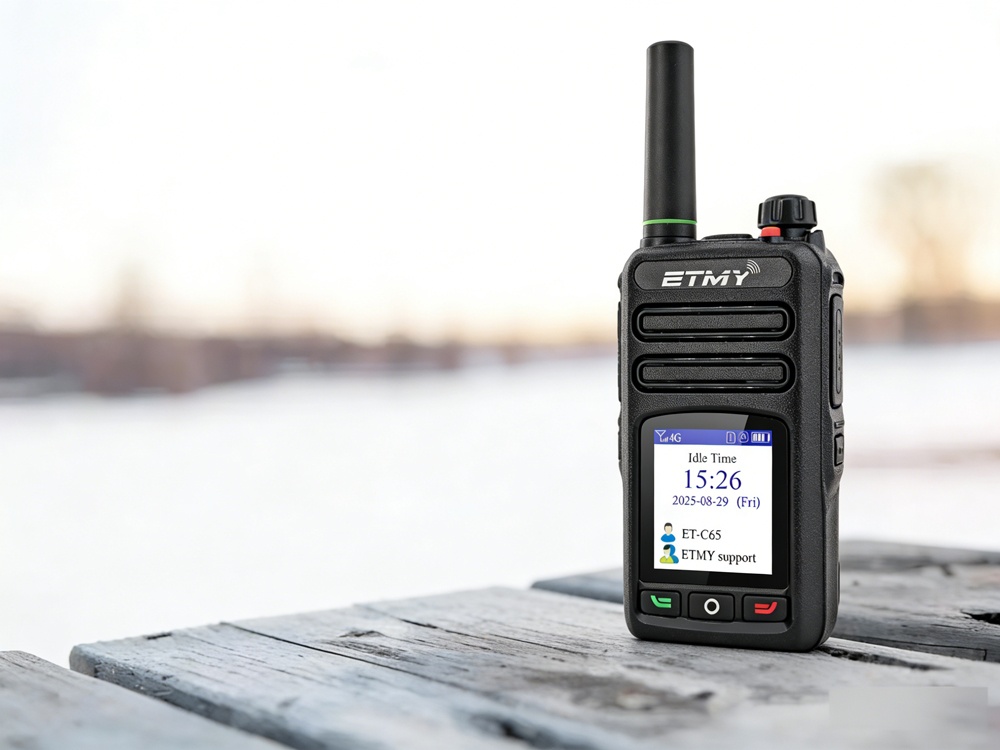
A recent industry report highlights PoC radio adoption for faster, long-distance team communication. Designed for cellular network connectivity, these radios improve coordination in public safety, logistics, and field operations, while offering beginner-friendly setup guidance to ensure reliable activation and compliance.
How exactly do you use a newly acquired PoC radio?