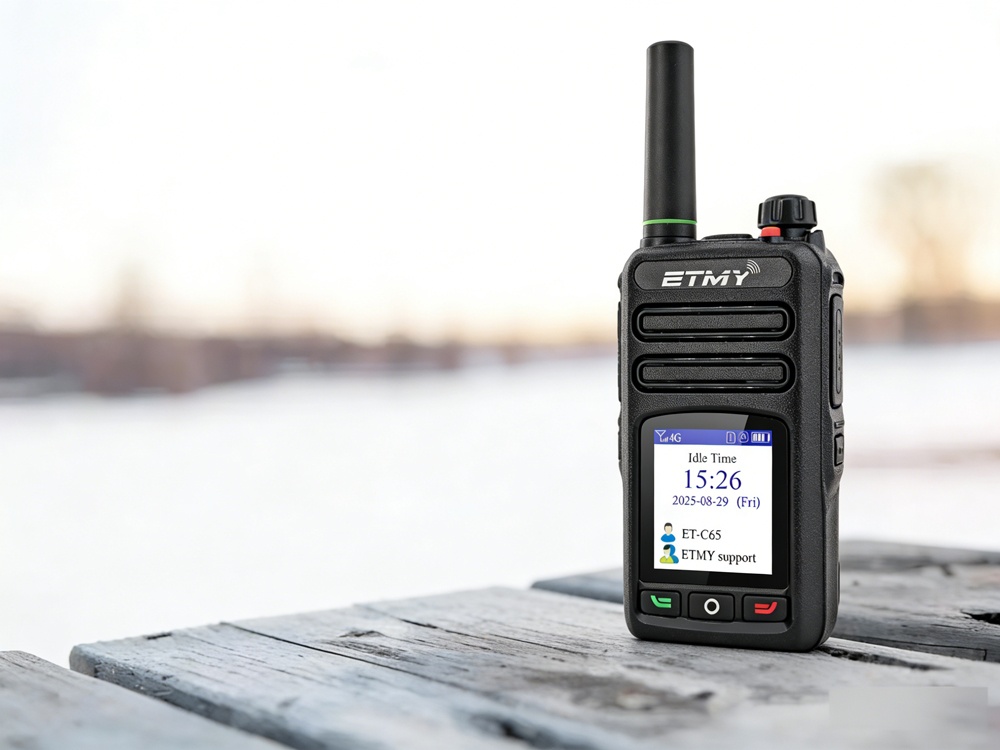
Are Walkie-Talkies Legal in India? — A Comprehensive Guide to Compliance

Walkie-talkies, as instant, reliable communication tools that do not rely on cellular networks, are highly valued in both professional and everyday scenarios worldwide. Whether for keeping travel groups connected, coordinating large events, or daily operations in construction and hospitality industries, walkie-talkies play an irreplaceable role. If you plan to use these devices in India, you will inevitably ask: Are walkie-talkies legal in India?
The answer is clear: Yes, but they must strictly comply with regulations set by the Wireless Planning & Coordination Wing (WPC) of India. India maintains stringent management of radio spectrum, and any radio transmission equipment must adhere to national rules. This article provides a comprehensive guide based on the latest official information to help you understand everything you need to know about using walkie-talkies compliantly in India.
Understanding License-free Walkie-Talkie Frequency Bands in India
In India, walkie-talkies that the public can legally use without a license must operate strictly within specific frequency bands and meet relevant technical parameters. The license-free walkie-talkie service in India uses the 446.0 - 446.1 MHz band, which is specifically designed for low-power, short-range public communication.

Key technical parameters include:
-
Frequency Range: 446.000 - 446.100 MHz
-
Number of Channels: 8 standard channels
-
Channel Spacing: 12.5 kHz
-
Modulation Mode: F3E (Frequency Modulation)
-
Maximum Permissible RF Output Power: 0.5 Watts (500mW)
-
Antenna Requirements: Must be fixed, non-detachable integrated antenna
These regulations are similar to the European PMR446 standard but emphasize India-specific power limitations. The 0.5W power restriction means the communication range typically reaches 1-2 kilometers in open areas and about 500 meters in urban environments, sufficient for most daily application scenarios.
Important Notes:
-
Devices must obtain WPC's ETA (Equipment Type Approval) certification
-
Use of walkie-talkies from other countries without WPC certification is strictly prohibited
-
Frequency band usage must comply with relevant etiquette and regulations
India's Radio Equipment Compliance Certification System
In India, radio equipment requires two main certifications: BIS safety certification and WPC wireless certification.

BIS Certification Requirements:
-
Mandatory product certification scheme
-
Focuses on product safety and quality
-
Valid for two years, renewable
-
Requires detailed technical documentation and test samples

WPC Certification Process:
-
Application submission by an Indian local representative
-
Device testing in recognized laboratories
-
Submission of complete technical documentation
-
WPC review and issuance of ETA certificate
-
Certificate remains valid long-term unless device hardware changes
Key Documents Required for Certification:
-
Product technical specifications
-
Circuit diagrams and block diagrams
-
Product appearance photos
-
Test reports
-
User manual

How to Apply for a Walkie-Talkie Usage License
For general users, using WPC-certified 446 MHz band walkie-talkies does not require a separate license. However, professional users who need to use other frequency bands or higher power must apply for the appropriate wireless station license.
Professional radio License Application Process:
-
Determine Frequency Requirements
First, inquire with WPC about the availability of required frequencies in your local area. Frequency resource allocation varies by region. -
Select Compliant Equipment
Ensure selected equipment models have WPC type approval. Devices must support the required frequency bands and meet technical standards. -
Prepare Application Materials
-
Completed application form
-
Equipment technical specifications and WPC certification documents
-
Applicant identity proof and address proof
-
Proof of frequency usage feasibility
-
-
Submit Application
Submit online through the SARAL SANCHAR portal or deliver to the local WPC office. -
Pay Fees
Pay applicable application and annual fees based on equipment type, frequency, and power. -
Await Approval
WPC will review the application and may conduct equipment tests or on-site inspections. -
Obtain License
Upon approval, receive the wireless station license, which requires periodic renewal.
License Validity and Management:
-
Typically valid for 1-5 years
-
Must apply for renewal before expiration
-
License must be kept with the equipment
-
Usage is subject to WPC monitoring
Special Regulations for CB Radio in India
CB Radio (Citizens Band Radio) has special management regulations in India, completely different from ordinary walkie-talkies.

CB Radio Usage Requirements:
-
Requires license application: Can use CB radios without a license In India
-
Frequency allocation: Uses the 26.957 MHz to 27.283 MHz band
-
Power limitations: Maximum output power typically 4 Watts
-
Equipment requirements: The equipment itself must pass the WPC type approval (ETA), but the user does not need to apply for an additional license
Main Differences Between CB Radio and Walkie-Talkies:
| Feature | CB Radio | License-free Walkie-Talkies |
|---|---|---|
| Frequency Band | 27 MHz HF band | 446 MHz UHF band |
| Propagation Characteristics | Long-distance propagation (skywave) | Line-of-sight propagation |
| License Requirements | License-free | License-free |
| Typical Applications | Long-distance truck drivers, rural communication | Short-distance team communication |
Compliance Recommendations and Best Practices
To ensure legal and compliant use of walkie-talkies in India, follow these recommendations:
For Tourists and Short-term Users:
-
Rent or purchase locally certified 446 MHz walkie-talkies or CB radios
-
Confirm devices have WPC certification marks
-
Adhere to prescribed power and frequency limits
-
Avoid using personal devices from other frequency bands
For Businesses and Long-term Users:
-
Apply for appropriate licenses for professional needs
-
Choose certified equipment suppliers
-
Establish equipment usage and management protocols
-
Conduct regular compliance training for employees
Equipment Selection Guide:
-
Check for WPC certification marks on devices
-
Confirm operating frequency is 446.0-446.1 MHz
-
Verify maximum power does not exceed 0.5W
-
Choose models with non-detachable antennas
-
Keep purchase receipts and certification documents
Frequently Asked Questions
Q: Can I bring walkie-talkies from abroad to use in India?
A: This is not recommended. Even if devices support the 446 MHz band, using them in India without WPC certification is illegal. It's best to rent or purchase certified equipment locally.
Q: What are the consequences of using walkie-talkies in violation of regulations?
A: Possible consequences include equipment confiscation, fines, and even legal proceedings. WPC conducts spectrum monitoring, and illegal signals can be easily located.
Q: How can enterprises apply for permits for large quantities of walkie-talkies?
A: Applications can be made in bulk, but each device requires individual registration. Professional consultation is recommended.
Q: How long does the license application process typically take?
A: Usually takes 4-8 weeks, depending on application complexity and WPC workload.

Conclusion
Using walkie-talkies in India is entirely feasible but must strictly comply with local regulatory requirements. For most users, choosing WPC-certified, 446.0-446.1 MHz band, 0.5W license-exempt walkie-talkies is the simplest and most convenient option. Users with special needs can apply for appropriate licenses through formal channels.
Remember that compliant use is not only about legal adherence but also respect for valuable radio spectrum resources and the best guarantee for ensuring interference-free communication. Before using walkie-talkies in India, be sure to do your homework and confirm device compliance to enjoy safe and reliable wireless communication services.
What is radio repeaters? Is it legal to use?
How to Talk on a Walkie Talkie? A Beginner's Guide
Related Article