
What is radio repeaters? Is it legal to use?
author: z
2025-09-26
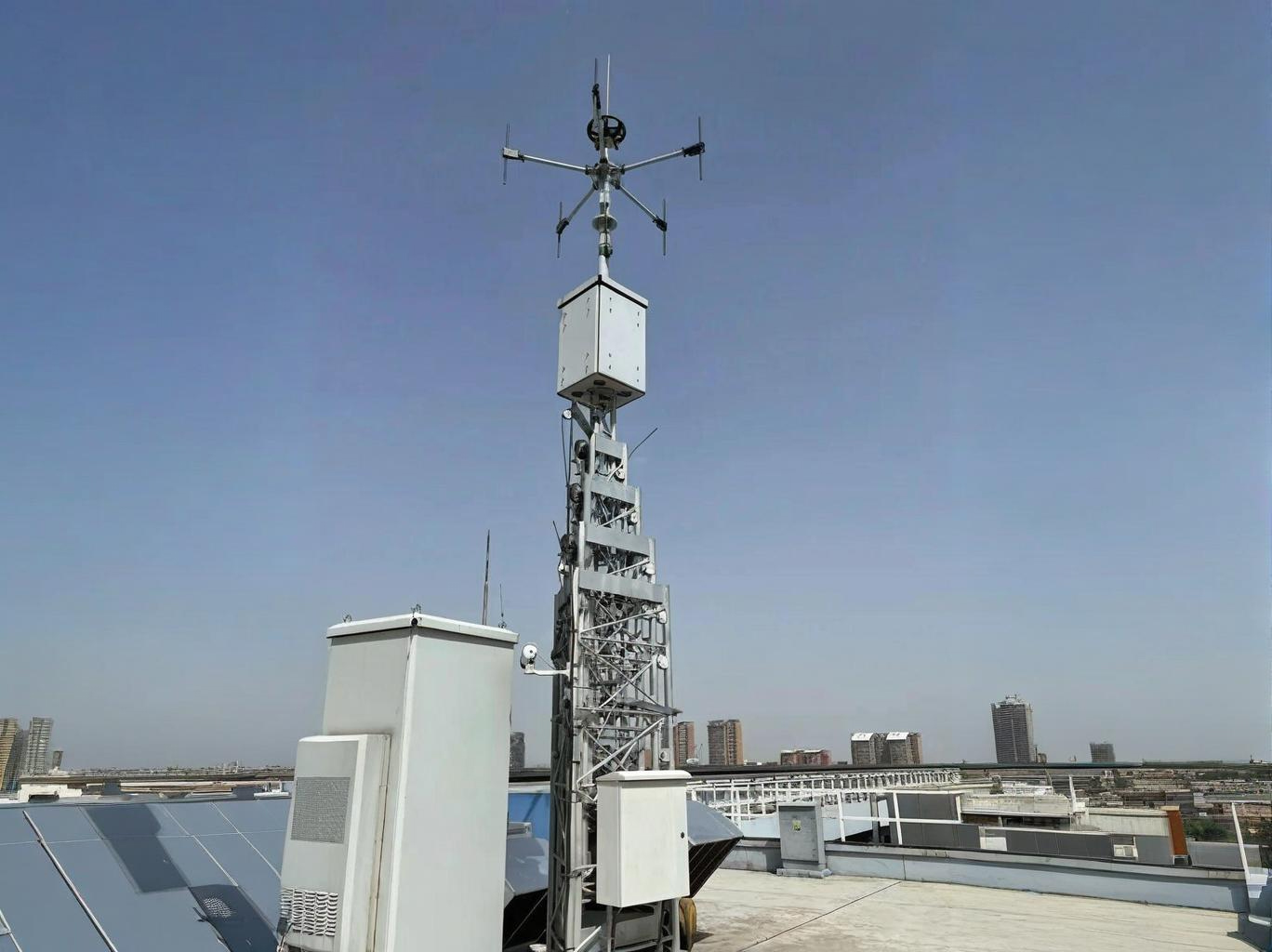
A radio repeater is an unmanned "signal relay station" that receives weak transmissions, amplifies them, and then retransmits them at a higher power, instantly doubling or tripling the effective range of a handheld or mobile radio.
When we're in mountain valleys, between high-rise buildings in cities, or at large events, we often encounter intermittent radio signals, significantly reducing call distance. Repeaters are often used to boost the signal.
Repeater Station Components and Functions
Receiver and Transmitter
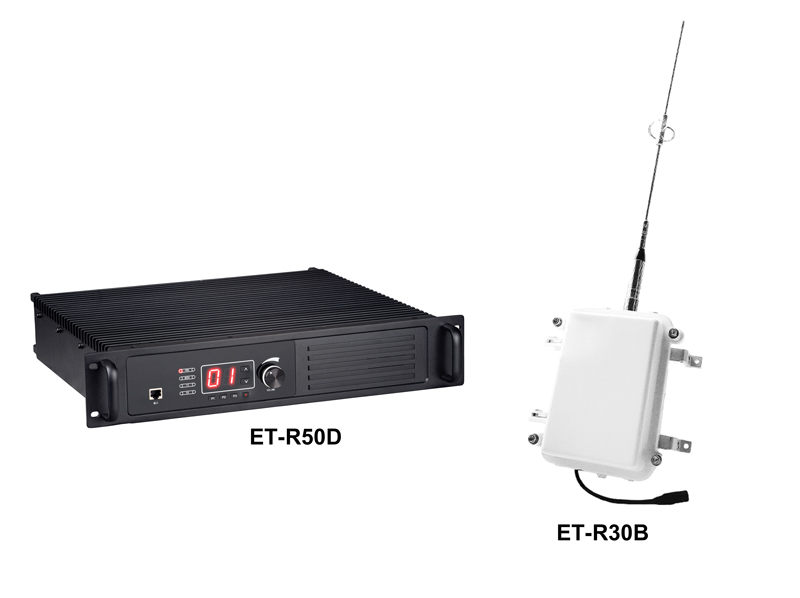
Next, we'll take a closer look at the components and workings of a repeater station. First, the receiver captures and processes the signal. To ensure efficient reception of weak signals, the receiver must be sensitive and have sub-sound capabilities to reduce unnecessary interference. The transmitter amplifies and retransmits the signal from the mobile device, enabling longer-range transmission. A certain distance, known as the "frequency offset," must be maintained between the transmitting and receiving frequencies to prevent the repeater from picking up its own sound and interfering with its own signal.
Next, we'll take a closer look at the components and workings of a repeater station. First, the receiver captures and processes the signal. To ensure efficient reception of weak signals, the receiver must be sensitive and have sub-sound capabilities to reduce unnecessary interference. The transmitter amplifies and retransmits the signal from the mobile device, enabling longer-range transmission. A certain distance, known as the "frequency offset," must be maintained between the transmitting and receiving frequencies to prevent the repeater from picking up its own sound and interfering with its own signal.
Antenna and Feeder
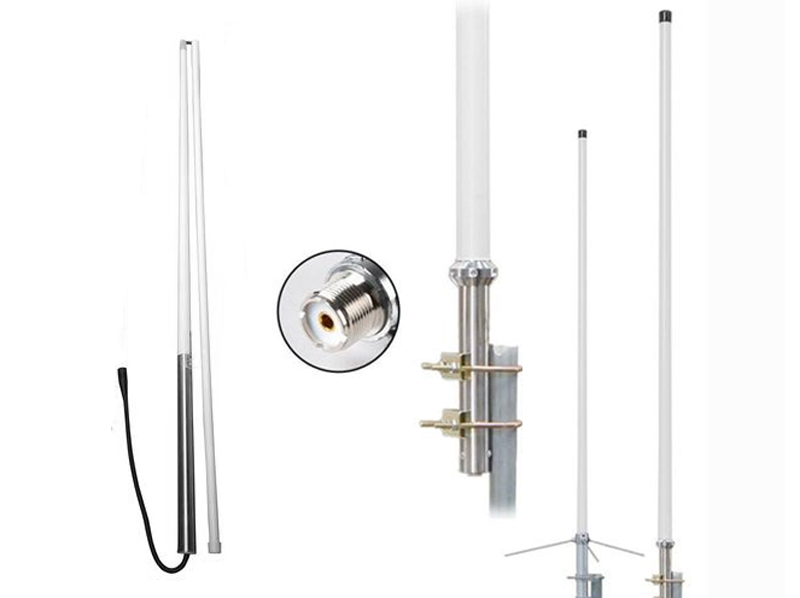
As a key component for transmitting and receiving signals, the antenna requires high gain and durability. To ensure smooth signal transmission, the antenna should be mounted as high as possible, away from obstructions. High-gain antennas require elevated placement, and high-quality feeder cables enhance signal transmission and ensure communication quality. The resulting improvement in communication quality is well worth the investment. Although the antenna investment may be higher, the long-term benefits are worthwhile. Furthermore, the feeder cable is a crucial component of the repeater, responsible for signal transmission. Compared to standard coaxial cables, thicker feeder cables offer superior performance, ensuring that even weaker signals reach the receiver.
As a key component for transmitting and receiving signals, the antenna requires high gain and durability. To ensure smooth signal transmission, the antenna should be mounted as high as possible, away from obstructions. High-gain antennas require elevated placement, and high-quality feeder cables enhance signal transmission and ensure communication quality. The resulting improvement in communication quality is well worth the investment. Although the antenna investment may be higher, the long-term benefits are worthwhile. Furthermore, the feeder cable is a crucial component of the repeater, responsible for signal transmission. Compared to standard coaxial cables, thicker feeder cables offer superior performance, ensuring that even weaker signals reach the receiver.
Controller and Power Supply
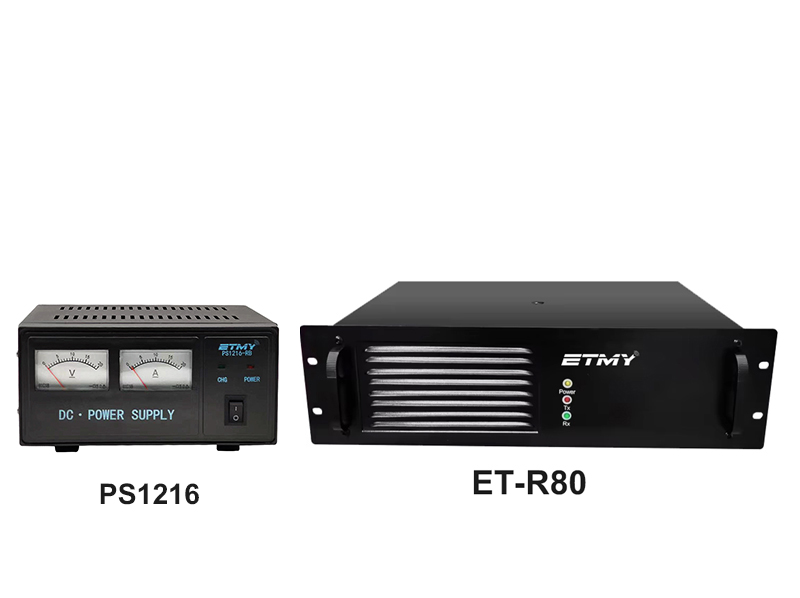
The controller manages the repeater's call sign and message transmissions. By law, repeaters must announce their call sign at specific intervals, either via voice or CW signals. The controller can also transmit pre-recorded messages and other information about the repeater. The power supply provides the necessary power for the repeater. When operating in the field, the radio is typically solar powered; in areas with abundant wind resources, a wind turbine may be used. However, during periods of continuous rain and overcast weather, extended calls on the repeater should be minimized to conserve power.
The controller manages the repeater's call sign and message transmissions. By law, repeaters must announce their call sign at specific intervals, either via voice or CW signals. The controller can also transmit pre-recorded messages and other information about the repeater. The power supply provides the necessary power for the repeater. When operating in the field, the radio is typically solar powered; in areas with abundant wind resources, a wind turbine may be used. However, during periods of continuous rain and overcast weather, extended calls on the repeater should be minimized to conserve power.
Analog vs. Digital Repeaters
| Feature / Parameter | Analog Repeater | Digital Repeater |
|---|---|---|
| Basic principle | Amplifies & re-transmits the continuous FM signal “as-is” | Converts voice to binary, error-corrects, then re-modulates |
| Signal quality | Noise & distortion accumulate on every hop | Noise-free audio to the fringe; drops only when BER > limit |
| Spectrum efficiency | 1 call per 12.5 kHz channel | 2 × calls per 12.5 kHz (TDMA) or 6.25 kHz (FDMA) |
| Coverage @ same RF power | ~70 % of digital range (higher noise floor) | Up to 20 % farther; usable audio in weaker fields |
| Error correction | None – whatever noise enters is re-transmitted | FEC + CRC; fixes bit-errors before sending |
| Encryption option | Not standard (requires external module) | Built-in 40 / 128 / 256-bit AES available |
| Data services | None (only 2-tone / 5-tone low-rate) | Text, GPS, IP packet, telemetry, over-the-air re-keying |
| Audio bandwidth | 12.5 kHz classic FM | 6.25 kHz equivalent or 12.5 kHz digital |
| Latency | ~20 ms (straight-through) | 40-80 ms (encode + decode + FEC) |
| Handset compatibility | Any analog FM radio | Must match same digital protocol (DMR, dPMR, NXDN, P25, TETRA) |
| Mixed-mode operation | — | Most new repeaters offer dynamic mixed mode (FM + DMR on same channel) |
| Amplifier requirement | Class C or AB okay | Needs linear Class A / AB amp to preserve 4-FSK / QAM shape |
| Power consumption @ 50 W | ~180 W AC (FM) | ~150 W AC (TDMA 2-slot, 50 % duty) |
| Cost (50 W UHF repeater) | $ 200 – 800 | $ 800 – 2000 |
| Upgrade path | Replace whole unit | Firmware + software license (new features, new protocols) |
| Licensing hassle | Same paperwork; only channel pair matters | Same paperwork; protocol ID sometimes required |
Are radio repeaters illegal?
Not necessarily, but they must be set up legally and used in accordance with regulations.
Legal repeater use: Hold an amateur radio license and set up a repeater within the specified frequency band. Obtain approval from the radio regulatory authority, such as a station permit from the Ministry of Industry and Information Technology of China. When using a repeater, adhere to the principles of "non-interference, non-privacy, and non-commercial use."
Illegal repeater use:
Unauthorized station installation: Setting up a repeater without authorization. Occupying a frequency band: Transmitting on an unauthorized frequency. Interfering with others' communications: Causing harmful interference and refusing to rectify it. Illegal use: For example, broadcasting advertisements or monitoring police frequencies.
If you wish to use a radio repeater legally, please first understand the radio regulations in your country, apply for the appropriate license, and comply with frequency usage regulations.
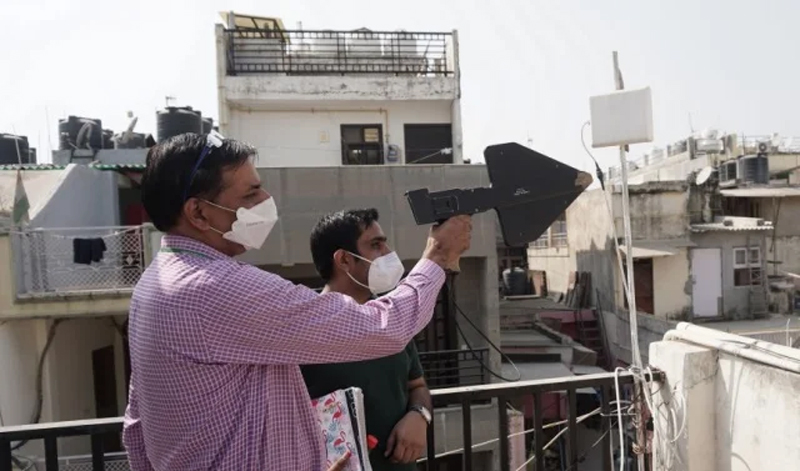
Regulations on radio repeaters in various countries around the world
| Country/Region | Allows individuals/associations to set up a repeater | Required licenses/approvals | Frequency coordination | Fees/Validity | Violations/Consequences |
|---|---|---|---|---|---|
| China | ✅ Amateur operations allowed; other services require organizational approval | 1) Operator license (individual) 2) Radio station license (MIIT/prov. wireless committee) 3) Repeater approval (all repeaters require approval) | Must be allocated/assigned by provincial/national radio authorities; coordination first | Licenses renewed every 5 years; no spectrum fee for amateur | Equipment can be seized; fines up to CNY 500,000; possible criminal liability |
| United States (FCC) | ✅ Amateur, GMRS, and commercial allowed | 1) Appropriate license (Amateur/GMRS/Business) 2) Frequency Coordinator letter 3) Online station license (call sign) | Must obtain coordination letter before FCC will process | GMRS: $35/10 years; Amateur: free | Unauthorized transmissions: up to $10,000 per day; deliberate interference can lead to imprisonment |
| Canada (ISED) | ✅ Same as United States | 1) Amateur License Basic/Advanced 2) Frequency coordination (RAC/Regional Coordinator) 3) Radio license (online) | Coordination required | Amateur license: free updates every 5 years | Unauthorized repeater operation: fines up to C$5,000 and equipment seizure |
| EU (CEPT framework) | ✅ Amateur operation allowed | 1) National amateur license (CEPT T/R 61-01 recognized level) 2) Many countries require “repeater registration” or notice | National radio authorities coordinate collectively | Generally free or nominal fees | Penalties vary by country; e.g., Germany up to €50,000 |
| United Kingdom (Ofcom) | ✅ | 1) Amateur license (Foundation/Intermediate/Full) 2) Online “Repeater Notice” | Coordinated by RSGB and then submitted to Ofcom | Free | Unregistered repeaters may be shut down and fined up to £5,000 |
| Japan (Ministry of Internal Affairs and Communications) | ✅ Limited to Class 1/2 amateurs | 1) Class 1 or Class 2 amateur license 2) Prior submission of “Repeater Station Notification” | Requires prefectural bureau technical confirmation | Free | Unauthorized transmissions can incur up to ¥1,000,000 fine or up to 1 year imprisonment |
| Australia (ACMA) | ✅ | 1) Amateur license (Advanced allows repeater) 2) Online application for “Repeater Certificate” | Coordinated by WIA (frequency coordination) | Free | Unauthorized transmissions may incur up to AU$21,000 fine |
| India (WPC) | ✅ Restricted to Senior Amateur level | 1) ASOC (General level) 2) Apply for “Repeater Station Licence” with WPC | WPC pre-allocation required | About ₹1,000/year | Unauthorized repeater operation: up to 3 years imprisonment and equipment seizure |
| Brazil (ANATEL) | ✅ | 1) Amateur license (Classe A/B) 2) Apply for “Autorização de Repetidora” with ANATEL | ANATEL coordinates centrally | Free | Unauthorized operation: fine of R$5,000–R$20,000 |
| Russia | ✅ | 1) Amateur license (Category 1/2) 2) Apply to Roskomnadzor for “Registration of radio transmitting device” | Coordination/registration managed by regulator | Not specified | Not specified |
What is a DMR Radio? A Comprehensive Guide to Professional Radio Communication
Are Walkie-Talkies Legal in India? — A Comprehensive Guide to Compliance
Related Article

A practical guide to testing two-way radio coverage in the environment where people will actually depend on it.
Why a Radio Coverage Test Can Pass— and the System Still Fails in Real Operation

Most radio operators never take grounding seriously—until their gear is fried. This piece exposes three fatal grounding traps, from shallow rods to mixed signal-and-power grounds, then hands you a six-step, code-compliant checklist drawn from NEC Article 810 and IEEE Std 142. Copy this homework instead.
A grounding error can instantly fry your radio—Installation guide for radio system lightning protection

Professional walkie talkie earpiece guide covering how to put on, wear, and use earpieces correctly. Features brand-specific tips for Motorola, Hytera, Baofeng, and more with structural comparisons for optimal comfort and performance.
How to use walkie talkie earpiece?- The Complete Guide to Walkie Talkie Earpiece Setup
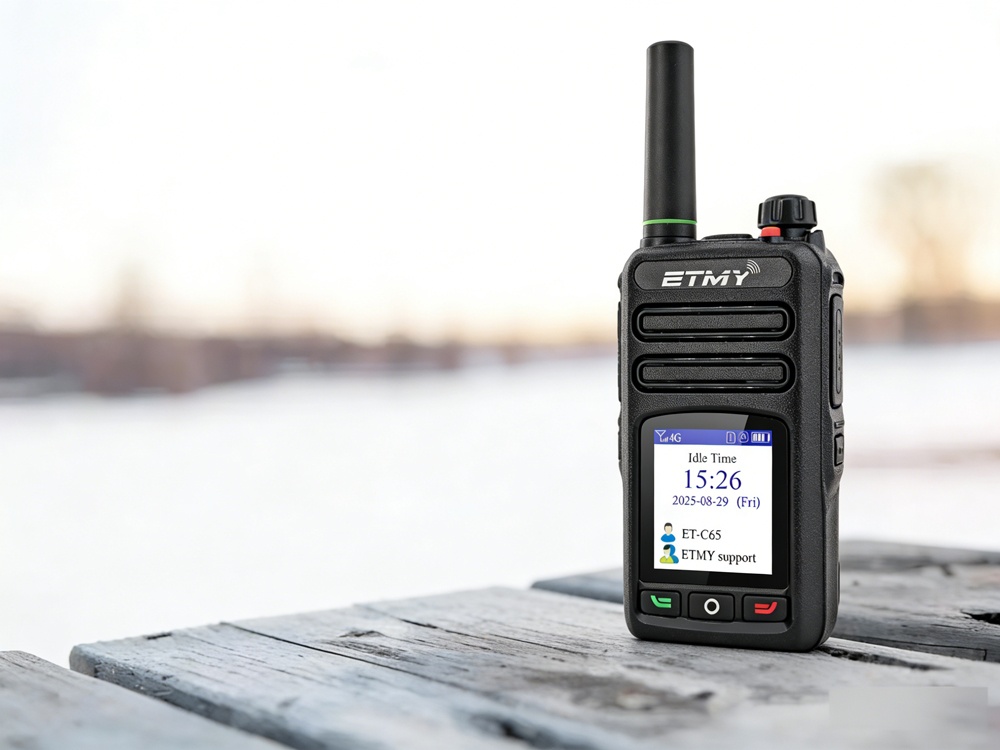
A recent industry report highlights PoC radio adoption for faster, long-distance team communication. Designed for cellular network connectivity, these radios improve coordination in public safety, logistics, and field operations, while offering beginner-friendly setup guidance to ensure reliable activation and compliance.
How exactly do you use a newly acquired PoC radio?