
Radio amateurs, from their room to the world in the days of confinement
2021-08-23
source:deia.eus
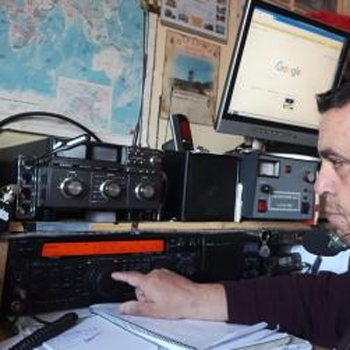
The coronavirus and the state of alert issued in response to the pandemic have increased the number of connections and increased calls to thousands of radio stations, especially the number of people who greet each other via radio waves every day.
If advances in communication technologies such as the Internet, social networks, mobile phones, and satellite antennas have reduced the weight of amateur radio, the development momentum of amateur radio is now strong, and you can enjoy "many hours" without leaving home. In fact, Spain is the fourth country in the world to have the most amateur radio licenses.
The fact of staying at home shows that regulars of this hobby turn on their devices more than usual, and those who have it have somehow forgotten the dust on their devices. "Here EA4AKP is the world, change." This is how Pedro Garrido, chairman of the Merida region of the Spanish Amateur Radio Enthusiasts Union (URE), starts daily contact.
"Now there are hundreds of connections, passing through different frequency bands or segments, which are counted," Garrido said, admitting to EFE, "I haven't had so much time to focus on this for a long time."
"It's a hobby, a way to make friends anywhere on the planet," said Garrido, who liked the radio as a child. "Listen to it and understand how the sound comes out of the box."
If the coronavirus is the cause of this restriction, so there is more time to contact, then COVID-19 is also the subject of conversation. In fact, the Costa Blanca (Alicante), the Cultural Association of Radio Amateurs, launched an initiative called "#yomequedoencasa Do Broadcasting"
Francisco Muñoz, an amateur radio enthusiast in Extremadura, said: "We are talking about the usual... working equipment, the characteristics of the antenna, the weather, but now there is the coronavirus. ." Mir space station.
The goal is to promote amateur radio, "do your part in the difficult period of isolation, make them more bearable" and "do a lot of broadcasting at home." Professional photographer Jerónimo Morales is one of them. "After catching up, I have contacted Germany, Serbia and Italy. The Italians and Spaniards faced this tragedy and we gave each other a lot of support," he said.
Other fans who were more "connected" in their time chose to clean up their radio stations, their power supplies and their microphones to "return" to the space of radio waves. It is a competition that all radio stations in the world can participate in, have corresponding licenses, and award points for each communication (QSO).
They all understand that amateur radio is not just a need for information or contacting people thousands of miles away. This is the love of radio waves, a different way of understanding radio.
Out of curiosity, with the passage of time and "killing time", people jump to find the "cruel" distance and use the "moon bounce" to reach "infinity". The sense of communication that Guillermo Marconi had when he sent Morse signals through space at the end of the 19th century is still valid for the 3 million radio enthusiasts in the world.
"How?" the humble reporter asked incredulously. "This is a question of using Earth's natural satellites as reflectors for UHF and VHF bands and higher band signals because they pass through the atmosphere," Muñoz replied.
Sometimes, with multiple bounces between the atmosphere and the land layer, "waves can circle the world in less than half a second, allowing you to hear your own voice." What is missing, except confinement, talking to himself.
The coronavirus and the state of alert issued in response to the pandemic have increased the number of connections and increased calls to thousands of radio stations, especially the number of people who greet each other via radio waves every day.
If advances in communication technologies such as the Internet, social networks, mobile phones, and satellite antennas have reduced the weight of amateur radio, the development momentum of amateur radio is now strong, and you can enjoy "many hours" without leaving home. In fact, Spain is the fourth country in the world to have the most amateur radio licenses.
The fact of staying at home shows that regulars of this hobby turn on their devices more than usual, and those who have it have somehow forgotten the dust on their devices. "Here EA4AKP is the world, change." This is how Pedro Garrido, chairman of the Merida region of the Spanish Amateur Radio Enthusiasts Union (URE), starts daily contact.
"Now there are hundreds of connections, passing through different frequency bands or segments, which are counted," Garrido said, admitting to EFE, "I haven't had so much time to focus on this for a long time."
"It's a hobby, a way to make friends anywhere on the planet," said Garrido, who liked the radio as a child. "Listen to it and understand how the sound comes out of the box."
If the coronavirus is the cause of this restriction, so there is more time to contact, then COVID-19 is also the subject of conversation. In fact, the Costa Blanca (Alicante), the Cultural Association of Radio Amateurs, launched an initiative called "#yomequedoencasa Do Broadcasting"
Francisco Muñoz, an amateur radio enthusiast in Extremadura, said: "We are talking about the usual... working equipment, the characteristics of the antenna, the weather, but now there is the coronavirus. ." Mir space station.
The goal is to promote amateur radio, "do your part in the difficult period of isolation, make them more bearable" and "do a lot of broadcasting at home." Professional photographer Jerónimo Morales is one of them. "After catching up, I have contacted Germany, Serbia and Italy. The Italians and Spaniards faced this tragedy and we gave each other a lot of support," he said.
Other fans who were more "connected" in their time chose to clean up their radio stations, their power supplies and their microphones to "return" to the space of radio waves. It is a competition that all radio stations in the world can participate in, have corresponding licenses, and award points for each communication (QSO).
They all understand that amateur radio is not just a need for information or contacting people thousands of miles away. This is the love of radio waves, a different way of understanding radio.
Out of curiosity, with the passage of time and "killing time", people jump to find the "cruel" distance and use the "moon bounce" to reach "infinity". The sense of communication that Guillermo Marconi had when he sent Morse signals through space at the end of the 19th century is still valid for the 3 million radio enthusiasts in the world.
"How?" the humble reporter asked incredulously. "This is a question of using Earth's natural satellites as reflectors for UHF and VHF bands and higher band signals because they pass through the atmosphere," Muñoz replied.
Sometimes, with multiple bounces between the atmosphere and the land layer, "waves can circle the world in less than half a second, allowing you to hear your own voice." What is missing, except confinement, talking to himself.
Tennessee National Guard mobilizes to help flood victims
How ITU provides emergency communications in a pandemic
Related Article

A practical guide to testing two-way radio coverage in the environment where people will actually depend on it.
Why a Radio Coverage Test Can Pass— and the System Still Fails in Real Operation

Most radio operators never take grounding seriously—until their gear is fried. This piece exposes three fatal grounding traps, from shallow rods to mixed signal-and-power grounds, then hands you a six-step, code-compliant checklist drawn from NEC Article 810 and IEEE Std 142. Copy this homework instead.
A grounding error can instantly fry your radio—Installation guide for radio system lightning protection

Professional walkie talkie earpiece guide covering how to put on, wear, and use earpieces correctly. Features brand-specific tips for Motorola, Hytera, Baofeng, and more with structural comparisons for optimal comfort and performance.
How to use walkie talkie earpiece?- The Complete Guide to Walkie Talkie Earpiece Setup
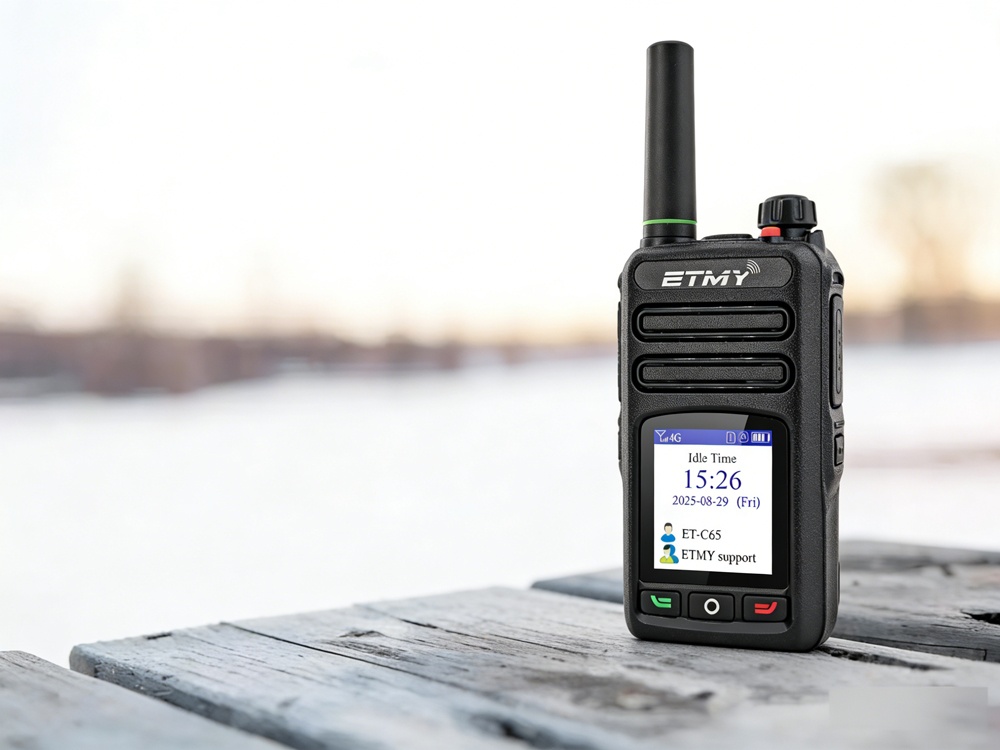
A recent industry report highlights PoC radio adoption for faster, long-distance team communication. Designed for cellular network connectivity, these radios improve coordination in public safety, logistics, and field operations, while offering beginner-friendly setup guidance to ensure reliable activation and compliance.
How exactly do you use a newly acquired PoC radio?