
Radio amateurs in Gorlitz prepare for disaster
2021-08-28
.jpg?imageMogr2/format/webp/thumbnail/!10p/format/webp)
source:saechsische.de
An emergency radio network is being established in the area with the Red Cross. This also works when every cell phone malfunctions.
Steffen Reitinger and Wolfgang Siegmund in the club room of Görlitzer Flugplatz: Even though the mobile phone network has long since collapsed, amateur radio enthusiasts continue to broadcast.
"There is 73!" Wolfgang Siegmund turned off the microphone. It sounds strange to say goodbye, but it is common among amateur radio operators. "73" means "best regards". Technical talk in the radio world.
The military barracks at Görlitz Airport, it is the seat of the Görlitz Regional Association German Amateur Radio Club (DARC) or in short, amateur radio operators. The GST, the Sports and Technology Association, started in the 1960s and later developed into the Görlitz Broadcasting Club, which is now a club.
Every night you will receive the most important news from Gorlitz in your mailbox. You can sign up for our newsletter here.
Amateur radio sounds like the 1960s, 1970s, maybe a bit like the 80s. Back to the time when we reached the vast world via short waves from East Germany.
"That was a bit risky at the time. You have to think about what you can say and what you shouldn't say," Wolfgang Siegmund recalled. Because the National Security Agency also allows amateur radio operators to see or hear their homemade equipment. Then we should avoid political problems with colleagues in the United States or elsewhere. More information about the weather.
Today, you can connect with like-minded people around the world in a matter of seconds just by looking at your phone. So is amateur radio an ancient relic? "Well, I don't think so," Stephen Rettinger said. He is the chairman of the Görlitz Regional Association. In the past, it was operated with electronic tubes and later with transistors, which has long given way to digital technology.
For example, Wolfgang Siegmund (Wolfgang Siegmund) is committed to broadcasting via satellite. Something still exists: Anyone who stands out as an amateur radio operator must take an exam, just like today. For this reason, radio operators are also allowed to assemble their equipment themselves, which is a unique process, especially in East Germany.
"We are working with the German Red Cross to establish an emergency radio network," Steffen Reitinger said. The nursing homes and nursing homes in Lausitzer Straße already have corresponding relay stations.
"Even if there is a power failure, we can continue to transmit. We only need to connect a car battery," Wolfgang Siegmund said with a smile. Steffen Reitinger said this is the lowest reserve level. Humans are still needed to operate these systems.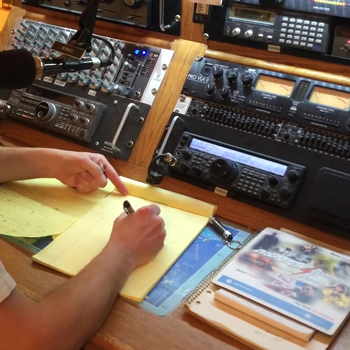
Görlitzer Verein keeps in touch with the world. And face the current challenges. If an unforeseen catastrophic event occurs, whether it is a flood or whatever, radio enthusiasts will continue to broadcast and keep in touch.
But Gorlitz is just one step. Reichenbach, Königshain, Niesky, Ostritz followed closely, and they are all branches of DRK. The antenna is installed. "You can use it to communicate in an emergency," Steffen Reitinger said.
This also means that when the Internet and mobile phone connections cease to serve, when all digitalization comes to a halt, just like the recent floods in Rhineland-Palatinate and North Rhine-Westphalia, there is still between rescues. There are contact workers.
Because amateur radio operators, like many clubs in Upper Lusatia, have concerns about young talents. In 2008, the average age of members was 51 years old, and the association organized 22 radio enthusiasts. Today, the local association has 16 members. The average age is 67 years old. The woman is not there.
Steffen Reitinger lists a few points to scare away potential new members. "Of course, you need to understand this technology and the fun of using your own made or assembled equipment," he said. Of course there is also a financial aspect. Not only the technical cost, but also the test, after which the real amateur radio operator is allowed to sit on the device.
An emergency radio network is being established in the area with the Red Cross. This also works when every cell phone malfunctions.
Steffen Reitinger and Wolfgang Siegmund in the club room of Görlitzer Flugplatz: Even though the mobile phone network has long since collapsed, amateur radio enthusiasts continue to broadcast.
"There is 73!" Wolfgang Siegmund turned off the microphone. It sounds strange to say goodbye, but it is common among amateur radio operators. "73" means "best regards". Technical talk in the radio world.
The military barracks at Görlitz Airport, it is the seat of the Görlitz Regional Association German Amateur Radio Club (DARC) or in short, amateur radio operators. The GST, the Sports and Technology Association, started in the 1960s and later developed into the Görlitz Broadcasting Club, which is now a club.
Every night you will receive the most important news from Gorlitz in your mailbox. You can sign up for our newsletter here.
Amateur radio sounds like the 1960s, 1970s, maybe a bit like the 80s. Back to the time when we reached the vast world via short waves from East Germany.
"That was a bit risky at the time. You have to think about what you can say and what you shouldn't say," Wolfgang Siegmund recalled. Because the National Security Agency also allows amateur radio operators to see or hear their homemade equipment. Then we should avoid political problems with colleagues in the United States or elsewhere. More information about the weather.
Today, you can connect with like-minded people around the world in a matter of seconds just by looking at your phone. So is amateur radio an ancient relic? "Well, I don't think so," Stephen Rettinger said. He is the chairman of the Görlitz Regional Association. In the past, it was operated with electronic tubes and later with transistors, which has long given way to digital technology.
For example, Wolfgang Siegmund (Wolfgang Siegmund) is committed to broadcasting via satellite. Something still exists: Anyone who stands out as an amateur radio operator must take an exam, just like today. For this reason, radio operators are also allowed to assemble their equipment themselves, which is a unique process, especially in East Germany.
"We are working with the German Red Cross to establish an emergency radio network," Steffen Reitinger said. The nursing homes and nursing homes in Lausitzer Straße already have corresponding relay stations.
"Even if there is a power failure, we can continue to transmit. We only need to connect a car battery," Wolfgang Siegmund said with a smile. Steffen Reitinger said this is the lowest reserve level. Humans are still needed to operate these systems.
Görlitzer Verein keeps in touch with the world. And face the current challenges. If an unforeseen catastrophic event occurs, whether it is a flood or whatever, radio enthusiasts will continue to broadcast and keep in touch.
But Gorlitz is just one step. Reichenbach, Königshain, Niesky, Ostritz followed closely, and they are all branches of DRK. The antenna is installed. "You can use it to communicate in an emergency," Steffen Reitinger said.
This also means that when the Internet and mobile phone connections cease to serve, when all digitalization comes to a halt, just like the recent floods in Rhineland-Palatinate and North Rhine-Westphalia, there is still between rescues. There are contact workers.
Because amateur radio operators, like many clubs in Upper Lusatia, have concerns about young talents. In 2008, the average age of members was 51 years old, and the association organized 22 radio enthusiasts. Today, the local association has 16 members. The average age is 67 years old. The woman is not there.
Steffen Reitinger lists a few points to scare away potential new members. "Of course, you need to understand this technology and the fun of using your own made or assembled equipment," he said. Of course there is also a financial aspect. Not only the technical cost, but also the test, after which the real amateur radio operator is allowed to sit on the device.
Emergency dispatch backup plan is effective, but not optimal
Lewiston Emergency Communication Tower is fully functional
Related Article

Most radio operators never take grounding seriously—until their gear is fried. This piece exposes three fatal grounding traps, from shallow rods to mixed signal-and-power grounds, then hands you a six-step, code-compliant checklist drawn from NEC Article 810 and IEEE Std 142. Copy this homework instead.
A grounding error can instantly fry your radio—Installation guide for radio system lightning protection

Professional walkie talkie earpiece guide covering how to put on, wear, and use earpieces correctly. Features brand-specific tips for Motorola, Hytera, Baofeng, and more with structural comparisons for optimal comfort and performance.
How to use walkie talkie earpiece?- The Complete Guide to Walkie Talkie Earpiece Setup
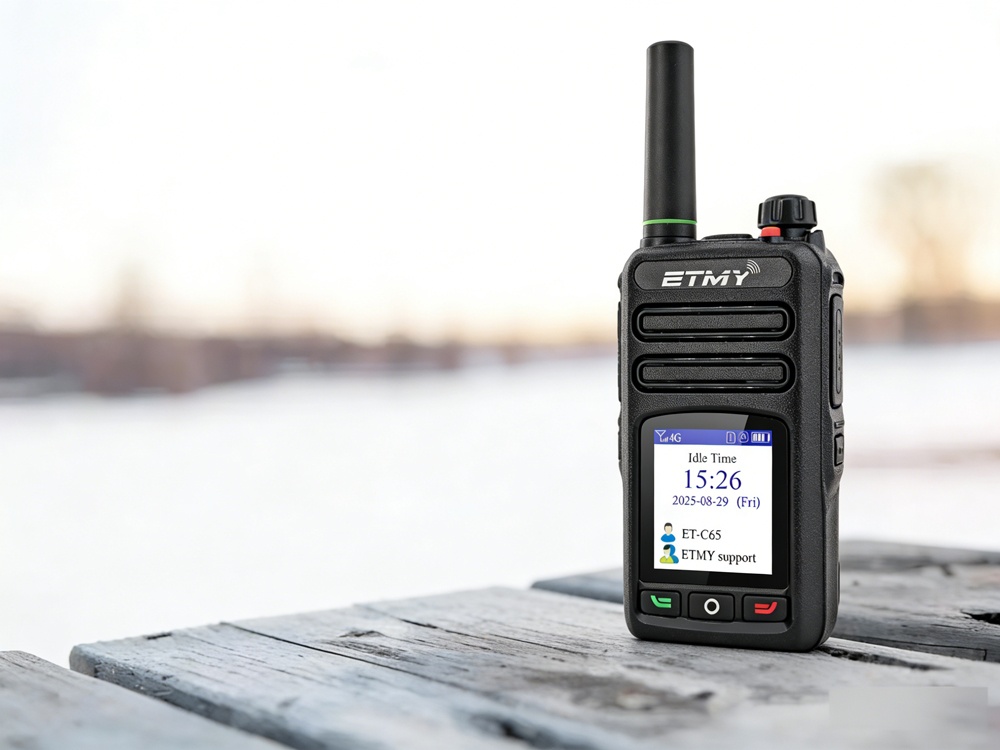
A recent industry report highlights PoC radio adoption for faster, long-distance team communication. Designed for cellular network connectivity, these radios improve coordination in public safety, logistics, and field operations, while offering beginner-friendly setup guidance to ensure reliable activation and compliance.
How exactly do you use a newly acquired PoC radio?
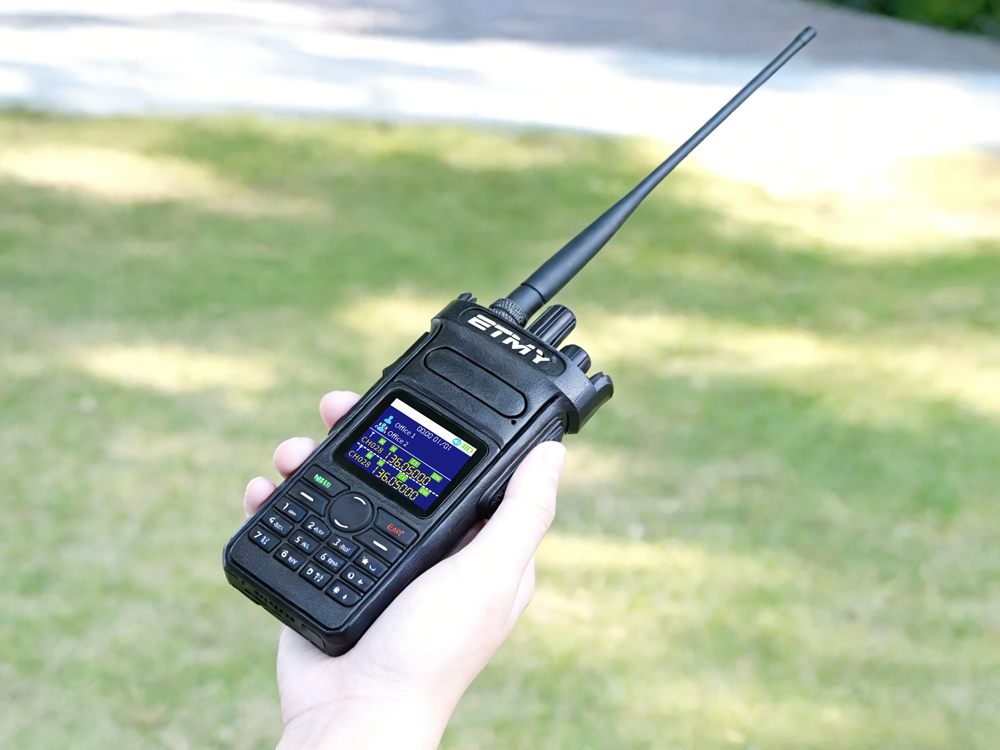
CTCSS function on walkie-talkies covers a frequency range from 67.0Hz to 250.3Hz. When transmitting in analog sub-tone mode, it transmits by continuously superimposing low-frequency, inaudible signals onto the carrier frequency, ensuring that only receivers receiving the same frequency can interpret the signal. This achieves anti-interference capabilities or allows the receiver to reject signals from other third parties.
What is ctcss on a walkie talkie? how to turn on?