
Radio enthusiast's last antenna measurement day
2021-08-14
.jpg?imageMogr2/format/webp/thumbnail/!10p/format/webp)
source:lokalkompass.de
Absolutely outstanding person in his field.
However, for interested readers, and of course interested female readers, how would you describe this "highly complex structure"?
Well, for example, our hobby has little to do with the "real chicken on the ladder". Except that the shape of our "chicken ladder" looks very similar to a real chicken ladder. The picture at the beginning of my report shows such a "chicken ladder" in the hands of the chairman of our local association DF5EO Hermann Römer.
What do you use it for?
A sentence or two cannot describe this well. People can paraphrase it very, very simply. The radio technology "chicken ladder" is used to adapt the antenna to radio equipment.
Because the better the antenna is for radio frequencies, the more radio signals can travel without interference.
A small example should clarify this point. You all know satellite antennas! This is how we (today) receive our favorite channels, whether it's TV or radio. And these transmitter signals can no longer be received by the early "grid antennas". In this case, the "adaptation" of the old antenna to the radio signal (from the satellite) and its frequency range is simply not correct. I can only receive (direct) satellite programs via "satellite antenna".
Another important aspect plays a very important role in antenna adjustment. If I want to broadcast with my 50 watt transmitter, then the 50 watts should actually be emitted by the antenna. A poorly adapted transmitting antenna will cause part of the transmitted energy to not be radiated, but will "return" to the radio. This will be the end of each station. Then the radio will be defective.
This antenna measurement day with TUS 08 Emmerich-Hüthum as the venue is really great. Finally, there is a "barbecue" from the "grate" and some (more or less) large quantities of drinks, which pleased our radio operators and guests on the antenna measurement day.
Some of our Dutch radio operator friends were present. Here, a special thanks to the person in charge of TuS08 Emmerich-Hüthum for his hospitality and allowing us to use the beautiful space.
Because we radio operators need a lot of space to let some of our antennas pass their pace. Many antennas require a span of 40 meters or more to fully transmit or receive (some shortwave radio signals).
One particular aspect should also be mentioned. One of our radio operators combined his other hobby with "radio work". So the (second) fishing rod became a radio antenna. Fishing, by the way, "spark", this is an extraordinary "symbiosis" of two hobbies.
In this sense, keep or become healthy, as always...
curious!
Absolutely outstanding person in his field.
However, for interested readers, and of course interested female readers, how would you describe this "highly complex structure"?
Well, for example, our hobby has little to do with the "real chicken on the ladder". Except that the shape of our "chicken ladder" looks very similar to a real chicken ladder. The picture at the beginning of my report shows such a "chicken ladder" in the hands of the chairman of our local association DF5EO Hermann Römer.
What do you use it for?
A sentence or two cannot describe this well. People can paraphrase it very, very simply. The radio technology "chicken ladder" is used to adapt the antenna to radio equipment.
Because the better the antenna is for radio frequencies, the more radio signals can travel without interference.
A small example should clarify this point. You all know satellite antennas! This is how we (today) receive our favorite channels, whether it's TV or radio. And these transmitter signals can no longer be received by the early "grid antennas". In this case, the "adaptation" of the old antenna to the radio signal (from the satellite) and its frequency range is simply not correct. I can only receive (direct) satellite programs via "satellite antenna".
Another important aspect plays a very important role in antenna adjustment. If I want to broadcast with my 50 watt transmitter, then the 50 watts should actually be emitted by the antenna. A poorly adapted transmitting antenna will cause part of the transmitted energy to not be radiated, but will "return" to the radio. This will be the end of each station. Then the radio will be defective.
This antenna measurement day with TUS 08 Emmerich-Hüthum as the venue is really great. Finally, there is a "barbecue" from the "grate" and some (more or less) large quantities of drinks, which pleased our radio operators and guests on the antenna measurement day.
Some of our Dutch radio operator friends were present. Here, a special thanks to the person in charge of TuS08 Emmerich-Hüthum for his hospitality and allowing us to use the beautiful space.
Because we radio operators need a lot of space to let some of our antennas pass their pace. Many antennas require a span of 40 meters or more to fully transmit or receive (some shortwave radio signals).
One particular aspect should also be mentioned. One of our radio operators combined his other hobby with "radio work". So the (second) fishing rod became a radio antenna. Fishing, by the way, "spark", this is an extraordinary "symbiosis" of two hobbies.
In this sense, keep or become healthy, as always...
curious!
Delco moves forward with new 911 communications system
Thorbjorsen delivers big rally, needs another in US Amateur
Related Article

A practical guide to testing two-way radio coverage in the environment where people will actually depend on it.
Why a Radio Coverage Test Can Pass— and the System Still Fails in Real Operation

Most radio operators never take grounding seriously—until their gear is fried. This piece exposes three fatal grounding traps, from shallow rods to mixed signal-and-power grounds, then hands you a six-step, code-compliant checklist drawn from NEC Article 810 and IEEE Std 142. Copy this homework instead.
A grounding error can instantly fry your radio—Installation guide for radio system lightning protection

Professional walkie talkie earpiece guide covering how to put on, wear, and use earpieces correctly. Features brand-specific tips for Motorola, Hytera, Baofeng, and more with structural comparisons for optimal comfort and performance.
How to use walkie talkie earpiece?- The Complete Guide to Walkie Talkie Earpiece Setup
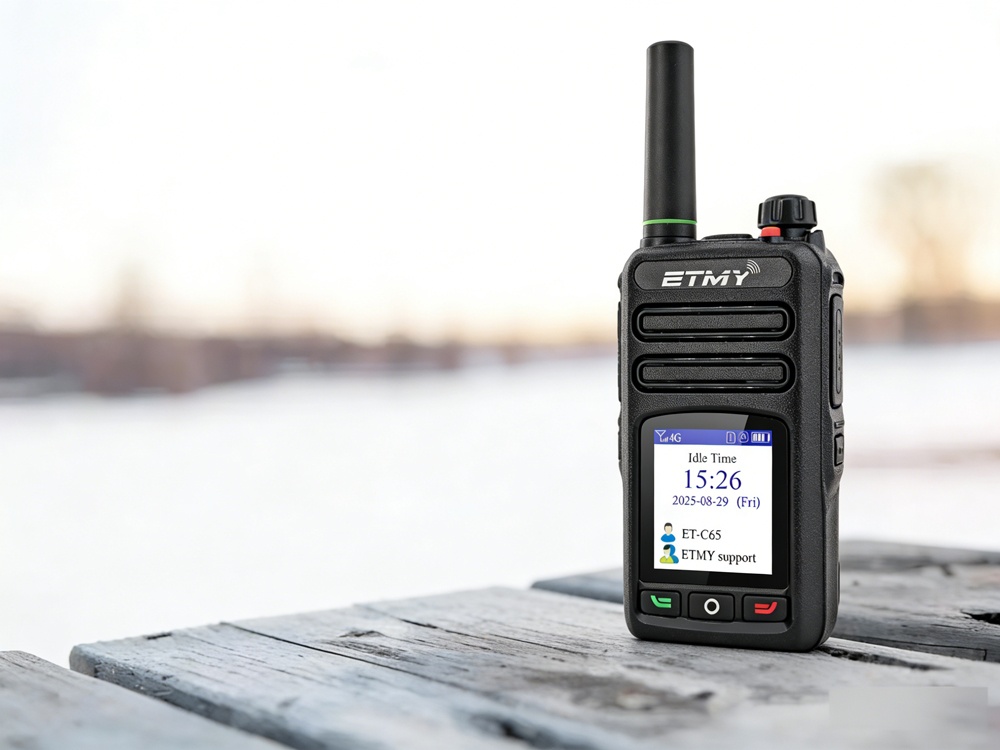
A recent industry report highlights PoC radio adoption for faster, long-distance team communication. Designed for cellular network connectivity, these radios improve coordination in public safety, logistics, and field operations, while offering beginner-friendly setup guidance to ensure reliable activation and compliance.
How exactly do you use a newly acquired PoC radio?