
Six major misunderstandings of radio, how many have you violated?
2021-11-19

source:pttcn.net
- Misunderstanding No. 1: setting up and using radio stations without authorization
The radio stations mentioned here mainly refer to handheld walkie-talkies and car radios for personal use; don't think that you can install and use radio stations at will if you buy a radio. It should be understood that the signals emitted by any radio station must occupy the radio frequency, just as each broadcast program needs to occupy a separate frequency. If the radio frequency is illegally occupied, it will cause radio interference. Radio frequency, like land and mineral deposits, is an important resource of the country and is managed by the country. According to the "Regulations of the People's Republic of China on Radio Management" issued by the State Council and the Central Military Commission, the establishment and use of radio stations must be submitted in advance to the local radio management agency in writing, approved and issued with a radio station license before they can be used legally and normally.
The main body setting up and using radio stations in the amateur radio communication network shall be a member of the China Radio Sports Association. To apply for setting up and using a personal amateur radio station, in accordance with the existing regulations, you must first apply to join the China Radio Sports Association as a member, participate in relevant laws and regulations and common sense training, and obtain an amateur radio operation certificate and certificate after the examination to submit to the local radio management agency for inspection. The specific methods and procedures can be downloaded from the website of China Radio Sports Association or consult the local radio management agency.
To set up and use a radio station in a dedicated radio communication network, you must apply to the local radio regulatory agency for the use of your own or group dedicated frequency in the name of the unit. Pay frequency resource occupation fees, equipment testing fees and other related fees in accordance with national regulations. If you find interference from other radio services on the approved dedicated frequency, you can appeal to the radio management department for protection.
In short, it is illegal to set up and use a radio station without obtaining the "People's Republic of China Radio Station License".
- Misunderstanding No. 2: Cannot change the technical parameters of the station without authorization even after obtaining a radio station license
Even if you have obtained a radio station license, you cannot use the radio station as you want.
Improper use of radio stations may cause interference to other radio services, which will not only infringe other people's normal communications, but even cause serious disasters unknowingly. For example, some people who have obtained amateur radio licenses ignore the restrictions on the frequency points approved by the radio regulatory agency and choose to use other frequency points in the unapproved 430-440MHz amateur frequency band without authorization. Amateur radio is a secondary service in this frequency band, and other important services such as aeronautical navigation and radio positioning are also in use in this frequency band. If the frequency is used indiscriminately, causing serious interference to aeronautical communications, it may cause a major accident. Based on the relevant flight records, the relevant departments have determined that it is caused by the frequency indiscriminate use by your radio station, and the consequences can be imagined.
Some people think that the unauthorised choice is to not hear the idle frequency of other radio signals, so as not to interfere with others, but it is not the case. Different services use different working methods, equipment performance, and coverage. The inability of your equipment or your listening ability to hear the signal does not mean that the frequency is idle, and it does not mean that your signal will not cause serious interference. For example, some parts of the amateur frequency band (such as: 145.800-146.000MHz and 435.000-438.0 0MHz, etc.), which also include internationally recognized satellite transponder frequencies, although you cannot hear the presence of signals, But satellites can receive your signal, and normal satellite communications are disrupted, but you may not know it at all. In the same way, your signal, which does not appear to be very strong on the ground, may also cause non-negligible interference to the communication of the air plane with the largest lobe emitted by your antenna. Therefore, even if you have a radio station license, you must work on the approved frequency and abide by the frequency rules recognized by the amateur radio community. It is also illegal to use an unapproved frequency.
- Misunderstanding No. 3: Set up relay stations for small groups
Some groups set up permanent or temporary radio repeaters without authorization in order to expand their communication coverage. It should be noted that repeaters are also a kind of radio stations. Generally, repeaters have high antennas, high power, and greater influence. Unattended, prone to out-of-control problems, so the harm is more serious than the general unauthorized use of walkie-talkies, and it must be banned. According to regulations, amateur radio enthusiasts can use amateur frequency repeaters, but they must be set up by legal amateur radio associations or related units, and the units that set up stations must improve the management system and have the function of remote switching on and off.
Amateur repeaters are only for amateurs to use within the scope permitted by regulations. The amateur frequency is open and shared to legal amateurs, but the relay station must serve all the amateur stations in the coverage area. It cannot only be used by a small group and exclude others, nor can it be used as a special tool for activities of a small number of people. If your group does need to establish its own dedicated repeater for special reasons, you should apply to the radio regulatory agency. Once approved, you need to pay the frequency occupancy fee in accordance with national regulations.
- Misunderstanding No. 4: Applying for a radio station license and not complying with the communication rules
Amateur radio enthusiasts have world-unified statutory or customary norms for radio communication. For example, only internationally assigned radio call signs can be used as radio station identification. The call sign must be reported when communicating, and other names or codes must not be used instead, and the content of the communication must not be used. Involved in politics, religion, profit, privacy, no secret language, code word, no uncivilized language, no entertainment, teasing, playing music and songs, etc. If you do not abide by these regulations, do not learn the relevant technical and legal knowledge, in the communication, you will not use the legal call sign and use your own code, vehicle number, vulgar language, jokes and even play music and songs; use your own device "card" "Taiwan, building a platform" deliberately interferes with others; violations of rules and conventions in the use of frequencies and the application of courteous terms can only put oneself in a position that everyone despise, and the relevant departments of such black sheep will never turn a deaf ear to it.
- Misunderstanding No. 5: Hand-held radio walkie-talkies can be used at will
Some people believe it is misinformed, and think that handheld walkie-talkies can be bought everywhere, and they can be carried with the car, and used at any time. This is a behavior lacking the most basic radio knowledge. It is true that there are certain types of radio transmitting equipment that do not need to apply for approval: one is a mobile wireless telephone handset, which is of course also a radio transceiver, but the frequency and equipment quality it occupies is related to legal procedures and frequency occupation. Fees have been handled by operators and manufacturers in a unified manner, and users do not need to apply repeatedly when purchasing and using mobile phones. The second is that the purchase and use of "public walkie-talkies" approved by the Ministry of Information Industry does not require approval. The feature of this kind of walkie-talkie is that it can only work at a specific 20 frequency points, the transmit power is below 0.5 watts, and it is not allowed to use antennas other than those approved. The third is micro-power radio transmission equipment such as wireless microphones, low-power cordless phones, and radio-controlled toys that comply with the regulations of the Ministry of Information Industry. Users do not need to be approved. Therefore, all kinds of handheld radio walkie-talkies other than the above can be used only after obtaining a license. People who illegally use walkie-talkies in many places in my country (including individual users and hotels, construction sites, service sites, etc.) have been subject to confiscation of equipment, fines, etc., and should be used as a lesson for the past.
- Misunderstanding No. 6: I used the radio illegally and nobody controlled it?
Compliance with radio regulations involves respecting and complying with national regulations, not occupying national frequency resources, not infringing on the lawful use of others, not disrupting the order of radio waves, and avoiding hidden accidents caused by communication interference with your own actual actions, so as to achieve the legal protection of others. Interest is the basic quality of a person. One must abide by the principles and not rely on the whip to go the right way. If you consciously abide by the law, your noble image will educate and drive more novices through radio waves, and become a role model in people's minds on the frequency, so that you can live in harmony with the social environment. But if you know that the law is illegal and you refuse to change it, the radio monitoring department, the public security department, and the national security department will definitely notice you. As long as you do not survive in a vacuum, your non-compliant contact signals will be "watched". , With advanced scientific and technological equipment and many "ham" friends who are upholding justice, sooner or later you will be punished by the law. When it comes to that level, you will regret it. Therefore, if you have a good radio station, you have to cooperate with people who consciously abide by the radio laws and regulations and have good quality, so that you will not get into misunderstandings and become a true radio enthusiast.
Hytera Launches Rugged PDM680 MCS Radio
NCC EVC lists benefits of Emergency Communications Centres
Related Article

A practical guide to testing two-way radio coverage in the environment where people will actually depend on it.
Why a Radio Coverage Test Can Pass— and the System Still Fails in Real Operation

Most radio operators never take grounding seriously—until their gear is fried. This piece exposes three fatal grounding traps, from shallow rods to mixed signal-and-power grounds, then hands you a six-step, code-compliant checklist drawn from NEC Article 810 and IEEE Std 142. Copy this homework instead.
A grounding error can instantly fry your radio—Installation guide for radio system lightning protection

Professional walkie talkie earpiece guide covering how to put on, wear, and use earpieces correctly. Features brand-specific tips for Motorola, Hytera, Baofeng, and more with structural comparisons for optimal comfort and performance.
How to use walkie talkie earpiece?- The Complete Guide to Walkie Talkie Earpiece Setup
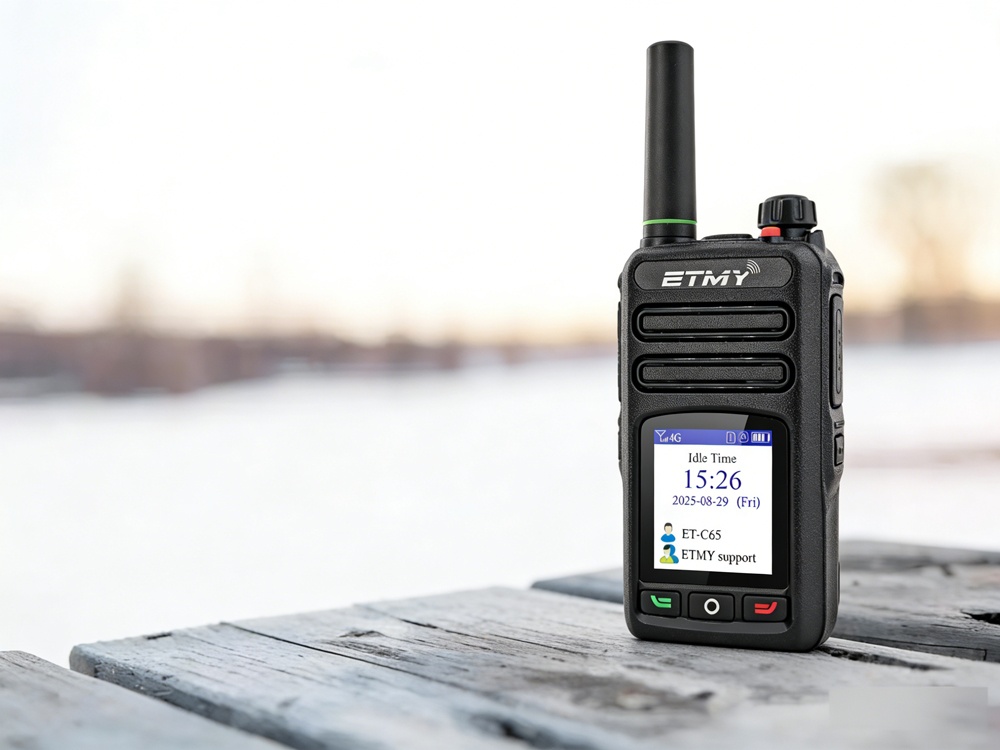
A recent industry report highlights PoC radio adoption for faster, long-distance team communication. Designed for cellular network connectivity, these radios improve coordination in public safety, logistics, and field operations, while offering beginner-friendly setup guidance to ensure reliable activation and compliance.
How exactly do you use a newly acquired PoC radio?