
Some ham radio introductory knowledge
2022-03-10

Since you're here, you're interested in ham radio. You might want to get an amateur radio license, but don't know where to start. You will get different answers from different people, and the answers on the Internet are also varied. Come on, let's solve these problems together.
The purpose of this article is to provide beginners with some little knowledge about the introduction of amateur radio, the acquisition of operating certificates, and the application of radio licenses. There is also a little practical information for doing amateur radio activities.
For experienced radio amateurs, helping others understand ham radio is a great joy. Why do you like ham radio? People join ham radio for a variety of reasons, and ham radio lives up to its hype, it's a colorful hobby. It is an interesting technical hobby, a means of emergency communication, and a means of communication used by some social welfare activities. Amateur radio can help you connect with local air community groups, as well as with ham radio amateurs around the world, or challenge further distances with portable equipment in the field or on mountaintops.
You might enjoy building your own circuits and antennas, experimenting with new modes of digital communication, or helping others at a charity event. Whatever your initial motivation, I hope you will learn all about amateur radio and learn more about radio. But first, let's find out how to get an operating certificate and a station license.
Station License: To become a qualified amateur radio operator, you must obtain a station license. Station licenses are issued by government radio regulators, which regulate radio amateurs. The counterpart department is the Department of Industry and Information Technology of XX Province at the provincial level, and the Radio Management Office of the Bureau of Industry and Information Technology of XX City at the prefecture level.
Operation certificate: This is a prerequisite for applying for a radio station license, which needs to be obtained by examination. At present, amateur radio stations are divided into three categories: ABC, and category A is the primary level. You can apply to set the radio station to use the amateur frequency between 30-3000 MHz, and the maximum allowable power is 25 W. Class B extends the frequency to all amateur radio frequencies allowed in the country, with a maximum power of 100 W on shortwave, and class C allows amateurs to use 1000W of power on shortwave.
Obtain different operation certificates according to individual needs. For example, if some friends like short-wave communication, they need to obtain Class B. Some friends only like to carry out activities in the UV segment, so the Class A operation certificate is enough.
Operation Certificate Exam: CRAC has established question banks for each of the three types of operation certificates, and your exam questions will be drawn from the question bank. The test question bank is released to the public on the CRAC official website for everyone to learn. Please do not trust the question bank of a third party to avoid losses. The organization of the examination is in charge of the radio management department, without any fees. In some places, the Radio Association will take the exam as an agent, and fees will be charged appropriately, but taking the exam has nothing to do with whether you join the association or not. It is only a proxy exam, in fact, the exam is still the responsibility of the radio management department. No matter who organizes the test, the test is for all citizens, and no restrictions on whether or not a member is a member of an organization shall be set. There is some information on the Internet that new amateurs must join the Amateur Radio Association. That is some old information. It is a regulation before 2010. In order to reduce the burden of amateurs and conform to the international situation and be in line with international standards, the requirement to join the association was made in 2010. It has been canceled.
There is no Morse code to send and receive exams in any grade exam. The exam is very simple, you only need to read the question bank a few times, and you can easily obtain the operation certificate. This is a very low threshold, a small test for radio amateurs.
Where can I get training? If you really have no confidence in yourself, consider joining a local radio association, they should give you some help. But I'm not sure because the exam is really easy and I don't have any experience of joining an association (except CRSA many years ago).
Examinations will be organized in various places, and you can check the examination notices on the website of the radio management department, usually the Bureau of Industry and Information Technology. You can also get in touch with the radio management department by telephone through the contact information published on the website to obtain relevant information on the examination and the application of radio licenses.
In addition to the review question bank, you also need to prepare an admission ticket, ID card, 2 pencils, and eraser for the exam. However, please pay attention to the notice as some locations are now using computer-based exams.
Before you take a test, you need to be prepared, and every test has unprepared people taking it, and then they have to wait for the next one. If I have time, I will choose some typical examples for analysis, in order to help everyone pass the exam better, after all, most of my friends have no foundation.
Question bank: There are many common-sense questions that do not need to be memorized. You only need to read them once to know how to answer them.
Memorize them by rote: it works, you need to memorize them clearly in order to pass your exam and get your radio license. The problem with doing this is that it's hard to remember exactly the right answer without knowing what the radio term means and what the question actually means. The method of memory varies from person to person, but please take it seriously.
A better approach is deep learning: only real understanding can make it work. Really learn, you will be stronger than rote memorization. If you really like ham radio, you better actually learn something!
Connect theory with practice: When you actually learn about radio laws and regulations, operating methods and techniques, you will really understand those test questions. You will easily remember the correct answers and passing the exam will be a piece of cake for you.
Additional learnings: You'll also learn how to use ham radio and how to be a competent ham. Plus, you'll earn the respect of others, and you'll have more confidence in yourself.
I've seen a lot of unlucky people who always complain that the exam is too strict and that the examiner won't let him copy. Instead of finding reasons from themselves, they go to the exam without any preparation. As soon as you talk to him, he starts making all kinds of excuses, busy, no time, etc. In fact, just a little time is enough, the point is that they don't take it seriously at all. When you practice exam questions, you should have a learning attitude. Because this is a hobby you like, not for exams like in school, and then you can study happily.
After obtaining the operation certificate, you can contact the radio management department to apply for the station license. At present, many provinces have opened online processing, as long as you fill in the form and upload the scanned copy, you can apply online. For details, please contact the local Bureau of Industry and Information Technology or the Department of Industry and Information Technology.
There should be a balance between the level of knowledge and hobbies. The vast majority of amateurs are unlikely to become experts in the field of radio like me. This balance is different for everyone and needs to be figured out by oneself.
If your local association can organize a competent teacher to answer your specific questions on the spot, and teach you hands-on how to use and recognize radios, antennas, feeders, etc. I strongly recommend you to attend, the opportunity is rare. As far as I know, not many associations are engaged in such activities in China, and more association activities are interpersonal communication activities at the table of eating, drinking and drinking.
Don't be sad if there is no such event locally. Now is the Internet age, the Internet, books are very good sources of knowledge. The WeChat official account has given us time to read in fragments. There are many small knowledge and tips in my WeChat official account, which can be viewed through historical news. Especially a lot of tidbits about amateur satellites.

Next, let's introduce a few simple radio concepts that will help you understand the difference between the various operating certificates and the differences between the various operating modes.
Band: A band is a contiguous range of radio frequencies. For example, 144 MHz-146 MHz is a frequency band, and 88 MHz-108 MHz for FM radio is a frequency band. The amateur service and the amateur satellite service are two of the 43 radio services in my country. The country has allocated many frequency bands to these two radio services. According to the different frequency bands, radio signals show different propagation characteristics.
Modes: You may have heard radios, amplitude modulation (AM) radios and frequency modulation (FM) radios. These are two different modes of operation, Amplitude Modulation (AM) and Frequency Modulation (FM). Amplitude modulation, which carries signals such as audio speech information by changing the amplitude of a radio waveform. FM, changing the transmission frequency to carry speech or music signals.
VHF (Very High Frequency) UHF (Ultra High Frequency): On these frequencies you can make voice calls, including SSB and FM, as well as use these bands to send digital and CW signals. These frequency bands tend to travel closer, farther than the line-of-sight distance. If you have a very tall antenna, you can reach great distances. In the vast majority of cases, amateurs use amateur radio repeaters to extend their reach. Repeaters take your signal and retransmit it, usually at great heights. Using local repeaters in the VHF and UHF bands, you can communicate over distances of tens or even hundreds of kilometers.
Various ways to play: Taiwan network, many radio stations communicate in the air, generally using repeater stations to communicate with the main console in turn. Radio amateurs can also communicate over long distances through amateur satellites orbiting the Earth, which receive and retransmit amateur radio signals from hundreds of kilometers into space. Most amateur satellites operate on UHF and VHF and can operate amateur satellites with a Class A operating certificate. Of course, you can even communicate with astronauts on the International Space Station!
Class B Operation Certificate: When you obtain a Class B Operation Certificate and apply for the corresponding station license, you can carry out activities on the shortwave 3-30 MHz. Shortwave propagation differs from VHF and UHF. Shortwave signals can be used for over-the-horizon communication, or even global communication, through the reflection of the ionosphere. You can use CW and various digital signal modes, of course SSB is also very popular. The maximum power limit of class B in shortwave is 100W, and the maximum allowable power at frequencies above shortwave is the same as that of class A, which is 25W.
Class C operation certificate: The maximum power allowed to be used in shortwave is 1000 W, and the maximum power limit of other frequencies is the same as that of Class A and Class B. With more power, it is easier to transmit the signal far away, which is more advantageous in the competition.
You already know that there are many different transmission modes available to radio amateurs, and using different modes requires the support of the station. Let's learn some basics about Radio Mode.
FM radio stations: After obtaining the Class A operating certificate, FM radio stations are generally the first radio stations that people come into contact with. The most common walkie-talkies and car radios generally only have FM mode. It delivers clear, loud sound and is simple to use. Some FM stations also operate in digital mode, such as using a GPS receiver to send location, or with a computer interface to send pictures, files, and text messages.
Multi-mode radio: In addition to the common FM mode, there are multiple operating modes such as SSB voice, CW, and digital. Multimode transceivers are generally more expensive than pure FM radios, are more complex to operate, and provide more functionality. Single Sideband (SSB) is a special form of AM that is very power efficient. I have tested at 438.450 MHz and a radio station about 100 kilometers away. We use 25 W of power in FM mode and it is almost impossible to communicate. With the squelch function turned off, we can barely hear the voice. Then we went to USB mode and a miracle happened, we were able to communicate well, and by the end we dropped the power down to 2 watts and still communicated well. Then there are no conditions to test lower power, because the radio can only be tuned down to 2 W. I think if it is CW mode, this power will be lower. SSB and CW are commonly used modes for ultra-long-distance communication in the VHF and UHF frequency bands. While everyone is waiting for the B-class operation certificate to set up a short-wave radio station, you can try the charm of SSB and CW.
I got my radio license, what should I do now? The joy of exam success will soon fade, and now is the time to get busy! Set up the antenna, set the frequency, find a local repeater, and maybe install a radio in your car.
In my opinion, a good hand station needs to have manual frequency adjustment function, instead of relying on the computer to store the frequency. Also, it shouldn't have all sorts of annoying signaling, that's nothing fancy, that's what professional radio stations use to identify users. Handsets are usually cheaper, you can consult other friends before buying, they will give reasonable advice.
Before starting to communicate, I recommend that you listen to other people's conversations a few times. You can listen to the repeater and hear how other people are communicating. Most of the contacts are in plain language, but you will also hear some technical terms.
When you're ready, follow what you've learned and what you've heard from others. Use your callsign to start your first call. Don't be intimidated by the fact that you are new, everyone else will welcome you.
When you are accustomed to using the mobile station to talk to other fans on the repeater station, of course, it can also be a direct frequency communication. At this time, you will consider installing a mobile station in your car, or a base station in your home, which has a lot higher power than the mobile station. They will also open up new areas of communication for you that a mobile phone can't do. Then you can slowly find your own interests, such as making antennas, trying out amateur satellites, etc.
Don't be afraid at any time, there is nothing to be afraid of, we are all radio amateurs, equal and independent, and we are all qualified radio amateurs recognized by the national radio management agency. NO leader, NO boss! NO President! NO Secretary-General!
source:pttcn.net
Motorola Solutions Acquires Ava Security Limited, a Global Provider of Cloud-native Video Security and Analytics
Philippine Bureau of Customs Adopts Hytera BWC Solution to Improve Border Protection and Trade Facilitation
Related Article

A practical guide to testing two-way radio coverage in the environment where people will actually depend on it.
Why a Radio Coverage Test Can Pass— and the System Still Fails in Real Operation

Most radio operators never take grounding seriously—until their gear is fried. This piece exposes three fatal grounding traps, from shallow rods to mixed signal-and-power grounds, then hands you a six-step, code-compliant checklist drawn from NEC Article 810 and IEEE Std 142. Copy this homework instead.
A grounding error can instantly fry your radio—Installation guide for radio system lightning protection

Professional walkie talkie earpiece guide covering how to put on, wear, and use earpieces correctly. Features brand-specific tips for Motorola, Hytera, Baofeng, and more with structural comparisons for optimal comfort and performance.
How to use walkie talkie earpiece?- The Complete Guide to Walkie Talkie Earpiece Setup
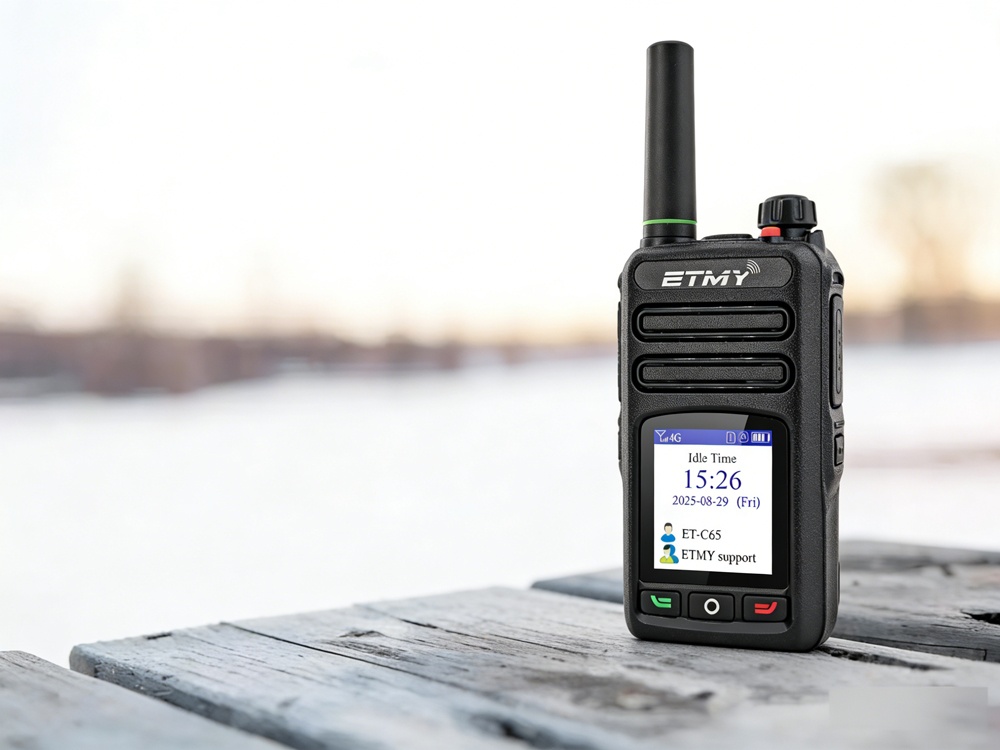
A recent industry report highlights PoC radio adoption for faster, long-distance team communication. Designed for cellular network connectivity, these radios improve coordination in public safety, logistics, and field operations, while offering beginner-friendly setup guidance to ensure reliable activation and compliance.
How exactly do you use a newly acquired PoC radio?