
Tennessee National Guard mobilizes to help flood victims
2021-08-24
source:army.mil
The members of the Guard cooperate with the Tennessee Emergency Management Agency to provide medical assistance and rescue support to those in need.
Nearly 50 soldiers, 12 light medium tactical vehicles and 8 Hummers from various units of Dixon, Lexington, Trenton and Waverley are heading to the disaster area to provide rescue support. LMTV is a high-water vehicle that can travel through flooded areas and assist rescue operations. A UH-60L Black Hawk helicopter was activated with the Tennessee National Guard Helicopter Water Rescue Team from the 1-230 Air Cavalry Regiment in Nashville to assist water rescue. The guards are cooperating with the technical rescue team of the Nashville Fire Department to conduct search and rescue operations throughout the county.
Medical personnel and medical personnel from the Tennessee National Guard Medical Command in Smyrna are being airlifted by Black Hawk helicopters to the Three Rivers Hospital in Waverly to support the medical personnel of the hospital.
Nearly 50 soldiers and 12 light and medium tactical vehicles that can travel through flooded areas, as well as 8 Hummers from units in Dixon, Lexington, Trenton, and Waverley, are heading to the disaster area to help rescue.
The Joint Force Headquarters in Nashville activated its mobile communications center to establish emergency communications in the disaster-stricken area by providing emergency cellular, Internet, and radio communications.
"Our first task is to assist rescuers to enter the area and carry out rescue operations," said Tennessee Lieutenant General Jeff Holmes. "We will continue to increase the number of troops based on the situation, and we will deploy additional special forces to respond as needed. It all depends on the agility and teamwork with trusted institutional partners, and we are fortunate to be able to pass a long time. Training to build these relationships."
The Tennessee National Guard will continue to work with local and state emergency management officials to assist recovery efforts and will provide regular public updates.
The members of the Guard cooperate with the Tennessee Emergency Management Agency to provide medical assistance and rescue support to those in need.
Nearly 50 soldiers, 12 light medium tactical vehicles and 8 Hummers from various units of Dixon, Lexington, Trenton and Waverley are heading to the disaster area to provide rescue support. LMTV is a high-water vehicle that can travel through flooded areas and assist rescue operations. A UH-60L Black Hawk helicopter was activated with the Tennessee National Guard Helicopter Water Rescue Team from the 1-230 Air Cavalry Regiment in Nashville to assist water rescue. The guards are cooperating with the technical rescue team of the Nashville Fire Department to conduct search and rescue operations throughout the county.
Nearly 50 soldiers and 12 light and medium tactical vehicles that can travel through flooded areas, as well as 8 Hummers from units in Dixon, Lexington, Trenton, and Waverley, are heading to the disaster area to help rescue.
The Joint Force Headquarters in Nashville activated its mobile communications center to establish emergency communications in the disaster-stricken area by providing emergency cellular, Internet, and radio communications.
"Our first task is to assist rescuers to enter the area and carry out rescue operations," said Tennessee Lieutenant General Jeff Holmes. "We will continue to increase the number of troops based on the situation, and we will deploy additional special forces to respond as needed. It all depends on the agility and teamwork with trusted institutional partners, and we are fortunate to be able to pass a long time. Training to build these relationships."
The Tennessee National Guard will continue to work with local and state emergency management officials to assist recovery efforts and will provide regular public updates.
Like a "solid rock" or "greeting the universe"
Radio amateurs, from their room to the world in the days of confinement
Related Article

A practical guide to testing two-way radio coverage in the environment where people will actually depend on it.
Why a Radio Coverage Test Can Pass— and the System Still Fails in Real Operation

Most radio operators never take grounding seriously—until their gear is fried. This piece exposes three fatal grounding traps, from shallow rods to mixed signal-and-power grounds, then hands you a six-step, code-compliant checklist drawn from NEC Article 810 and IEEE Std 142. Copy this homework instead.
A grounding error can instantly fry your radio—Installation guide for radio system lightning protection

Professional walkie talkie earpiece guide covering how to put on, wear, and use earpieces correctly. Features brand-specific tips for Motorola, Hytera, Baofeng, and more with structural comparisons for optimal comfort and performance.
How to use walkie talkie earpiece?- The Complete Guide to Walkie Talkie Earpiece Setup
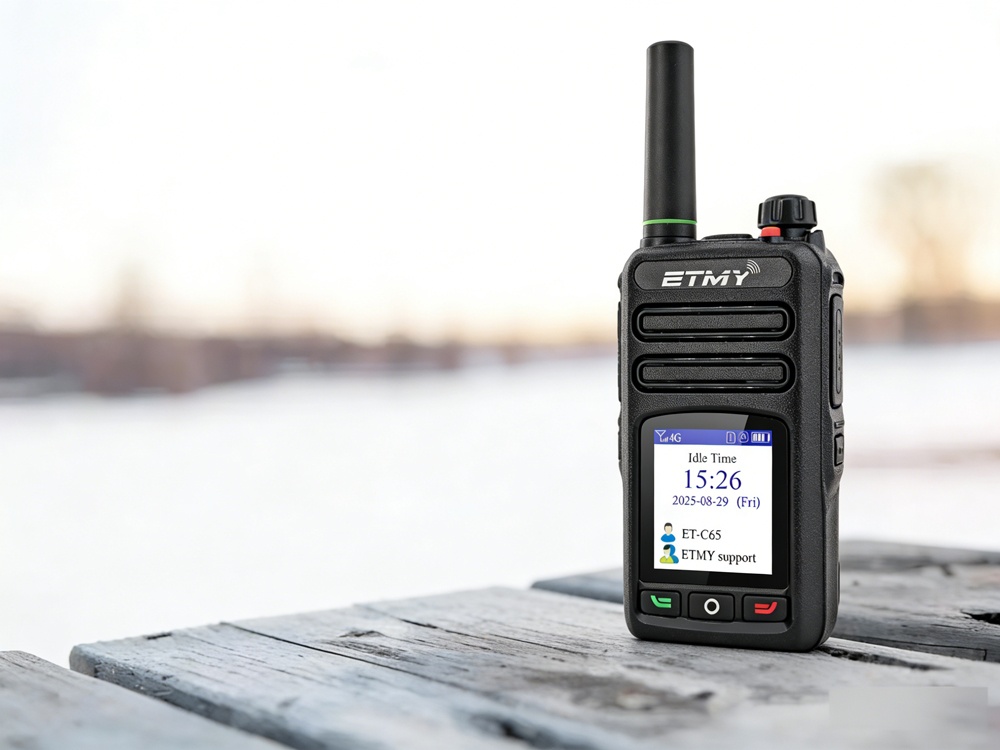
A recent industry report highlights PoC radio adoption for faster, long-distance team communication. Designed for cellular network connectivity, these radios improve coordination in public safety, logistics, and field operations, while offering beginner-friendly setup guidance to ensure reliable activation and compliance.
How exactly do you use a newly acquired PoC radio?