
The history of sailing ships with ham radio marks 100 years
2021-08-20
.jpg?imageMogr2/format/webp/thumbnail/!10p/format/webp)
source:arrl.org
The ship was built in Maine for Arctic expeditions. During the 1923 explorer Donald B. McMillan’s Arctic expedition and the 1925 Macmillan-McDonald-Bird expedition, the ship relied on amateur radio Communications-thanks in part to ARRL co-founder Hiram Percy Maxim, W1AW.
In 1923, MacMillan asked ARRL for help to equip his next expedition with better wireless equipment. Marinaro recalled, “It was provided with enthusiasm.” Maxim and the ARRL committee recruited Donald H. Mix of 1TS from Bristol, Connecticut as their radio operator to accompany the crew.
The goal supported by the Navy and the National Geographic Society is to determine the full capabilities of the radio north of the Aurora and to explore the northern region through the air. "WNP publishes 500-word press releases and lists of work and stations heard every week," Marinaro said.
The noble ship, the official ship of Maine and the flagship ship operation and technology project of Maine Maritime Academy, recently underwent a complete hull restoration and modification, and performed some touring performances to commemorate its centennial birthday. Its home port is Castine, Maine. ARRL historian Michael Marinaro (WN1M) explained in his QST article "Polar Exploration" published in June 2014 that the long-wave transmitter used by Macmillan in his early missions has proven "impenetrable Aurora borealis screen".
Early exploration missions used devices operating on long wave frequencies. The shipboard radio on the Bowden was given the call sign WNP-Wireless North Pole. MB West, an ARRL board member, designed the gear and then manufactured it by hobbyists at his company Zenith Electronics. The transmitter operates in the 185, 220, and 300-meter mid-wave frequency bands, running 100 W to a pair of Western Electric "G" tubes.
MacMillan’s subsequent attempts in the Arctic centered on wireless. “As soon as these reports are received by amateur radio, they are forwarded to the local affiliated newspaper of the North American Press Association; from there, they are distributed across the group via telegram.”
The outstanding achievement of the 1925 expedition was in the field of radio. Using short waves, the expedition team stays in touch with the outside world throughout the journey, which makes working amateurs happy. The amazing success proved to the Navy that the short wave is definitely superior to the long wave and ultra long wave that the fleet has been using.
The ship was built in Maine for Arctic expeditions. During the 1923 explorer Donald B. McMillan’s Arctic expedition and the 1925 Macmillan-McDonald-Bird expedition, the ship relied on amateur radio Communications-thanks in part to ARRL co-founder Hiram Percy Maxim, W1AW.
In 1923, MacMillan asked ARRL for help to equip his next expedition with better wireless equipment. Marinaro recalled, “It was provided with enthusiasm.” Maxim and the ARRL committee recruited Donald H. Mix of 1TS from Bristol, Connecticut as their radio operator to accompany the crew.
The goal supported by the Navy and the National Geographic Society is to determine the full capabilities of the radio north of the Aurora and to explore the northern region through the air. "WNP publishes 500-word press releases and lists of work and stations heard every week," Marinaro said.
The noble ship, the official ship of Maine and the flagship ship operation and technology project of Maine Maritime Academy, recently underwent a complete hull restoration and modification, and performed some touring performances to commemorate its centennial birthday. Its home port is Castine, Maine. ARRL historian Michael Marinaro (WN1M) explained in his QST article "Polar Exploration" published in June 2014 that the long-wave transmitter used by Macmillan in his early missions has proven "impenetrable Aurora borealis screen".
Early exploration missions used devices operating on long wave frequencies. The shipboard radio on the Bowden was given the call sign WNP-Wireless North Pole. MB West, an ARRL board member, designed the gear and then manufactured it by hobbyists at his company Zenith Electronics. The transmitter operates in the 185, 220, and 300-meter mid-wave frequency bands, running 100 W to a pair of Western Electric "G" tubes.
MacMillan’s subsequent attempts in the Arctic centered on wireless. “As soon as these reports are received by amateur radio, they are forwarded to the local affiliated newspaper of the North American Press Association; from there, they are distributed across the group via telegram.”
The outstanding achievement of the 1925 expedition was in the field of radio. Using short waves, the expedition team stays in touch with the outside world throughout the journey, which makes working amateurs happy. The amazing success proved to the Navy that the short wave is definitely superior to the long wave and ultra long wave that the fleet has been using.
How crisis management techniques can help emergency managers prepare for active shootings
Radio amateur network library expanded for emergencies
Related Article

A practical guide to testing two-way radio coverage in the environment where people will actually depend on it.
Why a Radio Coverage Test Can Pass— and the System Still Fails in Real Operation

Most radio operators never take grounding seriously—until their gear is fried. This piece exposes three fatal grounding traps, from shallow rods to mixed signal-and-power grounds, then hands you a six-step, code-compliant checklist drawn from NEC Article 810 and IEEE Std 142. Copy this homework instead.
A grounding error can instantly fry your radio—Installation guide for radio system lightning protection

Professional walkie talkie earpiece guide covering how to put on, wear, and use earpieces correctly. Features brand-specific tips for Motorola, Hytera, Baofeng, and more with structural comparisons for optimal comfort and performance.
How to use walkie talkie earpiece?- The Complete Guide to Walkie Talkie Earpiece Setup
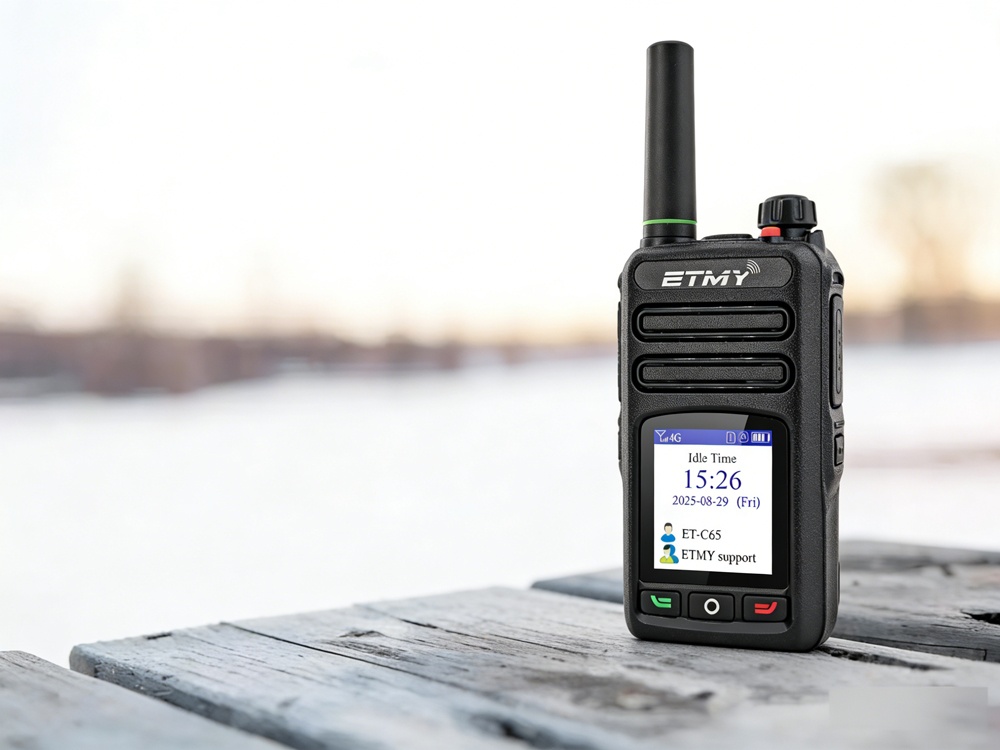
A recent industry report highlights PoC radio adoption for faster, long-distance team communication. Designed for cellular network connectivity, these radios improve coordination in public safety, logistics, and field operations, while offering beginner-friendly setup guidance to ensure reliable activation and compliance.
How exactly do you use a newly acquired PoC radio?