
Webinar: Shaping the future of emergency communications
2021-08-26

source:ems1.com
By making public safety access points (PSAP) and emergency communications centers (ECC) more efficient, more connected, and more responsive to members of the entire public safety ecosystem, existing and emerging technologies and innovations will revolutionize emergency response services This will ultimately speed up emergency response and save more lives.
Many technologies that form the basis of the next-generation 9-1-1 (NG 9-1-1) have emerged. IoT devices communicate directly with each other, from smart watches to medical devices, alarm systems to smart sensors. Artificial intelligence is used to reduce the workload of telecom workers. Improving the positioning accuracy can speed up the response speed and speed up the recovery speed. Cloud services provide the basis for delivering mission-critical information to the appropriate responders at the correct time intervals and in the correct format. Machine learning is used to digest and analyze thousands of sensor inputs from the public.
But the workflow related to how to answer, schedule, and resolve 9-1-1 calls has not kept up with the pace of change, nor can it meet the state of demand today, let alone the future.
Our team of experts will study how technological advancements affect PSAP/ECC and redefine the public safety ecosystem, including:
1. What basic technologies should PSAP/ECC use now?
2. How the California Office of Emergency Services and the San Diego Sheriff's Office will develop their agencies for the future.
3. How the future PSAP/ECC can better support answering calls, dispatchers and emergency rescuers?
4. What will the future workflow of the entire public safety ecosystem look like?
5. Realize the technical requirements needed for the new workflow.
Monica Million, 9-1-1 West Senior Business Development Manager, Justice and Public Safety Department, Amazon Web Services (AWS)
Monica Million has been in the 9-1-1 industry for 21 years. She started her career as a 9-1-1 telecommunications officer and later became a communications trainer, supervisor and operations manager of the Grand Junction Regional Communications Center. In the past few years, she has been speaking at state, regional, national and international events to advance 9-1-1 and emergency number services globally. She is now a 9-1-1 business development manager at AWS.
She served as the executive director of the Colorado 9-1-1 Resource Center. She has an emergency number professional certification and a bachelor's degree from California State University Long Beach. During her tenure on the NENA Board of Directors, she played an important role in establishing an international public safety cooperation alliance.
She is the past president of the National Emergency Number Association (NENA) and the recipient of the Hall of Fame Award. She is a member of the advisory board for the PTSD9-1-1 documentary work and serves as a public safety consultant for RapidSOS.
与此原文有关的更多信息要查看其他翻译信息,您必须输入相应原文
By making public safety access points (PSAP) and emergency communications centers (ECC) more efficient, more connected, and more responsive to members of the entire public safety ecosystem, existing and emerging technologies and innovations will revolutionize emergency response services This will ultimately speed up emergency response and save more lives.
Many technologies that form the basis of the next-generation 9-1-1 (NG 9-1-1) have emerged. IoT devices communicate directly with each other, from smart watches to medical devices, alarm systems to smart sensors. Artificial intelligence is used to reduce the workload of telecom workers. Improving the positioning accuracy can speed up the response speed and speed up the recovery speed. Cloud services provide the basis for delivering mission-critical information to the appropriate responders at the correct time intervals and in the correct format. Machine learning is used to digest and analyze thousands of sensor inputs from the public.
But the workflow related to how to answer, schedule, and resolve 9-1-1 calls has not kept up with the pace of change, nor can it meet the state of demand today, let alone the future.
Our team of experts will study how technological advancements affect PSAP/ECC and redefine the public safety ecosystem, including:
1. What basic technologies should PSAP/ECC use now?
2. How the California Office of Emergency Services and the San Diego Sheriff's Office will develop their agencies for the future.
3. How the future PSAP/ECC can better support answering calls, dispatchers and emergency rescuers?
4. What will the future workflow of the entire public safety ecosystem look like?
5. Realize the technical requirements needed for the new workflow.
Monica Million, 9-1-1 West Senior Business Development Manager, Justice and Public Safety Department, Amazon Web Services (AWS)
Monica Million has been in the 9-1-1 industry for 21 years. She started her career as a 9-1-1 telecommunications officer and later became a communications trainer, supervisor and operations manager of the Grand Junction Regional Communications Center. In the past few years, she has been speaking at state, regional, national and international events to advance 9-1-1 and emergency number services globally. She is now a 9-1-1 business development manager at AWS.
She served as the executive director of the Colorado 9-1-1 Resource Center. She has an emergency number professional certification and a bachelor's degree from California State University Long Beach. During her tenure on the NENA Board of Directors, she played an important role in establishing an international public safety cooperation alliance.
She is the past president of the National Emergency Number Association (NENA) and the recipient of the Hall of Fame Award. She is a member of the advisory board for the PTSD9-1-1 documentary work and serves as a public safety consultant for RapidSOS.
与此原文有关的更多信息要查看其他翻译信息,您必须输入相应原文
Citizen Group Committee seeks volunteers to play a role
Like a "solid rock" or "greeting the universe"
Related Article

Most radio operators never take grounding seriously—until their gear is fried. This piece exposes three fatal grounding traps, from shallow rods to mixed signal-and-power grounds, then hands you a six-step, code-compliant checklist drawn from NEC Article 810 and IEEE Std 142. Copy this homework instead.
A grounding error can instantly fry your radio—Installation guide for radio system lightning protection

Professional walkie talkie earpiece guide covering how to put on, wear, and use earpieces correctly. Features brand-specific tips for Motorola, Hytera, Baofeng, and more with structural comparisons for optimal comfort and performance.
How to use walkie talkie earpiece?- The Complete Guide to Walkie Talkie Earpiece Setup
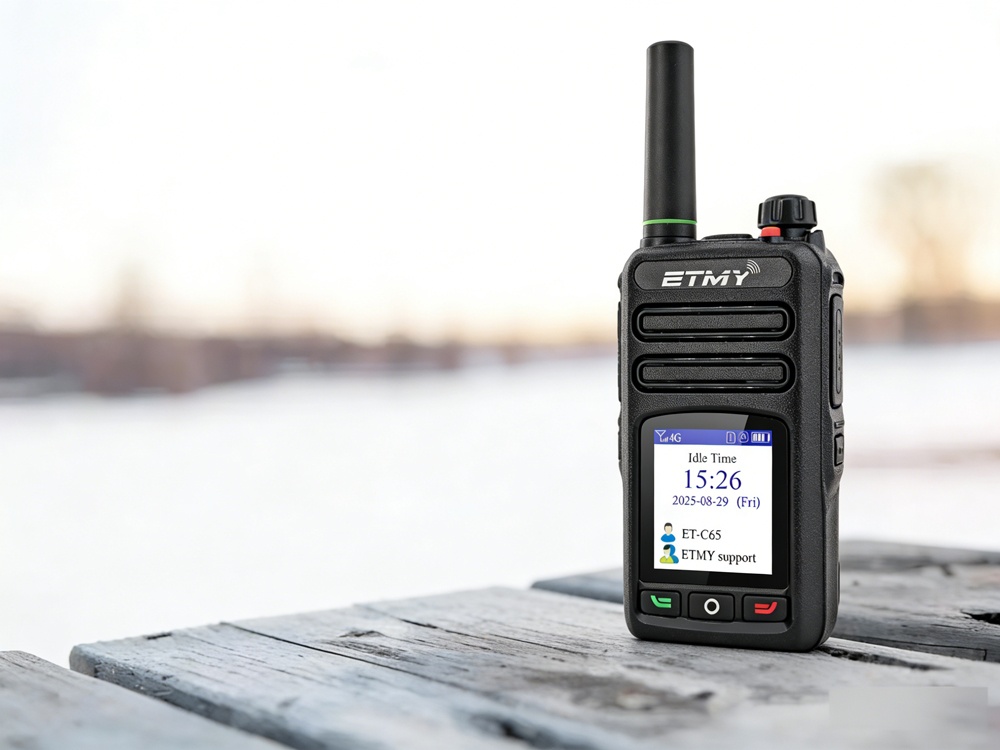
A recent industry report highlights PoC radio adoption for faster, long-distance team communication. Designed for cellular network connectivity, these radios improve coordination in public safety, logistics, and field operations, while offering beginner-friendly setup guidance to ensure reliable activation and compliance.
How exactly do you use a newly acquired PoC radio?
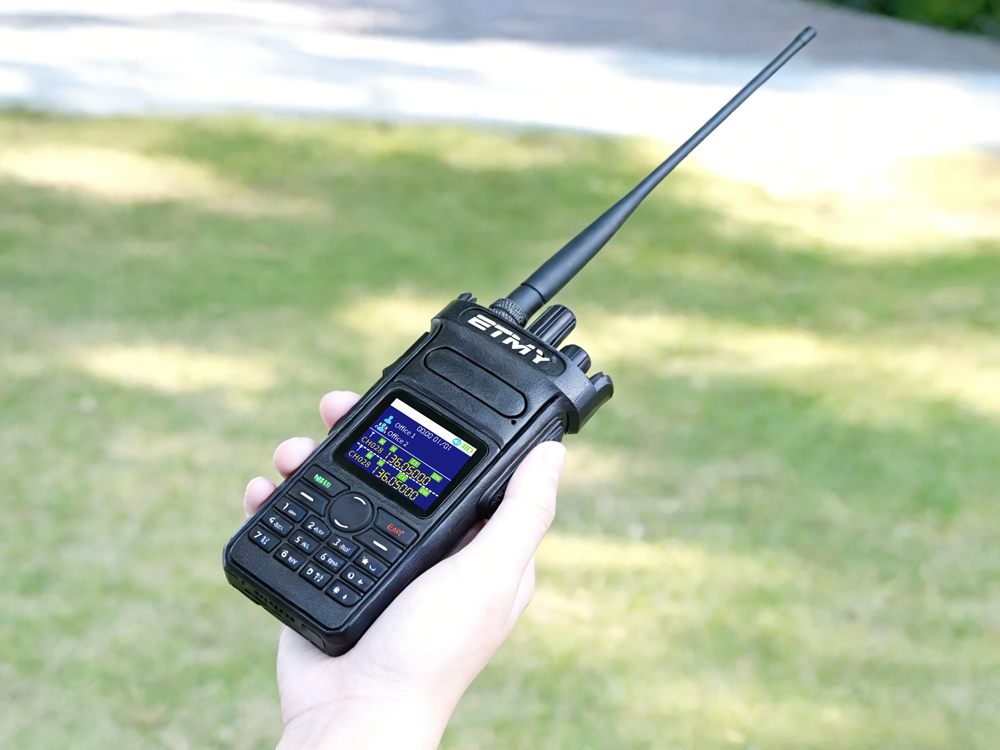
CTCSS function on walkie-talkies covers a frequency range from 67.0Hz to 250.3Hz. When transmitting in analog sub-tone mode, it transmits by continuously superimposing low-frequency, inaudible signals onto the carrier frequency, ensuring that only receivers receiving the same frequency can interpret the signal. This achieves anti-interference capabilities or allows the receiver to reject signals from other third parties.
What is ctcss on a walkie talkie? how to turn on?