
What is DMR, you still don't know?
2021-11-23

source:pttcn.net
The Digital Mobile Radio Standard (DMR) is a digital radio standard specially formulated by the European Telecommunications Standards Institute (ETSI) for professional mobile radio users. It was first approved in 2005 with the goal of being able to meet the requirements of commercial and industrial users.
DMR equipment can be divided into three levels
The first level equipment is used for cheap digital walkie-talkie applications
The second-level equipment is prepared for professional modes such as peer-to-peer mode and relay mode
The third level is used for professional trunking communication mode, in which the first and second level devices use confirmed and unconfirmed data transmission services, and short data transmission services.
For the third-level equipment, confirmed and unconfirmed data transmission services are used on the service channel, and short data transmission services are used on the control channel. Although DMR, TETRA, P25 and MPT-1327 are all based on open communication standards, they are also They have different protocols and target markets (for example, TETRA and P25 are widely used by public safety organizations) and are not technically compatible.
Another standard developed by ETSI, dPMR, focuses on the low-power, civilian free frequency product market. It is more suitable for personal use, entertainment, small-volume retail and other users who do not require broadband coverage or advanced feature settings.
What are the characteristics of DMR digital walkie-talkies?
1. Excellent audio performance
DMR digital technology can better suppress noise, especially at the edge of the coverage area. It has better voice quality than analog technology. These advantages are all due to the application of narrowband codecs and digital error correction technology.
Digital processing can filter the noise and reconstruct the signal from the degraded transmission, so the user's conversation will be clearer; DMR improves the reasonable and effective coverage of wireless communication, and the user can easily deal with the constantly changing working conditions on site.
2. User capacity doubled
A key advantage of DMR lies in its ability to allow a single 12.5kHz channel to support two simultaneous or separate calls. So, how does it do this?
In the DMR standard, time division multiple access (TDMA) can reserve 12.5kHz bandwidth and divide it into 2 alternate time slots. Each time slot can be operated as a separate communication channel and has the same bandwidth (6.25kHz). The original channel can still maintain the same configuration as the analog 12.5kHz signal.
This means that DMR is fully compatible with your existing authorized PMR frequency points, so there is no need to reconfigure or purchase frequency points again, and at the same time, it can double the capacity of the 12.5kHz bandwidth.
In the TDMA system, if the first time slot is used for voice communication, the second time slot can be used to transmit application data information, such as text information and other data information. At the same time, it can also carry out voice communication. It is very useful for video scheduling systems.
The usage of data information in today’s society is increasing rapidly, so this enhanced data information function is becoming more and more important. The future development prospects of dual-slot TDMA applications include temporarily combining two time slots to double the data rate, or at the same time Two time slots are used in order to enable full-duplex calls, while FDMA solutions cannot provide the aforementioned functions in a single channel.
3. Reduce the cost of basic equipment
Another advantage of DMR TDMA technology is that it can have two channels with only one repeater, one antenna and one duplexer. Compared with FDMA, dual-slot TDMA allows you to get double bandwidth efficiency of 6.25kHz. At the same time, the investment in repeaters and combined equipment is minimized. The equipment required by the two methods for a system is shown below.
The FDMA method requires a dedicated repeater for each channel. In addition, it also requires expensive combination equipment to enable multiple frequency points to use a single base station antenna. As we all know, it is necessary to use combination equipment with 6.25kHz bandwidth signals. It costs more, and doing so generally hurts signal quality and coverage.
The dual-slot TDMA can achieve the same stable channel only by using a single frequency point equipment, without additional repeaters or combination equipment, which means that it can reduce the cost of DMR users and simplify their network construction plans.
4. Longer battery life
Mobile devices have long faced the problem of short battery life. In the past, the talk time that can be increased after a battery is fully charged is very limited.
The emergence of dual-slot TDMA has solved this problem. This is because each call is only used in one of the time slots, so it only needs half the capacity of the transmitter, and the time slots are used in "replacement". , The transmitter will be in idle mode half of the time.
For example, in a conventional duty cycle, 5% is used for transmission, 5% is used for reception, and the remaining 90% is on standby. The transmission function will occupy a large amount of battery power, and the reasonable effective transmission time will be halved. Dual-slot TDMA can provide 40% longer talk time than analog wireless communication.
The overall power consumption of each call is reduced, and the use time is increased, and the charging interval time is increased. Modern digital devices also include sleep and power management technologies, which can also increase battery life.
Based on the above functions to improve power efficiency, DMR users can create a more concise and environmentally friendly wireless communication network, and wireless communication itself can also enjoy the benefits of longer battery life.
5. Improved privacy
On the analog channel, the voice signal is very easy to be monitored. However, taking full advantage of DMR's advanced digital technology, if the signaling or ID (total number of 16,776,415) does not match, the voice signal cannot be monitored, thereby ensuring the user to the maximum. The privacy of communications.
6. The data information application is simple and easy to use
The end-to-end digital features of DMR can easily implement applications such as text messaging, GPS and telemetry.
This is because the DMR standard also supports the transmission of IP data information, so it can simplify the development of standard applications. Now that the demand for data and voice communication is soaring, having this ability reflects that you can add more types of data applications to your system , And then get a higher return on investment.
7. Compatible with existing analog systems and can be easily converted to DMR digital systems in stages
DMR can support operation in analog or digital mode. Accordingly, you don’t need to worry about its compatibility with the analog system you are using, just rest assured to enjoy the benefits it provides you. In addition, DMR allows migration range Including: changing one walkie-talkie device at a time, changing a channel at a time, or changing the entire system at a time.
8. Fully open and widely supported standards ensure the reliability of supply
This is because DMR is a completely open standard and supported by many suppliers, so consumers do not need to worry about supply interruption. So far, DMR has become the most widely used digital two-way wireless communication system in more than 100 countries. There are a large number of active users in all regions and regions, and it is a market-leading digital technology.
China completes the first large-scale drone emergency communications drill to support rescue teams during simulating major disasters
Enter the listed company Hytera, seek new business growth points and return to the track
Related Article

Most radio operators never take grounding seriously—until their gear is fried. This piece exposes three fatal grounding traps, from shallow rods to mixed signal-and-power grounds, then hands you a six-step, code-compliant checklist drawn from NEC Article 810 and IEEE Std 142. Copy this homework instead.
A grounding error can instantly fry your radio—Installation guide for radio system lightning protection

Professional walkie talkie earpiece guide covering how to put on, wear, and use earpieces correctly. Features brand-specific tips for Motorola, Hytera, Baofeng, and more with structural comparisons for optimal comfort and performance.
How to use walkie talkie earpiece?- The Complete Guide to Walkie Talkie Earpiece Setup
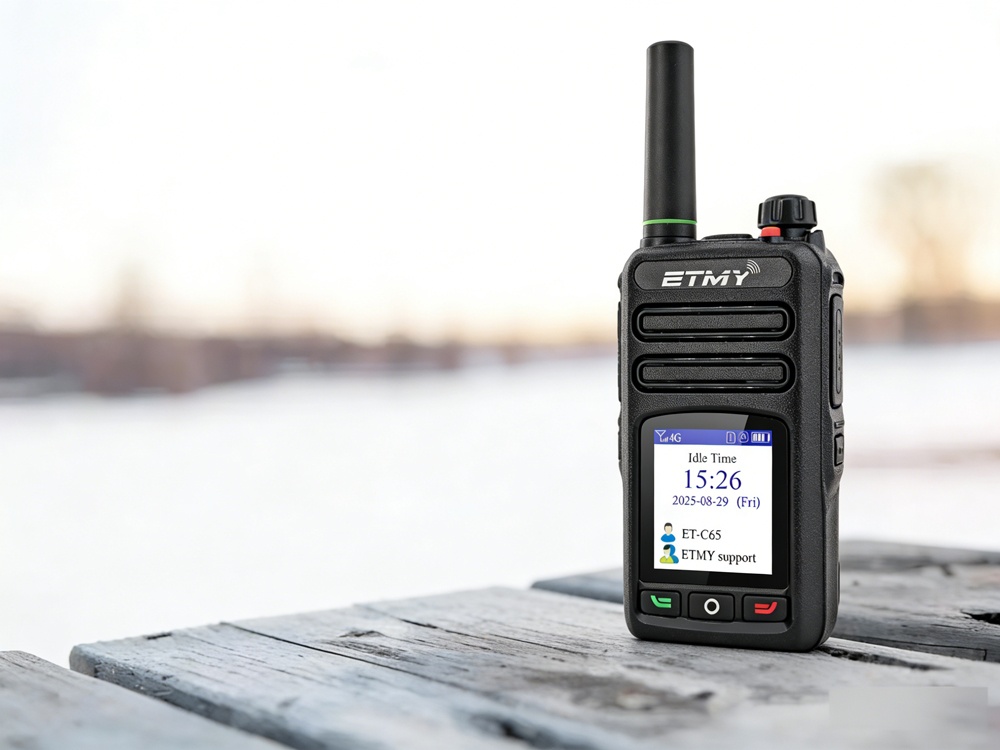
A recent industry report highlights PoC radio adoption for faster, long-distance team communication. Designed for cellular network connectivity, these radios improve coordination in public safety, logistics, and field operations, while offering beginner-friendly setup guidance to ensure reliable activation and compliance.
How exactly do you use a newly acquired PoC radio?
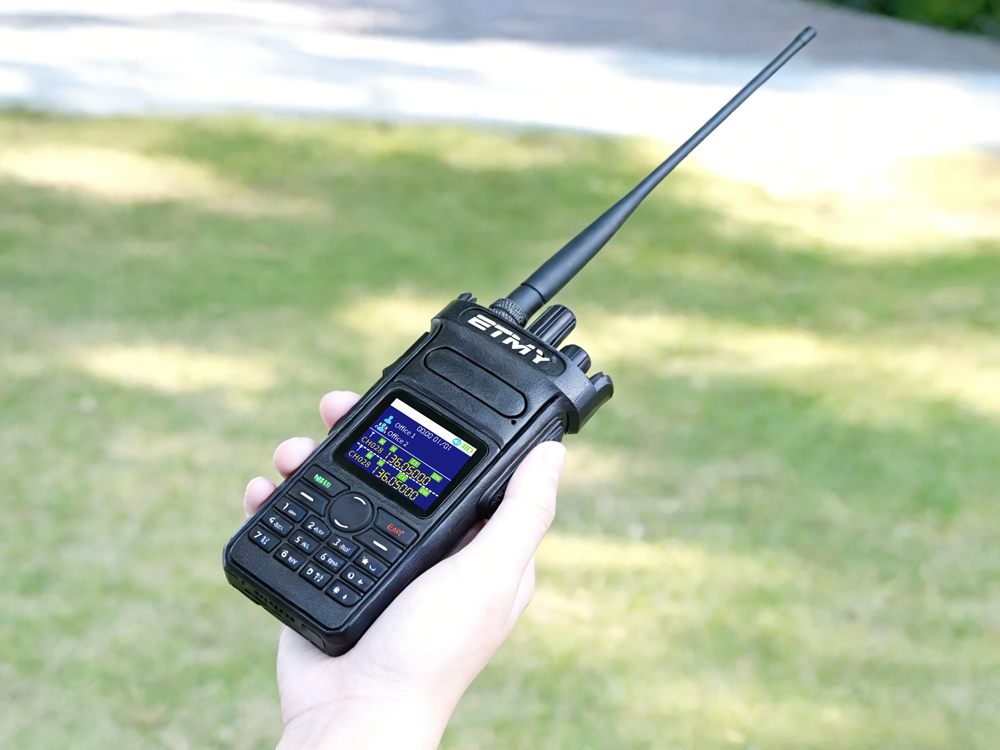
CTCSS function on walkie-talkies covers a frequency range from 67.0Hz to 250.3Hz. When transmitting in analog sub-tone mode, it transmits by continuously superimposing low-frequency, inaudible signals onto the carrier frequency, ensuring that only receivers receiving the same frequency can interpret the signal. This achieves anti-interference capabilities or allows the receiver to reject signals from other third parties.
What is ctcss on a walkie talkie? how to turn on?