
Who invented such a powerful radio technology?
2022-04-18
Who was the first to invent the radio? Fallacies permeate numerous reference materials, histories of science, biographies of scientists, and various public journals. This confusion was not formally cleared up by the U.S. Supreme Court until 1943.
Over the years, how many people have claimed that they invented the radio first, only to make things unrecognizable. Among these people, in addition to Marconi, the earliest and more well-known international celebrities such as Rocky, Pupin, Edison, Fixenton, Slaby, Brown, Thomson and Stern.
The best-known inventor of radio communication is Guglielmo Marconi of Italy, who, when he was less than 20 years old, was inspired by the papers of the discoverer of electromagnetic waves by Hertz. An experiment in radio transmission.
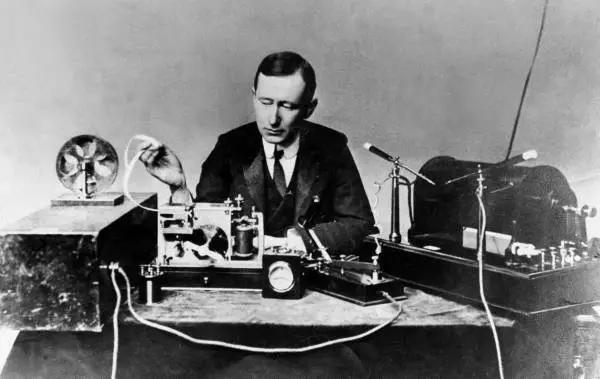
In 1894, shortly after Hertz's death, Marconi's experiment had made a breakthrough, successfully repeating Hertz's experiment, achieving a transmission of only a few centimeters.
Intriguingly, as the discoverer of electromagnetic waves, Hertz stated that the wireless electromagnetic waves he discovered were of no use other than to verify that Maxwell's equations were correct.
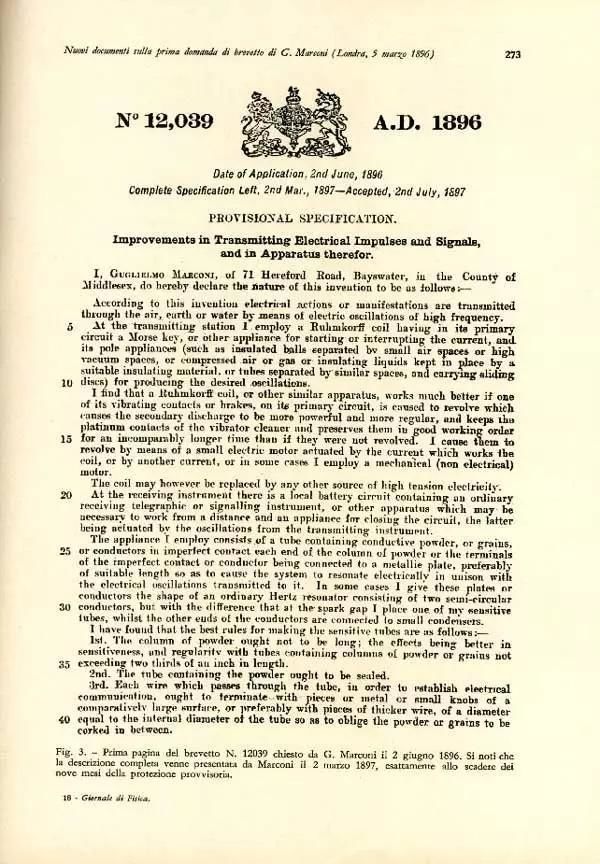
In 1896, Marconi applied for a commercial patent for his own radio in England, patent number 12039. The following year, Wireless Telegraph and Signal Co., Ltd. was established, which was later renamed the Marconi Company. For this invention, Marconi was awarded the Nobel Prize in Physics in 1909.
The above is the most widely circulated version of the radio invention, but was Marconi the first person to invent radio technology? There is another story here.
The protagonist of another story is the familiar wizard Nikola Tesla. In recent years, under the influence of a program "Master of Lightning" on CCTV's "People" column, all kinds of people bragging about Tesla have not. True rumors abound.
But Tesla is by no means a visionary, otherwise Musk would not name his electric car company after him, and the International Metrology Organization would not use his name as a unit of magnetic induction.
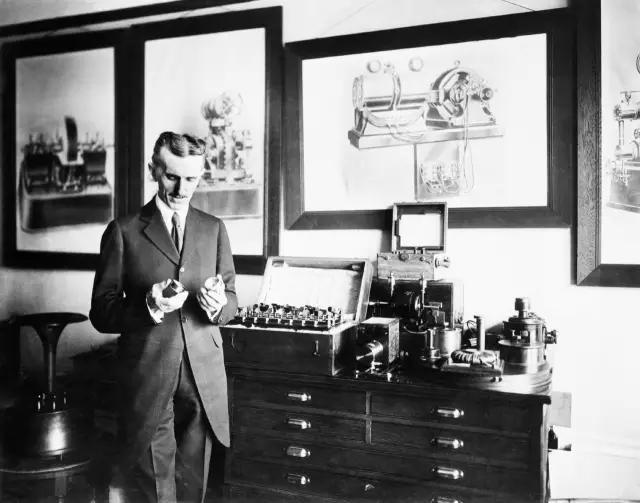
In 1893, Tesla made the first public demonstration of radio communication in St. Louis, Missouri, USA. In his presentations for the Franklin Institute in Philadelphia and the National Electric Lighting Association, he described and demonstrated the basic principles of radio communication. The instruments he made contained all the essential elements of radio systems prior to the invention of the valve.
Professor James R. Witt wrote: "A diagram drawn from Tesla's discovery in 1893, which marked the birth of radio communication. It must be admitted that Hertz had made insightful theories before this. and experimental work, demonstrating the effect of spark gap discharges at a distance. However, Tesla's discovery predates Marconi's invention and practical demonstration of wireless telegraphy by several years."
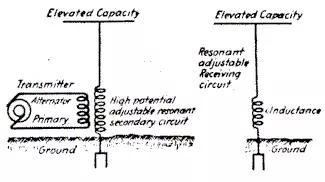
The picture above is from the U.S. Supreme Court case file and is quoted from Tesla's 1893 report. This sketch is often cited as evidence that he invented the radio.
Disputes over inventions are of course unavoidable from patent wars. It is undeniable that Marconi's application in England in 1896 was indeed the world's first patent on radio technology.
But in the United States, the attribution of radio patents is not so smooth.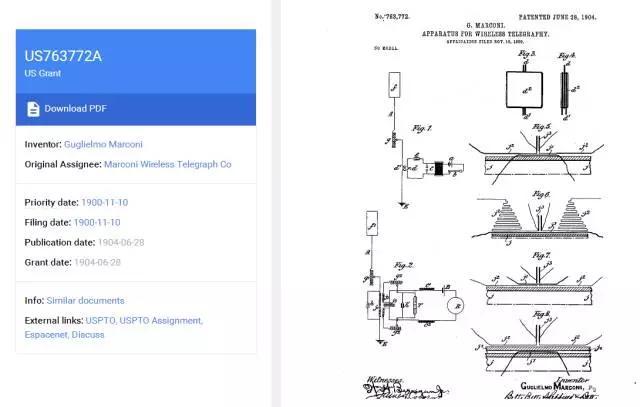
Marconi's earliest patent application in the United States was filed on November 10, 1900, and was later rejected because Lord Oliver Lodge had already proposed a technology in advance.
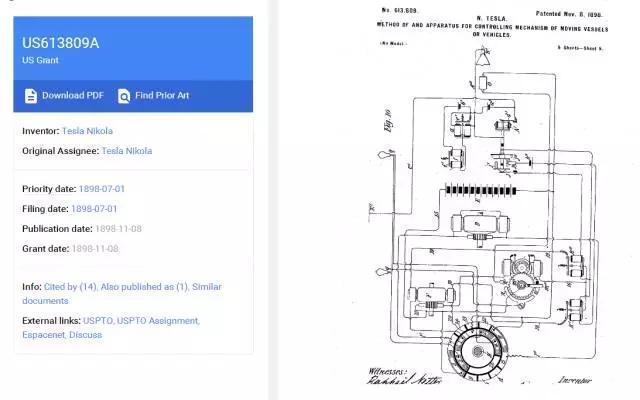
Tesla's patent 645,576, filed on September 2, 1897, and granted on March 20, 1900, predated Marconi's four-circuit tuning device.
However, the U.S. Patent Office revoked Nikola Tesla's 1897 patent on radio technology in 1904 and instead granted Marconi a patent for the invention of radio. This move may have been influenced by Marconi's economic backers in the United States, including Thomas Edison and Andrew Carnegie.
On May 13, 1915, in Marconi's case against the Atlantic Communications Company, Professor Pupin appeared in court as an expert witness for the defendant. Professor Pupin repeatedly pointed out that Tesla contributed his radio inventions to mankind; this is one of the reasons why experts at the Atlantic Company refused to recognize some of Marconi's radio patents.
In August 1915, Tesla also sued the Marconi company. The American Marconi Wireless Telegraph Company also sued the U.S. government, which, according to them, violated "Marconi's" patents during the First World War. The battle over radio patents has been going back and forth for decades, so it's no surprise that it turned out to be a mess.
On June 21, 1943, shortly after Tesla's death, the Supreme Court of the United States overturned the original judgment recognizing Marconi's invention. The Supreme Court ruled that the basic radio patent proposed by Nikola Tesla was earlier than Another competitor, the inventor of the radio patent is Nikola Tesla, and some scholars believe that the court's ruling may be to avoid the patent fees due during World War I. (June 21, 1943 - U.S. Report; U.S. Supreme Court Decision Cases, Vol. 320, "Marconi Wireless Telegraph Company of America," pp. 1-89).
During the First World War, thanks to engineering geniuses such as Steinmetz, Alexanderson, and Dempster, General Electric, based in Schenectady, finally succeeded in scaling up a small experimental model of a radio frequency oscillator. Became a huge 200kW production prototype and installed the first Marconi World Radio Station in New Brunswick, NJ, replacing a previously unsuitable high-power spark transmitter at the station.
It was a great irony for Tesla to be invited to the opening ceremony as a guest of honor when the radio station began its reliable transatlantic communications business. The terms of the armistice proposed by President Woodrow Wilson in April 1919 were radioed from the station to Kaiser Wilhelm.
Yet no matter how annoyed Tesla may have been, it is undeniably true that Marconi is known worldwide for his commercial success in radio, and shrewdly kept his Marconi World Radio Company at the commercial lead in radio development. Absolutely true fact.
The Russian physicist Alexander Stepanovich Popov also claimed to have invented radio technology.
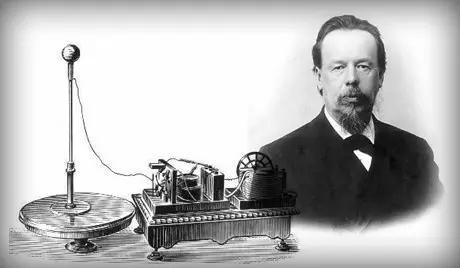
Popov invented the first radio receiver in 1894, a metal detector, which was improved in 1895 to receive electromagnetic waves emitted by lightning. On May 7 of the same year, he demonstrated at the annual meeting of the Physics Department of the Petersburg Institute of Physics and Chemistry. He made a radio receiver - a lightning indicator, which was later celebrated as "Radio Day" in Russia.
The device was installed in the weather station of the Forest Academy in St. Petersburg in July of the same year, and a few months later a paper was published showing that the device could receive signals from artificial oscillatory sources. In March 1896, at the Petersburg annual meeting of physics, the experiment of sending and receiving electromagnetic wave signals was carried out between two buildings of Petersburg University at a distance of about 250 meters. A device patented in June is earlier.
This radio war is just like the discovery of calculus by Newton and Leibniz. Likewise, the invention of the radio was an inevitable step in the development of human science, and coincidentally there were always more than one pioneer who took this step at the same time. Whoever invented the radio first, maybe Tesla, doesn't matter.
In any case, these great engineers are the pioneers of science and technology that we need to remember. If there is no radio, the cornerstone of communication, we would not have such a prosperous mobile Internet communication today; It hasn't left the earth to this day. Thank them for all their contributions to the progress of mankind.
Over the years, how many people have claimed that they invented the radio first, only to make things unrecognizable. Among these people, in addition to Marconi, the earliest and more well-known international celebrities such as Rocky, Pupin, Edison, Fixenton, Slaby, Brown, Thomson and Stern.
The best-known inventor of radio communication is Guglielmo Marconi of Italy, who, when he was less than 20 years old, was inspired by the papers of the discoverer of electromagnetic waves by Hertz. An experiment in radio transmission.
Marconi and his wireless telegraph equipment
In 1894, shortly after Hertz's death, Marconi's experiment had made a breakthrough, successfully repeating Hertz's experiment, achieving a transmission of only a few centimeters.
Intriguingly, as the discoverer of electromagnetic waves, Hertz stated that the wireless electromagnetic waves he discovered were of no use other than to verify that Maxwell's equations were correct.
In 1896, Marconi applied for a commercial patent for his own radio in England, patent number 12039. The following year, Wireless Telegraph and Signal Co., Ltd. was established, which was later renamed the Marconi Company. For this invention, Marconi was awarded the Nobel Prize in Physics in 1909.
Marconi's patent for radio signal transmission in the UK
The above is the most widely circulated version of the radio invention, but was Marconi the first person to invent radio technology? There is another story here.
The protagonist of another story is the familiar wizard Nikola Tesla. In recent years, under the influence of a program "Master of Lightning" on CCTV's "People" column, all kinds of people bragging about Tesla have not. True rumors abound.
But Tesla is by no means a visionary, otherwise Musk would not name his electric car company after him, and the International Metrology Organization would not use his name as a unit of magnetic induction.
In 1893, Tesla made the first public demonstration of radio communication in St. Louis, Missouri, USA. In his presentations for the Franklin Institute in Philadelphia and the National Electric Lighting Association, he described and demonstrated the basic principles of radio communication. The instruments he made contained all the essential elements of radio systems prior to the invention of the valve.
Professor James R. Witt wrote: "A diagram drawn from Tesla's discovery in 1893, which marked the birth of radio communication. It must be admitted that Hertz had made insightful theories before this. and experimental work, demonstrating the effect of spark gap discharges at a distance. However, Tesla's discovery predates Marconi's invention and practical demonstration of wireless telegraphy by several years."
The picture above is from the U.S. Supreme Court case file and is quoted from Tesla's 1893 report. This sketch is often cited as evidence that he invented the radio.
Disputes over inventions are of course unavoidable from patent wars. It is undeniable that Marconi's application in England in 1896 was indeed the world's first patent on radio technology.
But in the United States, the attribution of radio patents is not so smooth.
Marconi's earliest patent application in the United States
Marconi's earliest patent application in the United States was filed on November 10, 1900, and was later rejected because Lord Oliver Lodge had already proposed a technology in advance.
Tesla's patent 645,576, filed on September 2, 1897, and granted on March 20, 1900, predated Marconi's four-circuit tuning device.
Tesla's earliest patent on radio signal transmission
However, the U.S. Patent Office revoked Nikola Tesla's 1897 patent on radio technology in 1904 and instead granted Marconi a patent for the invention of radio. This move may have been influenced by Marconi's economic backers in the United States, including Thomas Edison and Andrew Carnegie.
On May 13, 1915, in Marconi's case against the Atlantic Communications Company, Professor Pupin appeared in court as an expert witness for the defendant. Professor Pupin repeatedly pointed out that Tesla contributed his radio inventions to mankind; this is one of the reasons why experts at the Atlantic Company refused to recognize some of Marconi's radio patents.
In August 1915, Tesla also sued the Marconi company. The American Marconi Wireless Telegraph Company also sued the U.S. government, which, according to them, violated "Marconi's" patents during the First World War. The battle over radio patents has been going back and forth for decades, so it's no surprise that it turned out to be a mess.
On June 21, 1943, shortly after Tesla's death, the Supreme Court of the United States overturned the original judgment recognizing Marconi's invention. The Supreme Court ruled that the basic radio patent proposed by Nikola Tesla was earlier than Another competitor, the inventor of the radio patent is Nikola Tesla, and some scholars believe that the court's ruling may be to avoid the patent fees due during World War I. (June 21, 1943 - U.S. Report; U.S. Supreme Court Decision Cases, Vol. 320, "Marconi Wireless Telegraph Company of America," pp. 1-89).
During the First World War, thanks to engineering geniuses such as Steinmetz, Alexanderson, and Dempster, General Electric, based in Schenectady, finally succeeded in scaling up a small experimental model of a radio frequency oscillator. Became a huge 200kW production prototype and installed the first Marconi World Radio Station in New Brunswick, NJ, replacing a previously unsuitable high-power spark transmitter at the station.
It was a great irony for Tesla to be invited to the opening ceremony as a guest of honor when the radio station began its reliable transatlantic communications business. The terms of the armistice proposed by President Woodrow Wilson in April 1919 were radioed from the station to Kaiser Wilhelm.
Yet no matter how annoyed Tesla may have been, it is undeniably true that Marconi is known worldwide for his commercial success in radio, and shrewdly kept his Marconi World Radio Company at the commercial lead in radio development. Absolutely true fact.
The Russian physicist Alexander Stepanovich Popov also claimed to have invented radio technology.
Popov invented the first radio receiver in 1894, a metal detector, which was improved in 1895 to receive electromagnetic waves emitted by lightning. On May 7 of the same year, he demonstrated at the annual meeting of the Physics Department of the Petersburg Institute of Physics and Chemistry. He made a radio receiver - a lightning indicator, which was later celebrated as "Radio Day" in Russia.
The device was installed in the weather station of the Forest Academy in St. Petersburg in July of the same year, and a few months later a paper was published showing that the device could receive signals from artificial oscillatory sources. In March 1896, at the Petersburg annual meeting of physics, the experiment of sending and receiving electromagnetic wave signals was carried out between two buildings of Petersburg University at a distance of about 250 meters. A device patented in June is earlier.
This radio war is just like the discovery of calculus by Newton and Leibniz. Likewise, the invention of the radio was an inevitable step in the development of human science, and coincidentally there were always more than one pioneer who took this step at the same time. Whoever invented the radio first, maybe Tesla, doesn't matter.
In any case, these great engineers are the pioneers of science and technology that we need to remember. If there is no radio, the cornerstone of communication, we would not have such a prosperous mobile Internet communication today; It hasn't left the earth to this day. Thank them for all their contributions to the progress of mankind.
Hytera's "2022 Smart China Tour" Chongqing Station was successfully opened, and worked with partners to build an "innovation and win-win" ecosystem!
PowerTrunk Delivers Sydney's Metro Rail TETRA System
Related Article

A practical guide to testing two-way radio coverage in the environment where people will actually depend on it.
Why a Radio Coverage Test Can Pass— and the System Still Fails in Real Operation

Most radio operators never take grounding seriously—until their gear is fried. This piece exposes three fatal grounding traps, from shallow rods to mixed signal-and-power grounds, then hands you a six-step, code-compliant checklist drawn from NEC Article 810 and IEEE Std 142. Copy this homework instead.
A grounding error can instantly fry your radio—Installation guide for radio system lightning protection

Professional walkie talkie earpiece guide covering how to put on, wear, and use earpieces correctly. Features brand-specific tips for Motorola, Hytera, Baofeng, and more with structural comparisons for optimal comfort and performance.
How to use walkie talkie earpiece?- The Complete Guide to Walkie Talkie Earpiece Setup
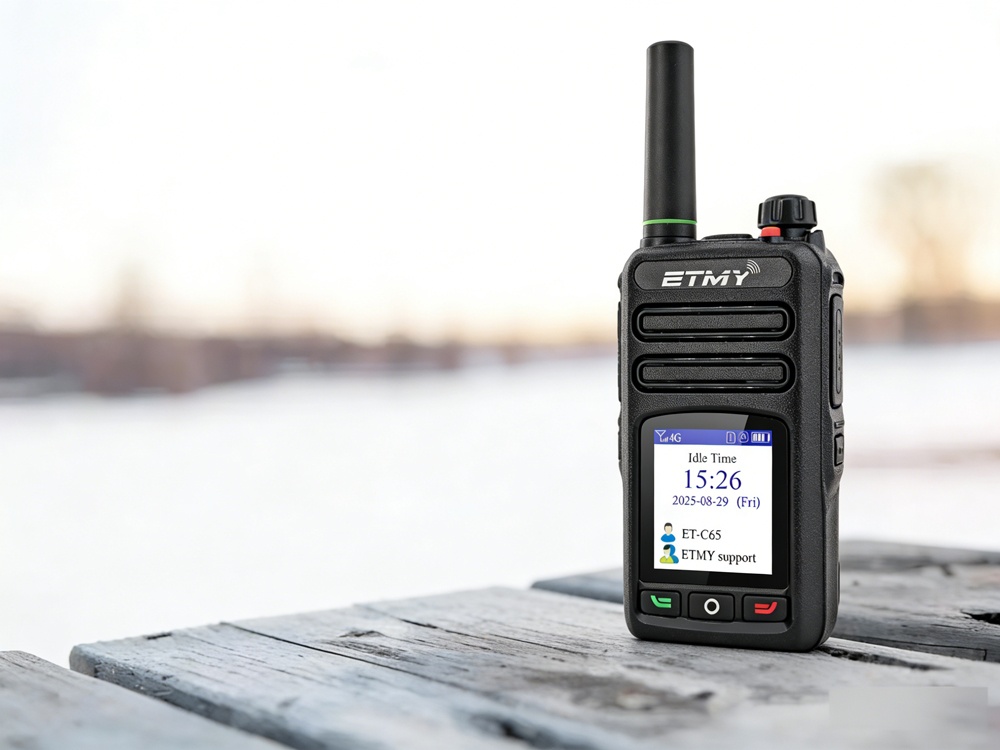
A recent industry report highlights PoC radio adoption for faster, long-distance team communication. Designed for cellular network connectivity, these radios improve coordination in public safety, logistics, and field operations, while offering beginner-friendly setup guidance to ensure reliable activation and compliance.
How exactly do you use a newly acquired PoC radio?