
Why are walkie-talkies bigger than cell phones?
2022-03-03

Although walkie-talkies can also communicate with voice like mobile phones, the two are different in many ways. Given the popularity of mobile phones among the general public in the Asia Pacific region, it is natural for people to compare walkie-talkies with mobile phones.
the difference
A fundamental difference lies in the user of the walkie-talkie. The walkie-talkies are used by professionals in the industrial, corporate and government sectors of society, while the mobile phones are used by consumers. Walkie-talkies are considered as production inputs, where walkie-talkies need to be used as part of an industry-specific tool for industry and government in order to accomplish their respective tasks or to produce goods or provide services.
Because walkie-talkies are an investment in the production process, most industrial, corporate, or government users purchase a walkie-talkie system and use it as a tool, just as they purchase computers, vehicles, and uniforms for their employees. Since industries, enterprises, and government agencies must purchase walkie-talkie systems as capital costs, they will strive to keep the cost of the system as low as possible while meeting their technical and operational requirements. One way to reduce the cost of a walkie-talkie system is to minimize the number of sites within a walkie-talkie infrastructure.
The typical power output of a high-power walkie-talkie system is between 25W and 100W. Because of the high-power radio transmitters, two-way user radio handsets must operate at higher power levels in order to communicate (conversation) with people in the facility. Typical power levels are around 1-5W. In comparison, mobile phone power is generally 0.6 W. Due to the relatively large unit size of walkie-talkie systems, the conversational range of handheld radios must be compensated for by higher power output.
For cell phones, cellular networks benefit from the smaller cell size. Smaller cell size means more capacity in cellular systems. Greater capacity in turn means more mobile phone call processing capability, resulting in more revenue. Contrary to cell phone design philosophies, walkie-talkie systems benefit more from larger unit sizes—the bigger the better, because larger radio unit sizes are able to capture more of the handheld radio for calls.
Is it feasible to operate the walkie-talkie system at a lower power level, thereby reducing the size of the walkie-talkie? The answer is yes, not only is it possible, but it has already been achieved. However, the consequence of reducing the size of the walkie-talkie is the need to increase the number of infrastructure sites. Ultimately, such tradeoffs affect the initial construction cost of the system (increased by the number of stations) and the long-term operation and maintenance costs over the life of the system (increased by the number of stations).
While users of walkie-talkies will see smaller portable devices, system owners may have to pay more for the infrastructure.
An interesting consequence of increasing the power output level is that it also enhances a feature that walkie-talkie devices have that cell phones don't - direct mode operation. This allows the walkie-talkie system to have a last means of communication after the handset is disconnected from the infrastructure. This allows users to communicate directly with each other without going through the infrastructure.
Higher power output levels have an important design implication and impact on product design—the need for larger size power amplifiers (PAs). Conversely, smaller power output devices can use smaller size power amplifiers. Due to the large size of the power amplifier, the internal design of the handheld radio is limited, and it is difficult to say how much the overall size can be reduced.
In addition to high-power power amplifiers requiring higher power, most walkie-talkie users have another high-power requirement-speakers. Walkie-talkie devices are commonly found in industrial environments with high noise or a lot of background noise. Unlike cell phones, speakers used in walkie-talkie devices must be able to work in loud environments.
Consumer and commercial products, such as cell phones and commercial walkie-talkie devices, are not designed with these factors in mind, so their mechanical design allows for smaller, thinner, and lighter enclosures. The difference is obvious: try dropping your [non-Motorola] phone in the office a few times. The phone will break. And rugged industrial-grade walkie-talkie devices will not break under normal conditions in an industrial environment.
Another factor in the inability of walkie-talkies to get smaller is that customers want some unique features that mobile phones don't have. For example, walkie-talkie devices can have government-grade encryption for voice transmissions that require the highest level of security. This requires hardware encryption circuitry and adds more circuitry and hardware inside the radio. If phones have to meet such complex user requirements, phones will be larger than they are today.
It's ironic now that walkie-talkie electronics may actually be small enough that the physical form factor is actually too small for some operating environments. That said, some operating environments may require a physically larger radio size for proper user operation. For example, firefighters must wear protective gloves to protect themselves from heat, fire, chemicals, etc. when fighting a fire, so gloves cannot be removed to operate a walkie-talkie in a hazardous environment. If the walkie-talkie is too small, they cannot operate properly while wearing gloves. The walkie-talkie must be large enough to fit in a gloved hand. If the shape is too small, it is difficult to handle and easy to fall off.
Future Design
The good news is that walkie-talkie designs have been getting smaller and smaller over the past three decades. And the walkie-talkie is now more powerful. With technological advances in many industrial fields, these achievements have been reflected in the design of walkie-talkies. The reduction in size of walkie-talkies depends on technological advances in many other areas. Specifically, semiconductor miniaturization techniques are needed to manufacture smaller components, such as power amplifiers, microprocessors, and chipsets.
Battery technology must also advance to make batteries that are lighter but still deliver the right amount of amperage when safe. Metal and metallurgical technology must also evolve to discover new lighter materials that dissipate heat better while maintaining corresponding strength. Materials technology also needs to advance in order to make lighter but still strong plastics for use in enclosures.
Summarize
In the US and Western Europe, where walkie-talkies have been in use since the 1940s, professional users have always understood that walkie-talkies are always larger than cell phones. In other parts of the world, because cell phones are more ubiquitous and widely deployed than walkie-talkies, expectations for the size of personal communication devices are set by cell phones. Due to its operational requirements, walkie-talkies must be larger than cell phones.
BAPCO 2022 conference focus: Fatema Zaghloul
New Product Announcement - FTM-200DR 50W Dual Band C4FM/FM Digital Radio
Related Article
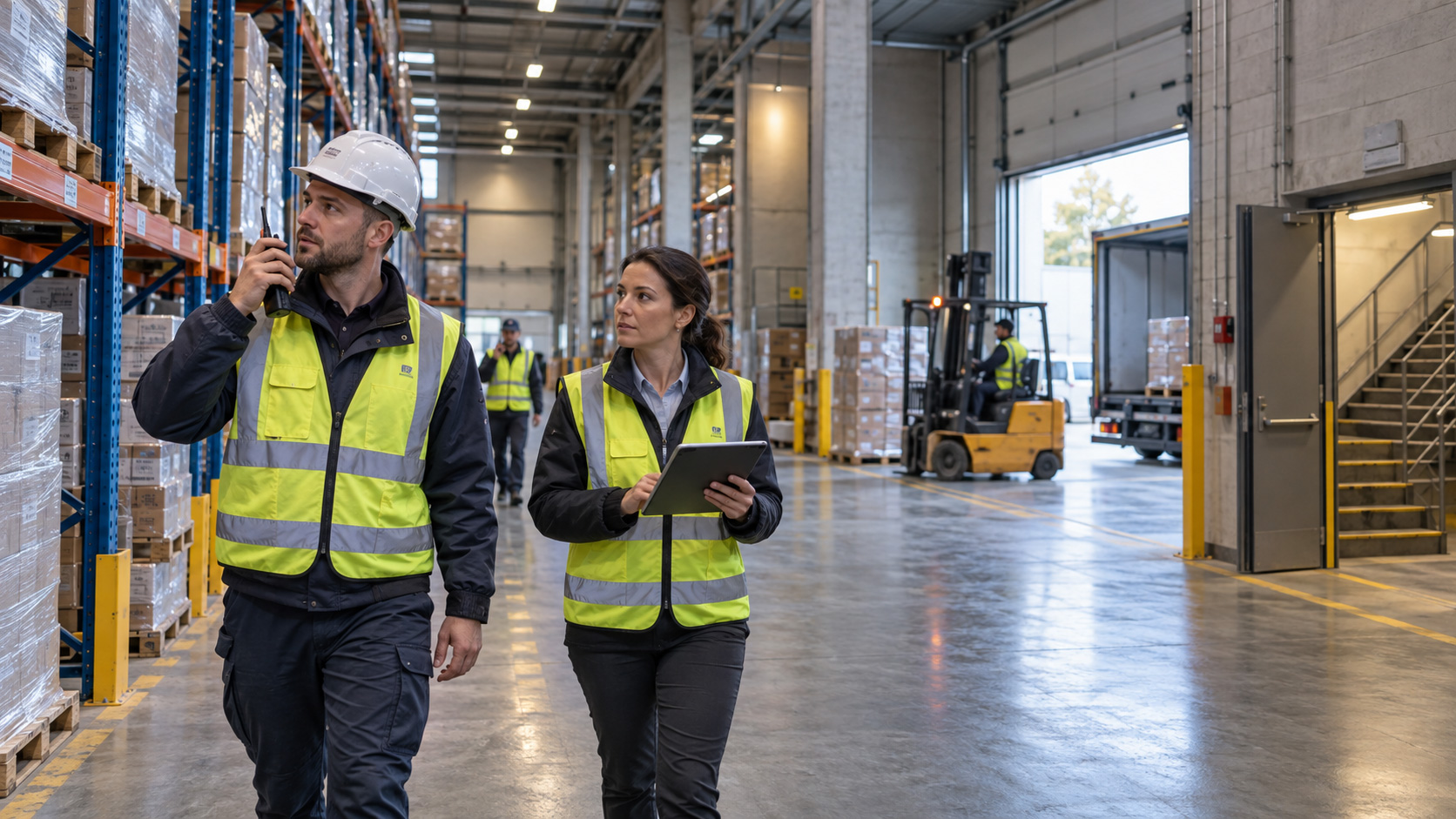
A practical guide to testing two-way radio coverage in the environment where people will actually depend on it.
Why a Radio Coverage Test Can Pass— and the System Still Fails in Real Operation

Most radio operators never take grounding seriously—until their gear is fried. This piece exposes three fatal grounding traps, from shallow rods to mixed signal-and-power grounds, then hands you a six-step, code-compliant checklist drawn from NEC Article 810 and IEEE Std 142. Copy this homework instead.
A grounding error can instantly fry your radio—Installation guide for radio system lightning protection

Professional walkie talkie earpiece guide covering how to put on, wear, and use earpieces correctly. Features brand-specific tips for Motorola, Hytera, Baofeng, and more with structural comparisons for optimal comfort and performance.
How to use walkie talkie earpiece?- The Complete Guide to Walkie Talkie Earpiece Setup
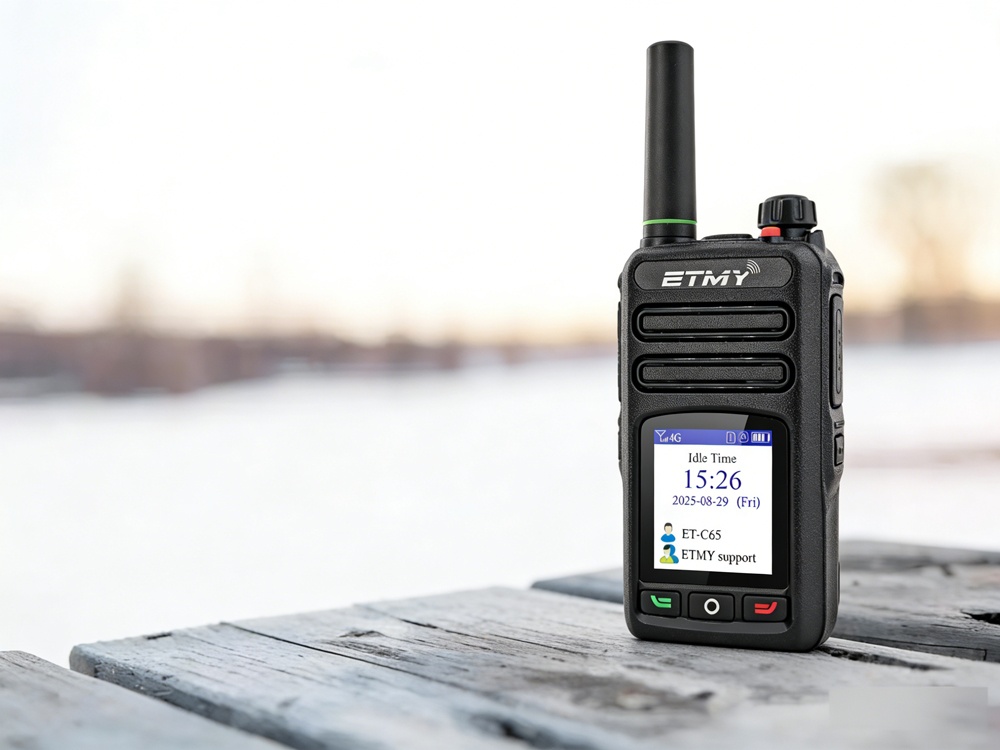
A recent industry report highlights PoC radio adoption for faster, long-distance team communication. Designed for cellular network connectivity, these radios improve coordination in public safety, logistics, and field operations, while offering beginner-friendly setup guidance to ensure reliable activation and compliance.
How exactly do you use a newly acquired PoC radio?