
Can I bring a walkie-talkie on an airplane?
author: z
2025-11-19

Can I bring a walkie-talkie on an airplane?
The answer is yes. On most commercial flights, passengers are allowed to bring walkie-talkies on board, but "bringing" does not mean "using." The core concern of the International Civil Aviation Organization (ICAO) and national civil aviation authorities is that any device actively emitting radio frequency energy could interfere with VHF aviation navigation, Trans-Collision System (TCAS) systems, and satellite communication links.
Therefore, walkie-talkies must be switched off at all times, batteries must be removed or placed in a short-circuit protected condition, and they must not be placed in the cargo hold of checked baggage as "concealed devices." Security checks typically require passengers to place the walkie-talkie separately in a security basket for X-ray and manual inspection; if the device resembles a professional machine or has an external long antenna, passengers may also be required to present a radio license or instruction manual to prove its transmission power and frequency band. It is important to note that some airlines list "portable wireless devices with a transmission power of ≥100 mW" as prohibited items during flight. While common civilian walkie-talkies (PMR446, FRS) have lower power than this, they are still classified as "active transmitters" and are strictly prohibited from being turned on. In short, they can be carried on board or checked in (with detachable batteries), but are strictly prohibited from being turned on or transmitted in the cabin or cockpit.

Regulations of various countries
| Country / Region | Carriage in cabin or hold | In-flight power-on / TX | Licence needed to import / possess | Remarks & typical enforcement |
|---|---|---|---|---|
| China (PRC) | YES – battery removed or switched-off | PROHIBITED | NO for PMR446; YES for VHF air-band | Security may request demonstration of power-off; > 5 units require customs declaration. |
| United States | YES – extra screening possible | PROHIBITED (FAA & FCC) | NO for FRS; YES for Part-90/Part-87 | TSA allows either cabin or hold; transmitters > 100 mW must be disabled. |
| European Union | YES – battery isolated | PROHIBITED (EASA SIB) | NO for PMR446/LPD; YES for programmed aviation freqs | National CAAs may limit > 5 units; 8.33 kHz air-band RX-only models are tolerated. |
| United Kingdom | YES – switched-off | PROHIBITED | NO for licence-exempt sets | CAA treats “business-band” radios same as PMR if ≤ 0.5 W. |
| Canada | YES – battery taped | PROHIBITED (CAR 602.08) | NO for GMRS/FRS; YES for VHF-AM | IC requires equipment certification mark; customs inspect large quantities. |
| Japan | YES – battery separated | PROHIBITED | YES (MIC licence) for any TX-capable VHF/UHF | Narita/Haneda may ask for licence at arrival; pure-RX scanners exempt. |
| Australia | YES – OFF | PROHIBITED (CASA CAO 20.16) | NO for UHF CB; YES for air-band TX | > 1 W devices need individual passenger declaration. |
| Singapore | YES – security check | PROHIBITED | NO for SRRC-exempt UHF; YES for VHF | Pure-receive air-band scanners < 2 W ERP allowed without permit. |
| UAE | YES – battery removed | PROHIBITED (GCAA & TRA) | YES – individual import permit | Walkie-talkies on tourist visa generally seized unless pre-approved. |
| Israel | YES – hold preferred | PROHIBITED | YES – Ministry of Communications | Temporary import possible with hotel guarantee; security profile may delay screening. |
| India | YES – switched-off | PROHIBITED (DGCA) | YES – WPC import licence | Hand-carried units occasionally held at customs until licence shown. |
| Brazil | YES – battery separated | PROHIBITED (ANAC) | NO for PMR446-equivalent; YES otherwise | ANATEL seal required; airport police may confiscate unmarked sets. |
| South Africa | YES – switched-off | PROHIBITED (CAA CAR 91.08) | YES – ICASA licence | Pure-receive scanners exempt; > 5 units attract duties. |
| Mexico | YES – security interview | PROHIBITED (DGAC) | NO for FRS; YES for GMRS & VHF | SCT can seize high-power units; keep Spanish copy of licence. |
| Argentina | YES – battery taped | PROHIBITED (ANAC) | YES – CNC licence | ANAC may request serial numbers at departure. |
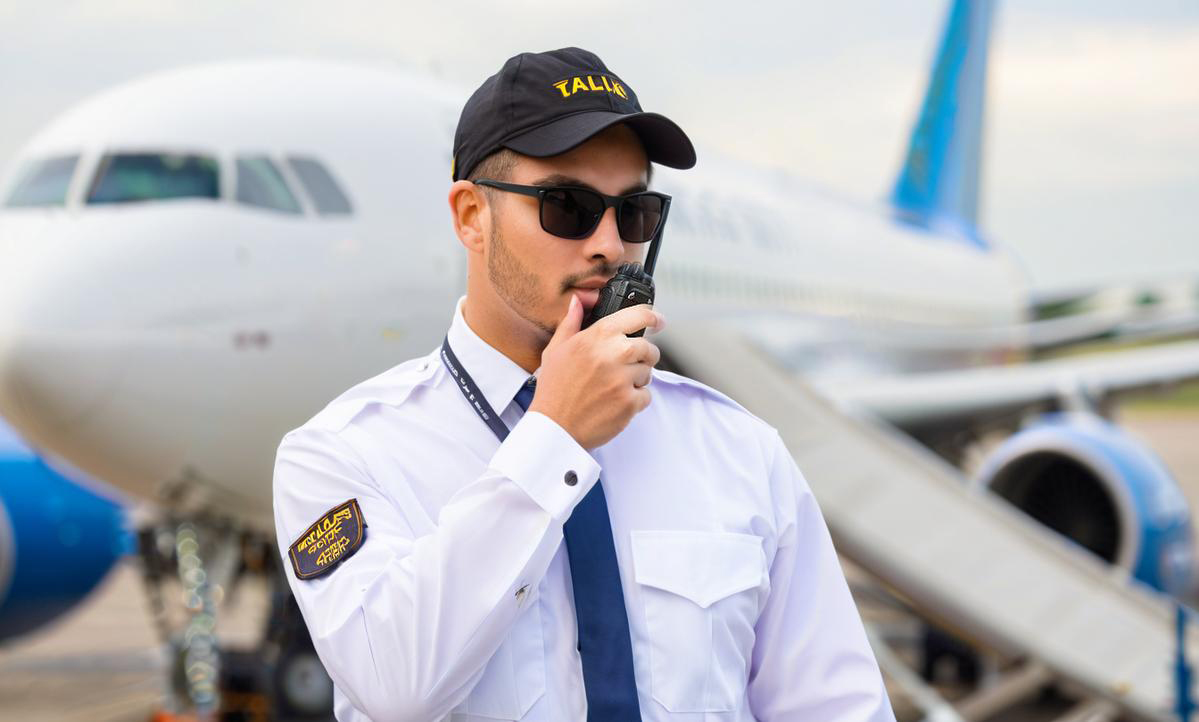
Do I need a permit to bring a walkie-talkie on a plane?
If you are only carrying 1-2 civilian, license-free walkie-talkies (such as PMR446, FRS) and guarantee that they will not transmit during the entire flight, you do not need to apply to the airline in advance. However, if any of the following conditions are met, it is recommended to submit a "Portable Electronic Device Transport Application" 5-7 business days in advance:
- Transmitting power ≥ 5 W or operating on aviation bands (AIR band 108-137 MHz)
- Quantity exceeds 5 units, or the device has a removable high-capacity lithium battery (>100 Wh)
- The device is in the form of a "base station" or "vehicle-mounted station," or the antenna length is > 20 cm
- The destination country requires that imported wireless equipment have a copy of its national license
- When applying, you must provide the device model, transmitting power, frequency band, battery specifications, and a description of its intended use. The airline's engineering department will review the application and issue a written permit. Security will allow passage based on the permit; otherwise, you may be required to check it in or have it returned on the spot.
Note: If you only need to "listen" to control tower conversations during the flight without transmitting, the third type of receiver is recommended. Replace the antenna with a short rubber rod beforehand to reduce security sensitivity. If you need to coordinate ground operations at the destination airport, you must obtain a local civil aviation radio license in advance; otherwise, transmission is prohibited.
What are some suitable airband radios?
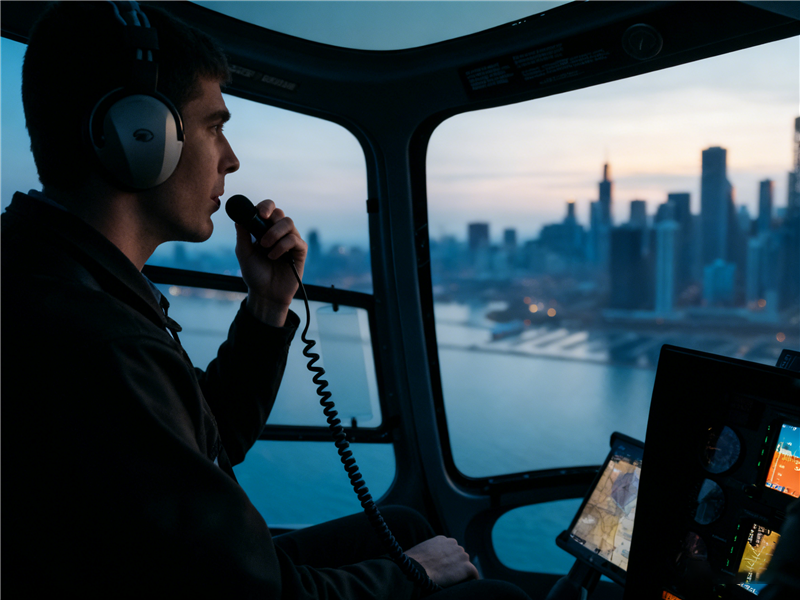
"Airband radio" specifically refers to radio that receives or transmits aviation frequencies (118–137 MHz AM). For aviation frequency monitoring only, a pure receiver model can be chosen, such as:

A handheld VHF AM radio with GPS, 5W transmit power, requires a license to operate, has a receiver sensitivity of <0.8 μV, supports 8.33 kHz narrowband, suitable for pilots or aviation enthusiasts for ground use.

Built-in GPS/VOR/ILS navigation, 6W transmit, 11-hour battery life, supports USB-C charging, compliant with FCC Part 87 certification.

Walkie-talkie is designed specifically for the aviation VHF band: covering the 118-137 MHz band in AM mode, and is smaller than most Icom/Yaesu counterparts, making it easy to slip into a pocket. For passengers who simply want to "listen," the ET-A23M offers an affordable solution.
Conclusion
Walkie-talkies are allowed on board, but "power off and battery disconnected" is a strict rule. If you need to legally transmit at your destination, be sure to obtain a radio license and written permission from the airline in advance. When choosing equipment, a receiver-only device is the most hassle-free, while high-performance airband transceivers require consideration of regulations, power, and certifications. By following these principles, you can take your walkie-talkie anywhere in the world safely, while ensuring flight safety.
What are the differences between a walkie-talkie with SIM card and a traditional two-way radio?
Are All Dmr Radios Capable Of Analog?
Related Article

A practical guide to testing two-way radio coverage in the environment where people will actually depend on it.
Why a Radio Coverage Test Can Pass— and the System Still Fails in Real Operation

Most radio operators never take grounding seriously—until their gear is fried. This piece exposes three fatal grounding traps, from shallow rods to mixed signal-and-power grounds, then hands you a six-step, code-compliant checklist drawn from NEC Article 810 and IEEE Std 142. Copy this homework instead.
A grounding error can instantly fry your radio—Installation guide for radio system lightning protection

Professional walkie talkie earpiece guide covering how to put on, wear, and use earpieces correctly. Features brand-specific tips for Motorola, Hytera, Baofeng, and more with structural comparisons for optimal comfort and performance.
How to use walkie talkie earpiece?- The Complete Guide to Walkie Talkie Earpiece Setup
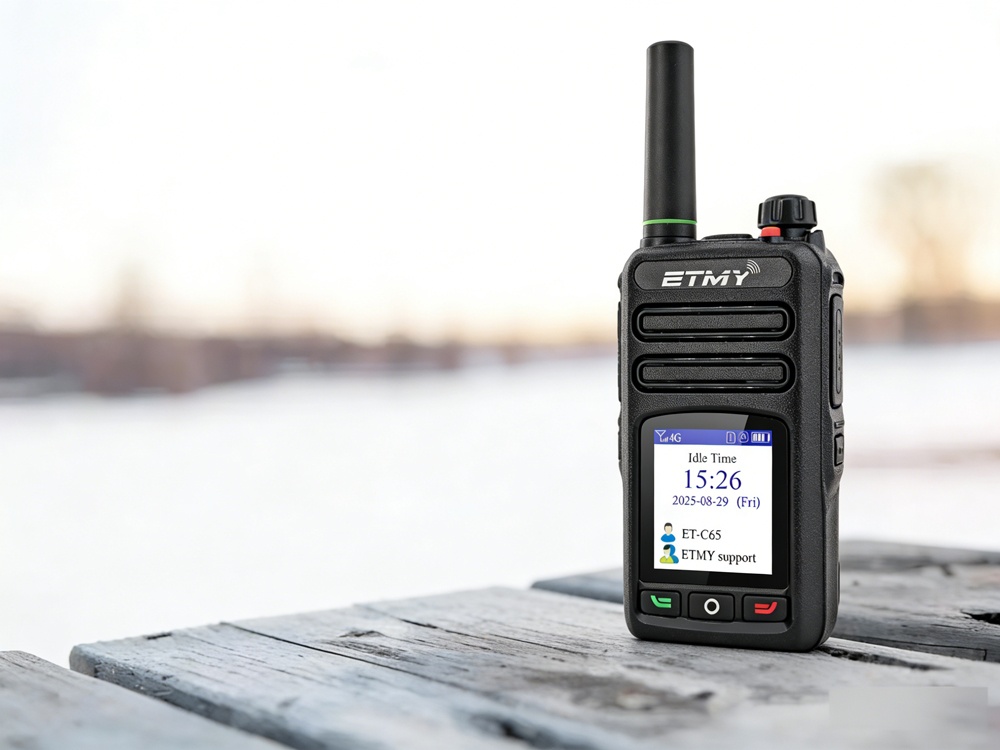
A recent industry report highlights PoC radio adoption for faster, long-distance team communication. Designed for cellular network connectivity, these radios improve coordination in public safety, logistics, and field operations, while offering beginner-friendly setup guidance to ensure reliable activation and compliance.
How exactly do you use a newly acquired PoC radio?